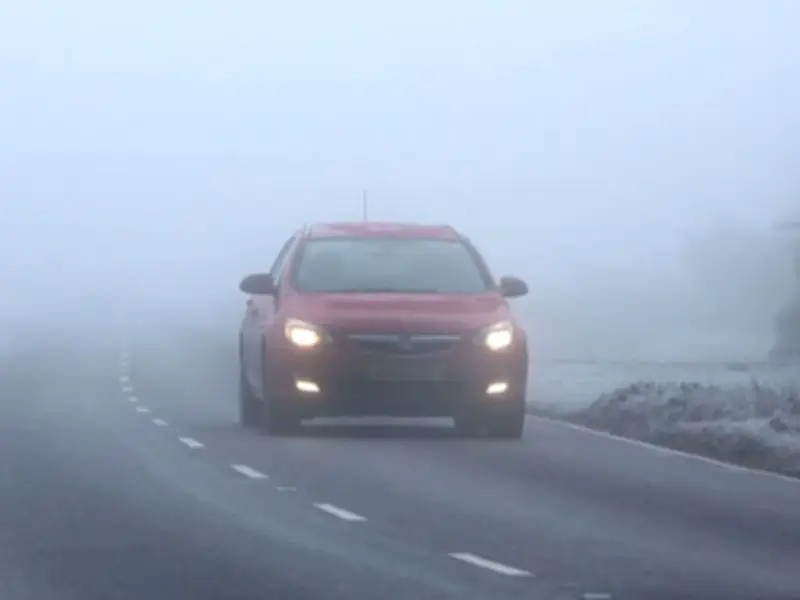
Flashing headlights to thank other drivers is illegal and can lead to a £100 fine and three penalty points, according to motoring experts who have highlighted five common lighting mistakes as fog continues to affect parts of the UK.
The Met Office has issued several yellow weather warnings for fog, which has significantly reduced visibility across affected areas. Motorists face hazardous driving conditions, particularly during morning commutes, as poor visibility makes it harder to spot other vehicles, pedestrians and potential hazards.
Experts at automotive and motorcycle dealership Dick Lovett are urging drivers to take extra precautions when travelling in fog. They warn that failing to use dipped headlights when visibility falls below 100 metres, or incorrectly using full beams, could create additional dangers on the road.
Flashing headlights and the law
Alex Lee, a motoring expert at Dick Lovett, has highlighted five common headlight and vehicle lighting mistakes that drivers should avoid. Flashing headlights is a common way for drivers to communicate, including thanking others, letting them know their headlights are off, and signalling hazards on the road.
However, if caught making a 'friendly' headlight-flashing gesture, drivers could get into trouble, as it is illegal. According to the UK Highway Code, flashing headlights to thank other drivers can result in a £100 fine and three penalty points on your licence.
Rule 110 explicitly states that headlights should be used only to alert other road users to your presence, not to convey personal messages, greet others, or invite them to proceed. Misusing lights in this way can cause dangerous confusion on the road, misinform pedestrians, or even make drivers a target for "flash-for-cash" scams.
With over 205,000 drivers found guilty of speeding offences in 2024, Alex says it is no surprise that some drivers warn others about speed cameras and mobile police speed-check vans on the road. Flashing headlights is a very common way to do so. However, Alex warns that if drivers are caught doing this, they could face fines of up to £1,000. He says it would legally be classified as 'obstructing police duties' under section 89 of the Police Act 1997.
Alex added: "And while it might feel nice to help and look out for a fellow driver, it could lead to more reckless drivers on the road if they're not caught by police and fined accordingly. Remember, speed limits are there to keep everyone, including you, safe."
Misusing hazard lights and full beams
Hazard warning lights are sometimes used as an additional means of communication with other drivers, but not necessarily in situations that warrant their use, according to Alex. For example, many drivers may use their hazard warnings when they're 'parked' somewhere they probably shouldn't be to let other drivers know that they're still in their vehicle.
However, the Highway Code states: "Never use them as an excuse for dangerous or illegal parking". Illegal parking can lead to fines, but prices vary as they are usually determined by the local authority. Another common misuse of hazard warning lights is putting them on and off quickly to thank other drivers. However, using hazards incorrectly could see you charged with 'driving without due care and attention'.
This is an offence under section 3 of the Road Traffic Act 1998 and could result in a £100 fine and three points, but the most serious cases could go to court, where offenders can face much higher penalties of up to £5,000 plus nine points or a ban.
There aren't any specific laws in the UK against using full beam headlights, Alex says. However, the Highway Code states that "you MUST NOT use any lights in a way which would dazzle or cause discomfort to other road users".
If you are found to be causing issues for other drivers because of driving with full beam headlights on, then you could be charged with inconsiderate driving or 'driving without due care and attention' - a fixed-rate fine of £100 and three points, but drivers could face fines of up to £5,000 and nine points or a ban if taken to court.
Alex says: "If you're confused about when to use full beam headlights, it's best to only use them on unlit stretches of road at night. When road users start coming in the oncoming direction (including both pedestrians and cyclists) then you must turn off your full beam to avoid dazzling other road users and potentially causing accidents as a result."
Dipped headlights and cloudy lenses
As per the Highway Code, you should use dipped headlights when visibility is reduced, or when you're able to see less than 100 metres (328 feet) ahead of your vehicle. "Basically, any time you're driving at night or during bad weather", Alex said.
The motoring specialist warns that failure to turn on your headlights when you don't have this kind of visibility could land you with a £100 fine if caught by the police, and if you are caught with the same issue, this can rise to £1,000. However, if the conditions are serious enough, the police officer could charge you with dangerous driving too, which carries a minimum 12-month driving ban.
Drivers with automatic headlights should not always rely on their vehicle to determine when to use their dipped headlights. Alex warns that these systems might not activate in certain conditions, such as heavy rain or fog.
Over the winter, headlights can become foggy or cloudy-looking, primarily caused by a combination of road dirt and salt buildup. Cloudy headlights can seriously reduce visibility and create glare for other drivers, so cleaning them is essential, Alex says.
In fact, driving with cloudy headlights is illegal. If caught, you could be charged with 'driving without due care and attention' - a fixed-rate fine of £100 and three points - but drivers could face fines of up to £5,000 and nine points or a ban if taken to court. Alex warns that the Highway Code states: "Lights, indicators, reflectors and number plates MUST be kept clean and clear". He said: "Having cloudy headlights could also cause you to fail your MOT."