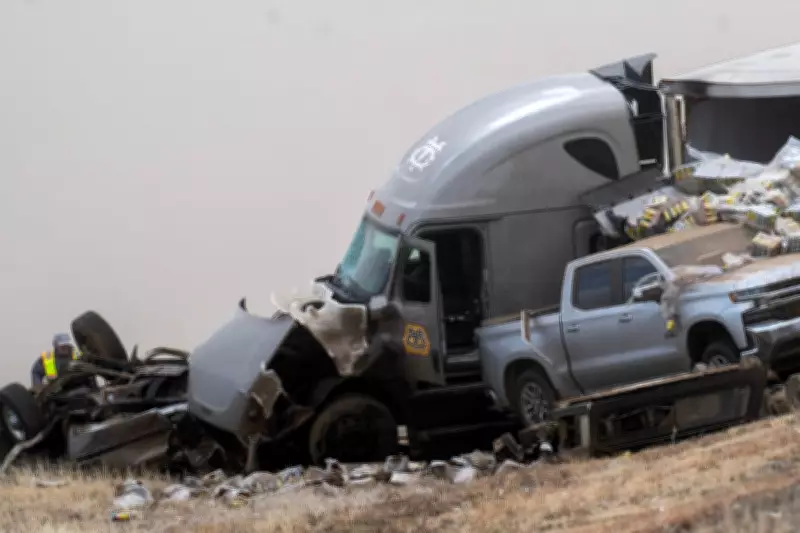
Colorado Highway Pileup Kills Four Amid Severe Dust Storm
A devastating multi-vehicle pileup on a major US highway has claimed the lives of at least four people, with dozens more injured, following extreme weather conditions that created hazardous driving environments. The incident, which involved over 30 vehicles, including six semitrailers, occurred on Interstate 25 south of Pueblo, Colorado, on Tuesday morning around 10 am local time.
Cause and Conditions of the Crash
Colorado State Patrol reported that heavy winds had kicked up significant amounts of dirt, leading to what officials described as 'low to no visibility' for motorists. This phenomenon, often referred to as a 'brown out', severely reduced drivers' ability to see the road ahead, contributing directly to the chain-reaction collision. The powerful winds affecting eastern Colorado on Tuesday not only caused the crash but also heightened the risk of wildfires and led to flight delays at Denver's airport, underscoring the widespread impact of the weather event.
Casualties and Investigation
In the aftermath of the pileup, twenty-nine individuals were transported to local hospitals for treatment. The full extent of their injuries remains unknown at this time, with authorities continuing to assess the situation. Colorado State Patrol has confirmed that the lack of visibility will be a significant factor in the ongoing investigation into the precise cause of the crash. Officials are working to determine if any other elements, such as driver error or vehicle malfunctions, played a role in the tragic event.

Broader Implications and Safety Concerns
This incident highlights the dangers posed by sudden weather changes on busy highways, particularly in regions prone to dust storms and high winds. Safety experts emphasize the importance of caution during low-visibility conditions, advising drivers to reduce speed, use headlights, and pull over safely when necessary. The crash serves as a stark reminder of the need for improved weather monitoring and emergency response protocols to prevent similar tragedies in the future.