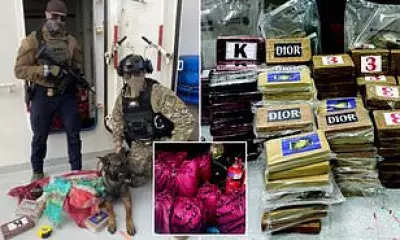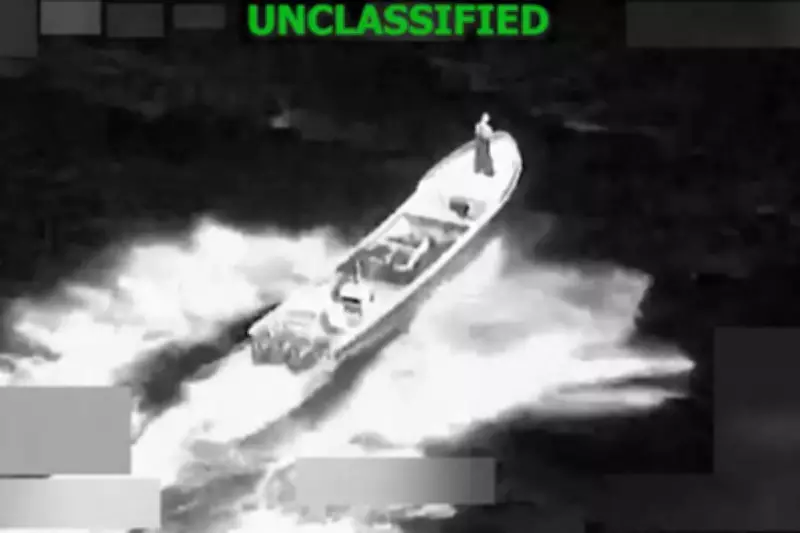
The United States military has confirmed it destroyed two vessels accused of smuggling narcotics in the eastern Pacific Ocean, resulting in five fatalities and leaving one survivor. This latest attack occurred on Saturday, continuing a controversial campaign initiated by the Trump administration against alleged drug traffickers in Latin American waters.
Escalating Campaign Against Alleged Traffickers
Since early September, the Trump administration has intensified its operations against what it labels "narcoterrorists" along known smuggling routes in the eastern Pacific and Caribbean Sea. The recent strike brings the total number of people killed in such boat attacks to at least 168, according to military statements. However, the US military has not provided concrete evidence that these vessels were actually transporting drugs, a point of contention among critics.
Military Statements and Public Evidence
As with most of its announcements regarding these strikes, US Southern Command stated that the targets were alleged drug traffickers. Videos shared on social media platform X depicted small boats moving across the water before being engulfed in bright explosions. Following the attack, US Southern Command notified the US Coast Guard to activate search-and-rescue protocols for the sole survivor, with the Coast Guard confirming coordination efforts and promising updates as they become available.

Legal and Effectiveness Concerns
President Donald Trump has defended these actions, asserting that the US is in an "armed conflict" with cartels in Latin America. He justifies the strikes as a necessary escalation to combat drug flow into the United States and reduce fatal overdoses claiming American lives. Despite this, his administration has offered little proof to support claims of eliminating "narcoterrorists."
Critics have raised significant questions about the overall legality of the boat strikes and their effectiveness. A key argument is that fentanyl, a major contributor to overdose deaths, is typically trafficked over land from Mexico, where it is produced using chemicals imported from China and India, rather than via maritime routes targeted by these strikes.
Broader Military Context
These operations in Latin America persist even as the US military focuses on engagements in the Middle East, where a recent war with Iran lasted several weeks. In a related development, Trump announced on Sunday that the US Navy would begin a blockade of ships entering or leaving the Strait of Hormuz. This decision followed unsuccessful ceasefire talks between the US and Iran in Pakistan, with Trump aiming to weaken Iran's leverage by demanding the reopening of this crucial waterway, which normally facilitates 20 percent of global oil transit. US Central Command indicated the blockade would involve Iranian ports, highlighting the administration's multifaceted military strategy.