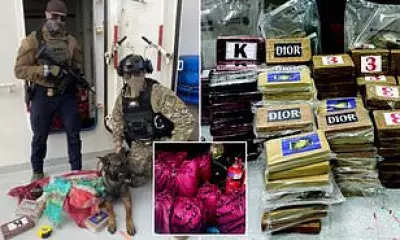
The United States military has confirmed the destruction of two boats allegedly involved in drug smuggling operations in the eastern Pacific Ocean. According to official statements released on Sunday, the strikes resulted in the deaths of five individuals, with one survivor reported.
Details of the Operation
U.S. Southern Command stated that the attacks, which occurred on Saturday, targeted vessels along known smuggling routes. The military asserted that the boats were engaged in illicit drug trafficking, though no concrete evidence was provided to substantiate these claims.
Videos circulated on social media platform X depicted small boats navigating the waters before being consumed by bright explosions. In the aftermath, U.S. Southern Command notified the U.S. Coast Guard to activate search-and-rescue protocols for the lone survivor.

Escalation in Counter-Drug Campaign
These latest incidents bring the total number of fatalities from U.S. military boat strikes to at least 168 since the Trump administration initiated its aggressive campaign against so-called "narcoterrorists" in early September. President Donald Trump has framed these actions as part of an "armed conflict" with cartels in Latin America.
The administration justifies the strikes as a necessary measure to combat the influx of drugs into the United States and reduce fatal overdoses among American citizens. However, critics have raised significant concerns regarding the legality and efficacy of these operations.
Controversy and Criticism
Opponents argue that the administration has offered scant evidence to support its characterization of those killed as "narcoterrorists." Furthermore, skeptics question the strategic value of targeting maritime routes, noting that the fentanyl responsible for many overdose deaths typically enters the U.S. via land borders from Mexico.
This synthetic opioid is often manufactured using precursor chemicals imported from China and India, complicating the narrative that Pacific boat strikes are a decisive solution to the drug crisis.
Broader Geopolitical Context
The continuation of these strikes in Latin America coincides with heightened U.S. military focus on the Middle East, where recent conflicts with Iran have unfolded. In a related development, President Trump announced on Sunday that the U.S. Navy would implement a blockade of ships transiting the Strait of Hormuz.
This decision followed unsuccessful ceasefire negotiations between the U.S. and Iran in Pakistan. The blockade aims to curtail Iran's strategic influence by restricting access to the vital waterway, which facilitates approximately 20% of global oil shipments.
U.S. Central Command indicated that the blockade would specifically target Iranian ports, marking a significant escalation in regional tensions. These parallel military endeavors underscore the Trump administration's multifaceted approach to national security and international drug enforcement.