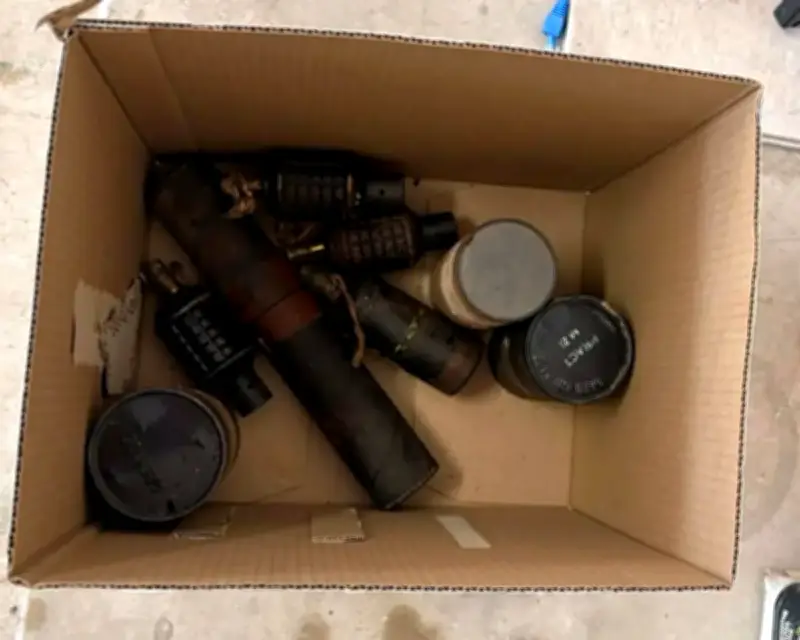
A buyer at a Texas estate sale discovered several second world war-era grenades in a box of newly bought items, prompting a neighborhood lockdown and a visit from the Austin police department’s bomb squad.
Live grenades found
The grenades, which were described as “live and active” in a social media post by the Austin police association, were removed and disarmed.
Their age and apparent volatility, the post said, required delicate handling by bomb squad members whose “training, expertise, and steady nerves” is rarely seen by the public.
Police response
“Handling 80-year-old explosives with unknown stability is dangerous, precise work, and they do it with the professionalism this city counts on,” the post said.
“Huge thanks to our patrol officers, who quickly secured the scene, set up a perimeter, and kept neighbors safe while they waited for EOD [explosive ordinance disposal].”
The police association did not identify the seller or buyer of the box of grenades, and said the person who bought them made the discovery only as he was rifling through several boxes of his new items on Monday.
Public warning
“No crime here,” the post said. “Just a great reminder, if you ever come across old military ordnance (grenades, shells, mortar rounds, etc), even if you think it’s inert, don’t touch it, don’t move it, and call 911.
“Let the experts handle it.”
Austin’s KLBJ news station identified at least three of the olive-colored grenades as Mk 2 anti-personnel fragmentation grenades, widely used by US forces during the second world war, and known as “pineapple” grenades because of their distinctive shape.
The grenades were still in limited use with the US army and Marine Corps until the 1960s.
The station said bomb squad technicians examined the highly explosive devices with X-rays and determined they were live, but did not pose an immediate threat under the circumstances.
The Guardian reported earlier this month on the dangers specialist teams face in dealing with decades-old unexploded ordinance, including the degradation of fuses and increasing instability of explosives over time.
It followed the discovery of two large, unexploded German bombs found separately in the UK county of Devon, one on a floating dredger and another on a building site. Experts said the devices “could knock a whole street down”.