Heathrow and Birmingham airports received bomb threats that were assessed as not credible, it is understood, as flights were diverted across Europe following a series of bomb alerts. Operations at both UK airports continued as normal, according to the Press Association.
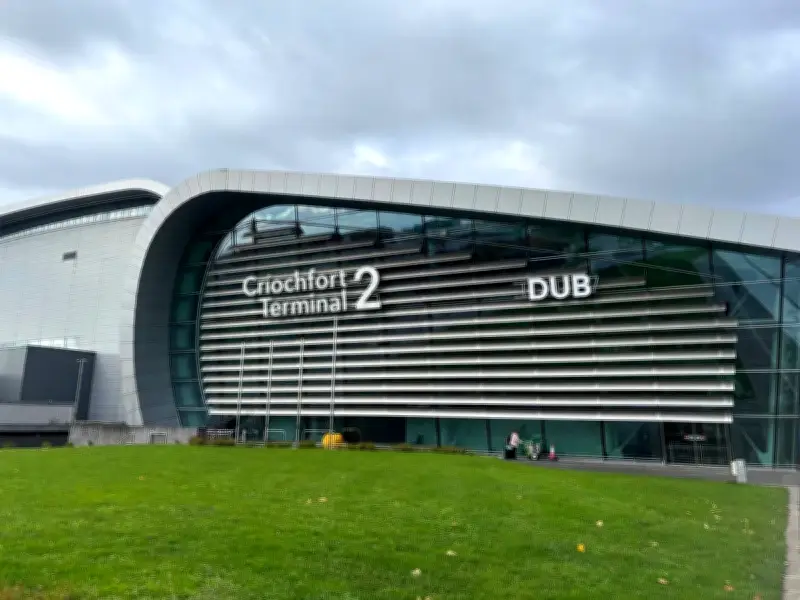
A flight from Dublin Airport bound for Rome was also redirected to a military air base in France, where a subsequent search revealed nothing of concern.
Widespread Alerts Across Europe
At least a dozen flights across Europe were confirmed to have been targeted with bomb threats on Thursday, including services from Copenhagen, Helsinki, Madrid, Milan and Warsaw.
EasyJet confirmed that two of its flights — one departing from Newcastle and another from Glasgow — were met by police upon landing in Prague as a "precautionary measure due to a security-related matter". Passengers disembarked both aircraft without incident, the airline stated.
A Heathrow spokesperson said: "Safety and security are our top priority. There are robust UK aviation security standards in place to assess and safely manage these types of situations.
"Upon receiving the threat, a multi-agency response is initiated to assess the information and determine the response. The threat received today was deemed not credible and there was no risk to passengers, colleagues or the aircraft at Heathrow."
Threats Linked to Anti-Feminist Group
According to a copy seen by the Associated Press (AP), an email containing a threat targeting Rome-bound aircraft was sent on behalf of a group identifying itself as anti-feminist. The news agency reported that an official from another European airport stated that a threat they received also came from a group identifying itself as anti-feminist and used comparable language. It remained unclear whether the messages originated from the same group, AP added.
The incidents followed a series of hoax security alerts affecting several aircraft earlier this week, including some departing from the UK and Ireland.
Among those affected on Thursday was a Ryanair flight from London Stansted bound for the Bulgarian capital, Sofia, which was diverted and touched down safely in Plovdiv, Bulgaria, according to AP. One Aer Lingus flight from Dublin to Rome was redirected to an airfield in northern France following a bomb alert.
Government and Airport Responses
Transport Secretary Heidi Alexander told journalists she was aware that a "small number of flights" had been disrupted on Thursday. She added: "We do have some of the most robust aviation security systems anywhere in the world and we have established processes for dealing with hoax and malicious threats, and that's what these threats have been." Ms Alexander said the UK took these threats "seriously", adding: "But we understand that these have been malicious hoax threats."
A UK Government spokesperson confirmed that threats reported in the "early hours" of Thursday had been "resolved". "It's right that authorities treat any potential threats seriously – the UK has one of the most robust aviation security systems in the world, with well-tested processes for dealing with any threats, as well as malicious hoaxes, like those we've seen this week. The Met's Aviation Policing Command continues to monitor the situation and liaise with the relevant authorities."
A spokesperson for Birmingham Airport said: "The safety and security of customers and colleagues is always our highest priority. In line with UK aviation security standards, processes were immediately initiated in conjunction with emergency services and partners."
Flight Diversions and Investigations
Graeme McQueen, head of communications with Dublin Airport operator DAA, described Thursday as a "normal day" for the airport. He said: "There are reports of email threats being made to airports and airlines around the world. We've seen those. Obviously, stuff like that is obviously investigated. There was one flight which left Dublin Airport this morning, bound for Rome. It did divert to an airport in Paris. So, other than that, it's a normal day at Dublin Airport."
A statement released by the French prime minister's office confirmed that the A320 aircraft was redirected to the Evreux air base, where it touched down safely. "The 151 passengers and six crew members were brought to safety and the bomb disposal teams intervened," the statement added. Aer Lingus said: "Aer Lingus flight EI402 from Dublin to Rome diverted to Normandy this morning as a security precaution. The flight landed safely and Aer Lingus will work to reaccommodate customers to their final destination as soon as possible."
According to AP, after French authorities were informed of the bomb threat and ordered the plane to land in Normandy, the pilot apparently refused, and two warplanes were sent to escort it to Evreux. Both the pilot and the English co-pilot are being questioned as part of an investigation into what happened, a French regional prosecutor confirmed. An Aer Lingus spokesperson said: "Aer Lingus is aware of the matter and will of course co-operate fully with the French authorities. Clearly the safety of passengers is our priority at all times."
Finnish carrier Finnair confirmed that two of its flights departing Helsinki – one bound for Rome and another for Vienna – had been subjected to "unfounded or hoax" bomb threats on Thursday. Both aircraft touched down at their respective destinations and passengers disembarked without incident, the airline stated. In Rome, the Finnair aircraft was thoroughly inspected and nothing suspicious was discovered, while checks on the plane in Vienna are still ongoing. The flight to Rome had 144 passengers and seven crew members on board, while the Vienna-bound service carried 177 passengers and six crew, the airline confirmed.
WizzAir confirmed two of its flights departing from Milan had been subject to bomb threats on Thursday – one travelling to Bucharest, which touched down safely at its destination, and another heading for Warsaw, which landed safely in Vienna following a diversion. The airline stated it was "co-operating fully with the relevant authorities" and taking "all necessary steps to ensure the safety of everyone onboard". It added: "The safety and security of our passengers and crew remain our highest priority."
The aviation sector has "well-proved mechanisms" in place for handling bomb threats, according to Joji Waites, director of flight safety, policy and regulation at the British Airline Pilots' Association. When an airline receives notification of a threat against an aircraft, this information is forwarded to a panel of assessors who classify it as red (credible), amber (partially credible) or green (not credible), he explained. "Amber is not considered an appropriate assessment if the plane is airborne," Mr Waites noted. "If the threat is assessed as not credible, staff on the plane will not be informed of it. However, when a threat is assessed as credible (red or amber) the flight crew will be informed immediately and they will carry out company procedures for a credible bomb threat."
From the moment the flight crew is notified of a credible bomb threat, the commander of the aircraft – the captain – is in command and will make all the decisions, guided by the appropriate checklist, for the safety of their aircraft. "Usually, if a plane is still on the tarmac, that will mean an evacuation, and if it is in the air, the priority will be to land the plane as soon and as safely as possible. Pilots are highly trained and skilled professionals. Their expertise is invaluable in ensuring passenger safety and keeping aviation one of the safest forms of transport there is."