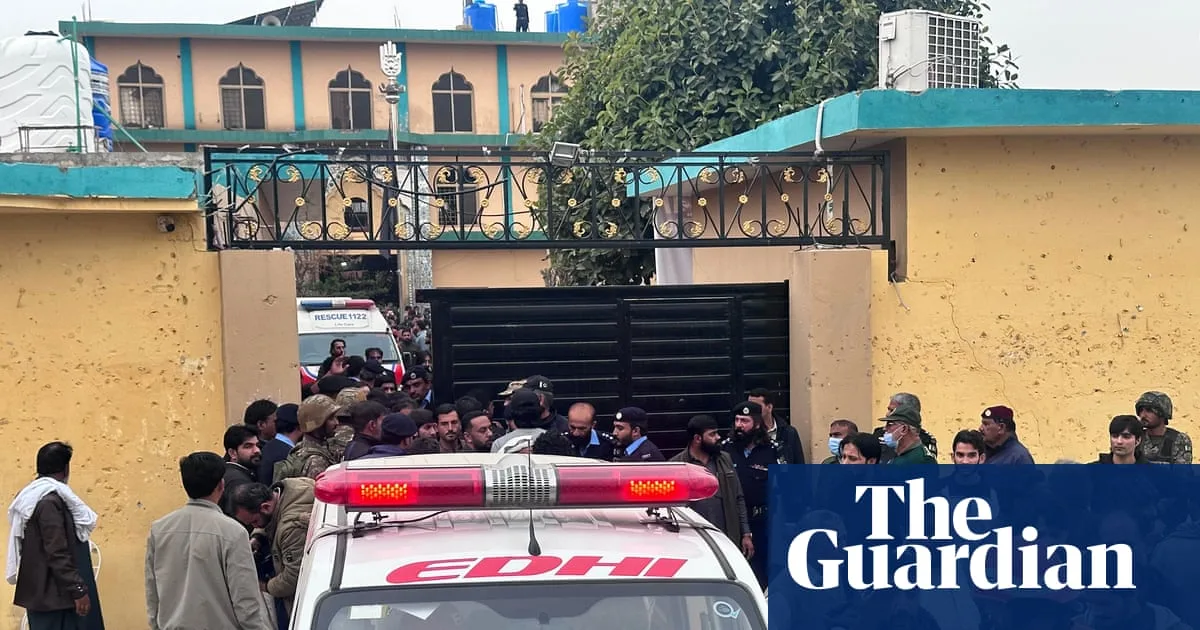
An explosion ripped through a Shia mosque on the outskirts of Pakistan’s capital during Friday prayers, killing 31 people and injuring at least 169 others, according to officials. Police said they were investigating whether the attack was carried out by a suicide bomber.
Hussain Shah, who was praying in the mosque’s courtyard, described the harrowing scene: “I immediately thought that some big attack has happened.” When he entered the mosque, many of the injured were screaming and crying out for help. He counted about 30 bodies inside. Another witness said there were at least two attackers who fired at people before detonating bombs, leaving limbs separated from bodies.
Islamic State claimed responsibility for the attack on its Telegram channel. The militant group has been blamed for previous attacks on Shia worshippers, who are a minority in Pakistan. The attack comes amid a surge in militant violence in recent months, largely attributed to Baloch separatist groups and the Pakistani Taliban.

Pakistan’s president, Asif Ali Zardari, and prime minister, Shehbaz Sharif, condemned the attack and extended condolences to the families of the victims. Zardari called it “a crime against humanity,” while Sharif ordered a full investigation, stating, “Those who are responsible must be identified and punished.” Interior minister Mohsin Naqvi also condemned the attack and urged authorities to ensure the best medical care.
A top Shia leader, Raja Nasir Abbas Jafri, expressed deep sorrow and questioned the performance of law enforcement agencies, saying the attack “raises significant questions” about protecting human lives. He appealed for blood donations as hospitals faced urgent shortages.
Pakistan’s mainstream media faced backlash for initially failing to report the attack, with journalist Nadir Gurmani noting that news was circulating on social media but TV channels did not carry even a single ticker. The bombing occurred while Uzbekistan’s president was on an official visit to Islamabad, several miles from the mosque.