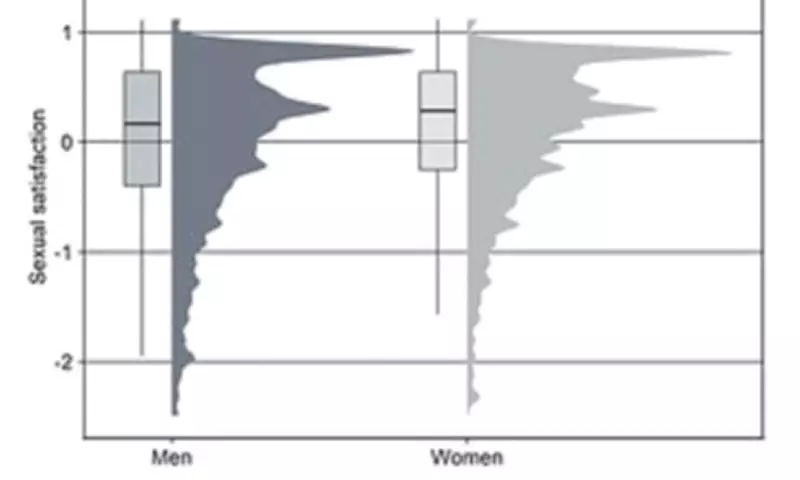
Women Report Higher Sexual Satisfaction Than Men in Romantic Partnerships, Study Finds
A groundbreaking new study has turned conventional wisdom on its head, revealing that women in romantic relationships are more sexually satisfied than their male partners. Researchers from Sweet Briar College in Virginia analysed data from over 10,000 participants across dozens of previous studies to reach this surprising conclusion.
Challenging Prevailing Perceptions
The findings directly contradict widespread assumptions that women face more obstacles to sexual fulfilment. Published in the Archives of Sexual Behavior, the research indicates that despite cultural narratives suggesting otherwise, women actually report slightly greater sexual satisfaction within romantic partnerships.
"The current research joins a growing body of literature suggesting that prevalent perceptions regarding gender differences in sexual experiences are often incomplete," the researchers wrote. "Specifically, despite the prevailing view that women are likely less sexually satisfied than men, the current research suggests that women report slightly greater sexual satisfaction than men in the context of romantic relationships."

The Age and Duration Factor
A closer examination of the data revealed that this gender gap in sexual satisfaction becomes more pronounced among older adults and couples who have been together for longer periods. Researchers suggest this pattern may stem from differing responses to relationship longevity.
Men's sexual satisfaction appears to be more strongly influenced by novelty, meaning their enjoyment levels tend to decline as the initial excitement of a new relationship fades over time. Women's satisfaction, by contrast, shows greater resilience to the passage of years within established partnerships.
Important Caveats and Context
The research team emphasized several important qualifications to their findings:
- The observed differences, while statistically significant, were not especially large
- The findings were not affected by sexual frequency or overall relationship happiness
- Women still report higher rates of pain during sex and fewer orgasms than men - a phenomenon known as the "orgasm gap"
- There remains a possibility that women might be less willing to disclose sexual dissatisfaction than men
Evolutionary psychologist Dr Robert Burriss commented on the counterintuitive nature of the findings: "Ask 10 of your friends that question and most - perhaps all - will answer 'men.' But would they be correct? Contrary to lay assumptions, partnered women were slightly more sexually satisfied than partnered men."
What People Value Most About Sex
The study also examined what aspects of sexual experience people value most highly. The most commonly reported positive elements included:
- Closeness and intimacy
- Specific sexual acts
- The physical pleasure of feeling good
- Pleasing one's partner
- Expressions of love and caring
- Orgasm
- Arousal and excitement
Other valued aspects included calming effects, desire and passion, enlivening experiences, fun and adventure, thrill and rush, novelty, feeling alive, bodily and primal urges, trust, celibacy, post-sex feelings, kink and pain, fantasy and imagination, and considerations around children and procreation.
Broader Implications
Lead researcher Ashlyn Brady told PsyPost: "I hope people take away that social norms and expectations may not always reflect actual experiences among people within society. Although there are many valid reasons why men may be more sexually satisfied than women, that doesn't necessarily mean that they always are."
Dr Brady was careful to emphasize that the findings do not suggest women experience perfect sex lives without obstacles. Rather, they indicate that common assumptions about gender differences in sexual satisfaction may require re-evaluation, particularly as relationships mature and develop over time.
The research adds to a growing body of literature challenging simplistic narratives about gender and sexuality, suggesting that actual experiences within romantic partnerships often defy cultural stereotypes and expectations.