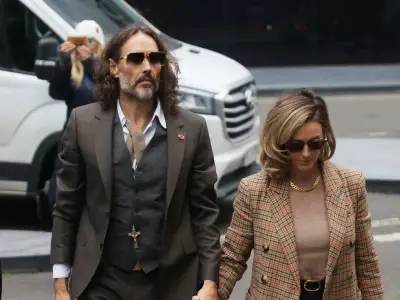
David Walliams was last photographed on October 14, less than a month before he was accused of sexual misconduct. The comedian, who is currently staying at a psychiatric hospital, was spotted enjoying a dog walk followed by a sit-down at a London coffee shop with businesswoman Adrianna Martin.
Almost four weeks later, Walliams, 55, is now facing allegations of sexual assault, grooming and harassment in the workplace. Following an investigation launched by The Guardian and Independent Television News (ITN), Walliams, who attempted to secure an injunction against them, has denied the allegations.
Walliams responds to allegations
"Looking back, I realise that at times I behaved thoughtlessly towards other people I had casual sexual relationships with," the Little Britain star wrote. "And whilst a power imbalance is inevitable when one party is famous, abusing that power is something else entirely and it is something I never did."
"I am not a sexual predator," Walliams declared. "I have not broken the law, but I am devastated that some of the women I met 10 to 20 years ago have now expressed hurt or anger towards me."
Details of the allegations
Among the allegations, Walliams has been accused of sexual assault by a woman he met when she was just 15. In addition, multiple women have alleged that the comedian groomed them as teenagers.
It has also been reported that female staff members at the publishing company HarperCollins were warned of Walliams' behaviour. According to The Guardian, the children's author had engaged in a sexual relationship with a junior member of staff at the company.
HarperCollins cuts ties and injunction fails
HarperCollins, which has since cut ties with Walliams, announced that it would stop publishing his books in September 2026. Walliams, who sought a lifelong injunction last week, had attempted to stop ITN and The Guardian from publishing allegations of sexual misconduct made against him.
His lawyers argued that the story should be blocked because of the risk he would take his own life, after two previous suicide attempts. The judge, Mr Justice Nicklin, dismissed the case on Tuesday 3 November. He explained that an injunction would be "an exceptionally serious interference" to the freedom of the press, while noting that the investigation "concerns matters of substantial public interest".