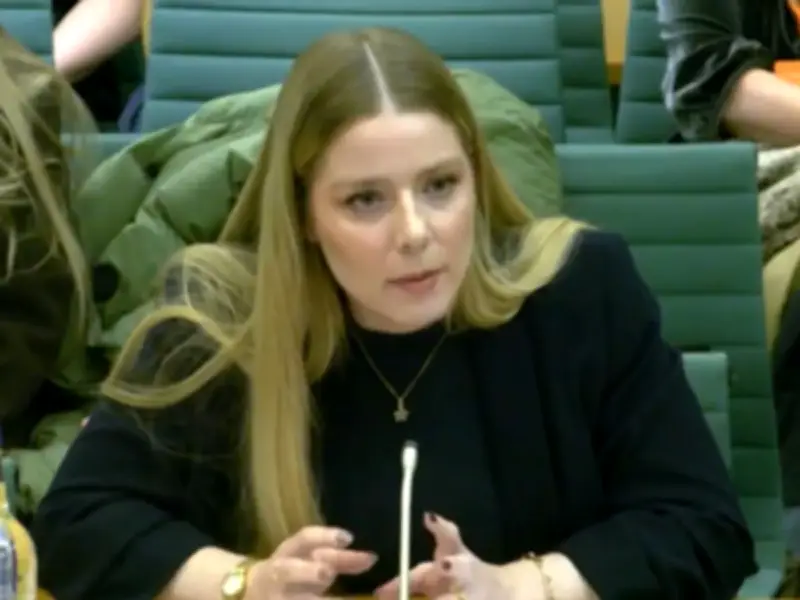
A campaigner who was sued by a man she accused of sexually assaulting her and raping her twin sister has called on MPs to stop women being silenced by wealthy individuals.
Verity Nevitt warned that current laws permit "the ultimate form of gaslighting". She told a cross-party committee that facing a lawsuit is "maybe in some ways worse than the rape itself" as she described her ordeal.
Lawfare and the 'reversal of reality'
Ms Nevitt, who set up campaign organisation the Gemini Project for survivors of sexual violence, said lawfare by wealthy individuals creates a "reversal of reality". MPs were told there had been an "avalanche" of lawsuits in recent years on behalf of people accused of sexual misconduct.
She said the government must act to tackle so-called SLAPPs - Strategic Lawsuits Against Public Participation - designed to censor, intimidate and financially and physically exhaust survivors. Ms Nevitt said: "It felt like the truth didn't matter. I went into the case thinking that the truth would prevail, and at the end of it, it just felt like it didn't matter at all. It didn't matter what we were saying was the truth and we should be able to speak about that - it just became a question of costs."
A settlement and its aftermath
She and her sister reached a settlement in 2020 allowing them to speak about their experience as long as they did not name their alleged abuser. They shared their story online after police decided not to take further action - but wanted to warn others about the man.
Ms Nevitt told the committee: "When you experience rape or sexual assault, choice is taken from you. And being subject to a SLAPP replicates those dynamics, in the sense that you have no choice but to be subject to it."
After the sisters shared the allegations online, the man took legal action accusing them of misuse of private information, harassment and defamation. Ms Nevitt said: "I think SLAPPs allow a flipping of the script where the perpetrator is presented as a victim of wrongdoing, and then the victim-survivor is presented as the aggressor by being made a defendant. It's an egregious reversal of reality and it's the ultimate form of gaslighting."
Impact on survivors
She added: "Facing a SLAPP is maybe in some ways worse than the rape itself. You are questioned, you have to hand everything over, it's very exposing, also kind of having to detail your trauma online in order to raise costs via crowdfunding platforms."
She revealed that 47% of survivors who responded to her organisation's research had thought about ending their lives. Ms Nevitt read out testimonies from women who had faced similar legal actions. One said: "Throughout the case, I was constantly reminded of my abuse when writing statements, liaising with my legal team, crowdfunding for legal fees, and during court appearances. It extended and exacerbated the trauma I experienced when I was sexually assaulted. All I wanted to do was to move on and to heal, but I couldn't get away from it. It was an inescapable, unrelenting, pervasive intrusion into my life, and I had no choice in being subjected to it."
Another survivor said: "The terror from threat of legal proceedings was harder to deal with than the rape itself. It is a threat with no endpoint."
Calls for government action
Ms Nevitt said there is no way of telling how prevalent such cases are. She told MPs: "I think it's almost impossible to get a sense of the scale because it's so hidden. I think the nature of these proceedings means that it's very hidden."
Barrister Jennifer Robinson told MPs that Ms Nevitt's experience is "common in my experience of working with women who want to speak out". Ms Robinson said she had written a book named Silenced Women sharing her frustrations about the "avalanche" of litigation and legal claims. She told the committee: "I think the question I get from women a lot is: 'How can he sue me? It's true.' And my response to them is: 'Well, the point is you need to be able to prove it in court, and to be able to prove it in court, it is incredibly expensive.' And so what we're seeing is just the mere threat of a defamation letter, for most women, this would basically put them at risk of bankruptcy. And so what does free speech mean if you can't defend it?"