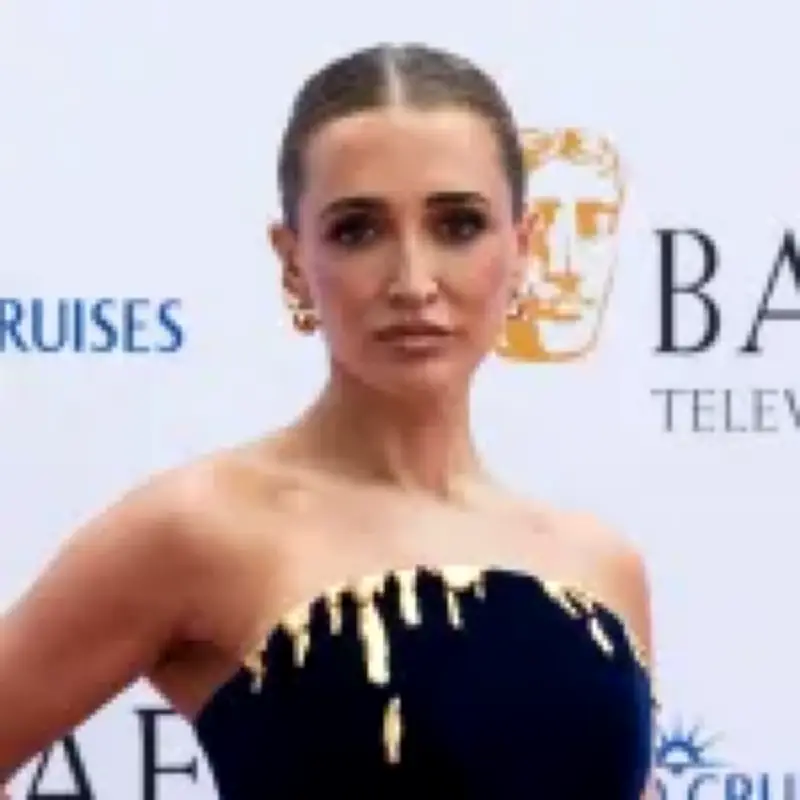
British media personality Maya Jama has revealed that someone deepfaked nudes of her and circulated them online. 'Someone did get my bikini pictures a couple of years ago and they edited them so they looked like nudes,' she told The Observer. Her own mother and friends initially believed they were real. Earlier this year, Maya posted that she found 'the internet is scary and only getting worse' in relation to deepfaked content of herself.
Georgia's Law campaign
Former Love Island star Georgia Harrison, who has become an advocate for fighting deepfakes and image-based sexual abuse, is calling for a new law: Georgia's Law. It's intended to help anyone in a situation like Maya. She told Jimmy's Jobs of the Future podcast, which has hosted the likes of former PM Keir Starmer, that she wants to introduce a 'kill switch' on social media, to immediately remove content while it's reviewed.
Her desire to introduce this law stems from being secretly filmed by her ex Stephen Bear while they had sex, six years ago. Then, he posted it to his OnlyFans account and within a matter of days it was everywhere. Stephen was convicted of voyeurism and two counts of revenge porn, and spent 10 and a half months in prison, before being released in January 2023. But, the explicit video is still readily available online.
Current law and its limits
As it stands, any non-consensual intimate images must be taken down within 48 hours, after the Crime and Policing Act 2026 was passed on April 29. If platforms fail to comply they could face fines of up to 10% of their revenue — pretty hefty considering Meta alone made £149 million in revenue in 2025. Companies could also be blocked from operating in the UK.
At the time the Act was introduced, Georgia told Metro it was a 'vital step forward in protecting women and girls from intimate image abuse,' but she believes it's still not enough. On the recent podcast, she says: 'At the moment there is a law that basically says that intimate image abuse has to be taken down within 48 hours. As a girl who has experienced what can happen in that two days, I just don't think it's good enough. And our current government have already said they want to treat intimate image abuse as importantly as terrorist content, as well as child pornography. So why are they not doing so?'
'I'm still having absolute floods within my inbox of people every single night at three in the morning, desperate because their content is up on some sort of a platform and no one is answering them.' Georgia added that you typically get an email or form from certain tech companies saying they're 'working on it' when you report image-based abuse on their platform. But she suggests implementing a law that means the content has to be on 'pause' while it's reviewed.
Victims' experiences
'I want to have a kill switch,' she says. 'So, if there's intimate image abuse, you report it, it gets paused. Instead of the victim having to fill out a form about how it's unconsented, the perpetrator should have to fill out a form to explain that it is. And if it is, then it goes back up, but it shouldn't be on the victim.'
It would help women like Jodie*, who previously told Metro a friend found explicit images of her on X advertising sex work back in 2020. 'I got in touch with the police and said this account was using my real name, real location, identifying information about who I am and where I live,' Jodie recalled. But the police told her 'these things happen' and that they couldn't help. Then, just months later, an anonymous email directed her to a chat forum where she found countless fake sexually explicit images of herself.
'Any situation you can imagine, there were photos of it,' Jodie explained. 'They had been taken from my Instagram (which was private) and had been deepfaked. I completely broke down. It was the single worst day I'd experienced, with this feeling of total shock and dread, thinking: "Who else could have seen these? Do people think they're real? How do I explain this to my parents, my boyfriend, my work?" It was sheer panic, trying to work out how to get them down.'
To this day, Jodie doesn't know if all the sexually explicit fake images of her have been erased from the internet. The perpetrator got a six month suspended prison sentence, and had to pay her £100 compensation, along with community service and court-mandated sexual rehabilitation therapy. He wasn't put on the sex offenders register.
Ever since, Jodie, like Georgia, has campaigned for stricter laws to be implemented and her 73,000 signature strong campaign, alongside the End Violence Against Women Coalition, Revenge Porn Helpline, survivor-campaign group #NotYourPorn, and world-leading expert Professor Clare McGlynn, was instrumental in the 48-hour legislation. But Jodie also believes 48 hours is too long. 'I think tech firms have the capability to do it quicker,' she said. 'Ultimately those images being online is where the harm lies — knowing they can be copied and saved and redistributed. Victims are less bothered about a platform being given a fine, and more worried about their images coming down.'