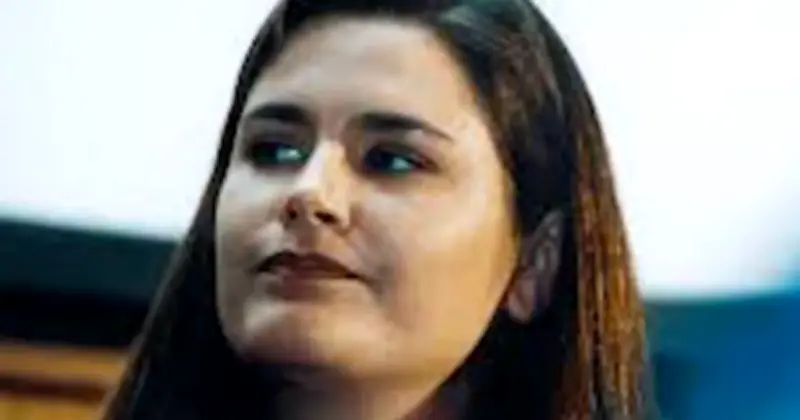
Alison Botha, who survived a horrific gang rape and disembowelment in 1994, has called on South Africa's government to show the same urgency it displayed during the Covid pandemic in tackling the country's gender-based violence crisis.
Botha was 27 when she was abducted, gang raped and disembowelled by two men in Port Elizabeth. She survived against overwhelming odds and later gave birth to two children.
A Nation in Crisis
According to the nation's latest crime statistics, nearly 600 women were murdered in South Africa between July and September 2026. This figure includes 13 women whose partially naked and bruised bodies were discovered dumped in public spaces around Johannesburg, sparking nationwide fury and putting pressure on police to apprehend the perpetrators.
In a Facebook video, Botha said: "I was lucky enough to survive what happened to me, but these women, like so many others in our country, were not so lucky. I was abducted by two men, sexually assaulted and left for dead."
She added: "I went on to talk about what happened to me in the hope that it would help the situation. We are over 30 years later, and the gender-based violence crisis in our country is no better - in fact, it's worse."
The Night of the Attack
Botha recounted the night of December 18, 1994, when she was returning home after an evening with friends. As she reached for her laundry on the passenger seat, a blonde man forced his way into her car. Frans Du Toit, the son of a police officer, threatened her life while claiming he simply needed the car for an hour.
After travelling a considerable distance, Du Toit picked up Theuns Kruger, who got into the car. The pair drove to a wooded area, where they sexually assaulted Botha. Du Toit then strangled her into unconsciousness and slashed her throat 16 times, leaving her nearly decapitated.
Botha said she "could hear the flesh slit" and described how her "head had flopped backwards and almost rested between my shoulder blades." She also sustained more than 50 stab wounds to her abdomen, and her intestines were protruding from the wound.
Survival and Aftermath
Despite her catastrophic injuries, Botha dragged herself to the middle of the road and lay across it horizontally, forcing drivers to stop. She was discovered at 2.45am, meaning her ordeal had lasted just an hour and a half. A vet named Tiaan Eilerd, who was at a bar with friends, checked her vital signs and tucked her thyroid back into her throat, an action Botha later described as a "lifeline".
Both men, who identified as Satanists, pleaded guilty to charges of kidnapping, rape, and attempted murder. In 1995, they were handed life sentences without the possibility of parole.
However, on July 4, 2023, Du Toit and Kruger were released on parole after serving just 28 years of their life sentence, without any notification to Botha. Taking to her Facebook page, she voiced her shock: "The day I hoped and prayed would never come. When I was asked 'How will you feel if they ever get parole?' – my immediate answer was always – 'I'm hoping I'll never find out.'"
Botha has chronicled her ordeal in her book "I Have Life" and the film "Alison", which made its debut in August. She has spoken to hundreds of people, inspiring them with her story. Marking the release of her film, she said: "I have always hoped that by sharing my own journey with others, it would give them hope and courage for their own. To have my story and ultimate triumph shared on screen, would mean that so many more people would see the power of choice that we each have; and might also choose to triumph over life's hardships."
In recognition of her dedication to inspiring others, Nelson Mandela Metropolitan University bestowed upon Alison Botha the Council Prestige Award.