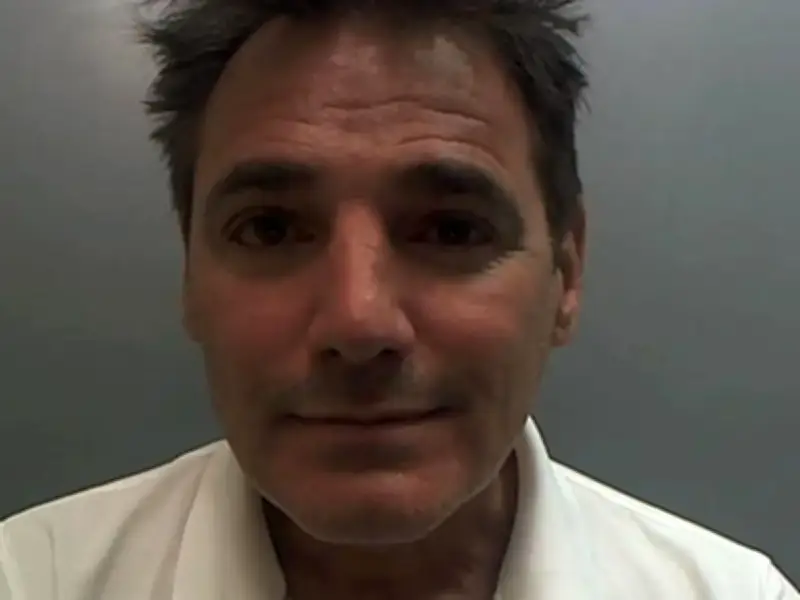
A Wilmslow man who continued to lend money illegally after being convicted has been jailed for two years and four months. Craig Lapenna, 65, admitted illegal money lending and breaching an earlier suspended sentence at Minshull Street Crown Court on Friday, November 27.
Judge Jason MacAdam sentenced him to a year for the latest offence and activated the suspended term, meaning he will serve a total of two years and four months. The court heard his victims had been left anxiety-ridden and suicidal, with one borrower claiming Lapenna "destroyed people's lives".
Continued lending after arrest
Lapenna was first arrested at his home in Torkington Road in May 2017 following an investigation by the England Illegal Money Lending Team (IMLT), working with Cheshire East Council Trading Standards and Cheshire Constabulary. The investigation found that between January 2015 and April 2018, around £1.8m had been paid out of accounts belonging to Lapenna and his wife, while more than £4.3m had been received.
He admitted 19 counts of illegal money lending and one count of money laundering relating to offences between January 2015 and October 2017. He was sentenced to a year and four months, suspended for two years. Further investigations revealed he had continued lending money following his arrest and conviction, with around £440,000 paid out after his 2017 arrest.
Recruiting a former borrower
Prosecutor Richard Barraclough KC, representing the IMLT, told the court Lapenna had enlisted the help of former borrower Nargis Chaudhary to continue the operation and avoid detection. Chaudhary, 47, was responsible for providing loans and managing repayments through her personal bank accounts. She was arrested by IMLT officers at her home on Holme Road, Didsbury, in January 2020. Officers found paperwork and a business agreement between her and Lapenna, indicating she had been issuing loans with financial support from him.
Chaudhary admitted illegal lending and was sentenced by Judge MacAdam in June this year to a 12-month community order, with 15 days of rehabilitation activity and 150 hours of unpaid work.
Attempts to avoid regulation
The court heard Lapenna had previously held a licence as a credit broker and knew he needed authorisation from the Financial Conduct Authority to lend money. He did not have the required authorisation. In an effort to avoid the regulations, a number of loans were made out to be just over £25,000, for example £25,001, as business loans over £25,000 are not subject to the same regulations as smaller private loans.
One business took four separate loans totalling around £43,000. Lapenna asked the owners to say it was one large loan so that it fell within the exempt area of being a business loan over £25,000. Another business owner was offered £25,100 to avoid regulations, to be repaid with interest of £10,000. When the borrower couldn't pay, Lapenna took over the sale of her house, which was on the market for £725,000. He instructed a builder, but the work was poor and within a year the house was derelict. Lapenna said he had carried out work worth £80,000 and the loan for £25,000 was now £60,000. The house had been her pension. She became suicidal and contacted the IMLT.
Sentencing remarks
Sentencing Lapenna, Judge MacAdam said: "This offending is serious. It's profiteering from others' economic hardship, taking advantage of vulnerable people." He added: "There was no defence, you were bang to rights. The only thing you could do was delay proceedings. You only pleaded guilty when you'd played every other card." The judge said he did not accept Lapenna was unaware of the regulations governing money lending, adding: "The simple fact is that you are thoroughly dishonest."
Mr Barraclough told the court: "Lapenna acted in cynical contempt of the court and the suspended sentence imposed. He caused mitigation to be submitted to the court which was utterly disingenuous. This contempt was but a continuum of his contempt to regulatory enforcement starting with his continuing the business after his 2017 arrest and the agreement he made with Chaudhary."
Reading a victim impact statement from one borrower, Mr Barraclough told the hearing: "I became scared to answer my phone. I found myself looking over my shoulder. Even all these years later I still have a lot of anxiety." One borrower said after the sentencing: "He invested in my business, and was so charming, it did feel like he was helping me at the time. But as time went on it got worse and worse, he was so calculating and manipulative, I have ended up massively out of pocket. It was such an awful time. I should be retiring now with money to spare, but instead I am in debt. It has been devastating."
Another borrower said: "When I first found out about what he was doing I was angry, upset and distraught. We had constant messages from him saying we had destroyed his life. I was scared to answer the phone, I felt threatened, I wasn't sleeping and I was worried he would turn up unannounced. He thinks he's helping people but it's nonsense, it's him who is destroying people's lives and he can't be allowed to keep doing that. I feel quite lucky compared to others, but I still can't believe I got caught in this. I am a lot less trusting of people now."