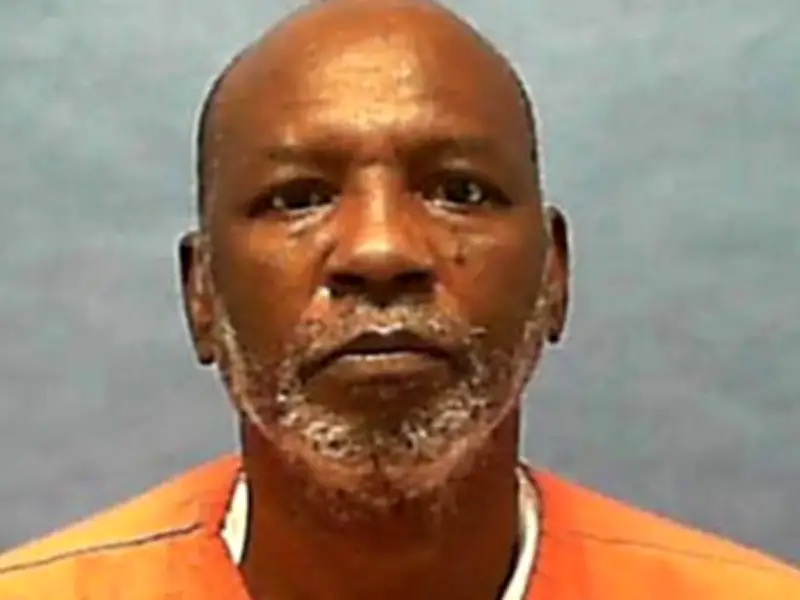
William Reaves, a 77-year-old Vietnam War veteran, was executed by lethal injection in Florida on Tuesday for the murder of a police officer. He received a three-drug injection at Florida State Prison near Starke at 6.12pm local time (9pm UK time) and declined to say any last words.
Reaves was sentenced to death for the 1986 killing of Indian River County Deputy Richard Raczkowski. The execution was the 18th of the year in Florida under Governor Ron DeSantis, whose aggressive use of the death penalty has drawn attention after Christa Pike survived a lethal injection in Tennessee.
Appeals and PTSD Argument
Reaves' defence lawyers had argued that jurors who recommended the death penalty were never told that the US Department of Veterans Affairs rated him as 100% disabled by post-traumatic stress disorder caused by his Vietnam War service. More than 100 veterans sent DeSantis a letter on Monday asking him to stop the execution, but the US Supreme Court rejected Reaves' final appeal without comment on Tuesday afternoon.
The 1986 Shooting
Court records show that Raczkowski responded to a 911 call at a Vero Beach convenience store in September 1986. Reaves acknowledged placing the call from a payphone outside the store. During their conversation, a gun fell from Reaves' shorts, and the men struggled over the firearm. Reaves regained control and shot Raczkowski four times in the back as the deputy tried to run away. Raczkowski later died from his wounds.
Reaves was initially convicted and sentenced to death about a year after the shooting, but the Florida Supreme Court reversed the conviction due to a conflict of interest with the prosecutor. He was retried and again sentenced to death in 1992, and subsequent appeals were unsuccessful. The Florida Supreme Court rejected his final appeals last week.
Execution Method and Context
Reaves' lawyers also challenged Florida's execution method, which uses a sedative, a paralytic, and a drug that stops the heart. The court has previously upheld this protocol, which differs from the single-drug injection used in Tennessee, where Pike survived two doses of pentobarbital last month. Pike, sentenced to death for killing 19-year-old Colleen Slemmer in 1995, became the first person to survive a lethal injection.
The Tennessee Department of Correction has not said what went wrong, and Governor Bill Lee paused further executions pending a review. Medical experts suggested possible causes, including drug quality issues or IV line placement causing the drug to pool in tissue. Pike was hospitalized and put on a ventilator, but woke up and was discharged on October 10 before being returned to prison.
Reaves was Florida's eighth prisoner over the age of 70 executed this year, highlighting the nation's ageing death-row population. Florida set a state record with 19 executions last year, and another execution is scheduled for November, which would tie that mark. DeSantis, who leaves office in January, has said his goal is to bring justice to victims' families who have waited decades for death sentences to be carried out.