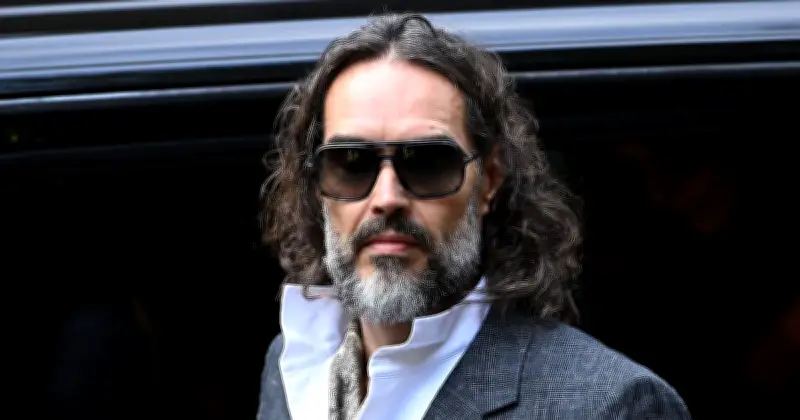
Russell Brand has been warned he could face serious consequences in prison after his wife shared a message in which he insisted he was innocent of the crimes he was jailed for. The disgraced comedian, 51, was sentenced to 10 years and six months in prison after being found guilty of raping one woman and sexually assaulting three others.
On Sunday, his wife Laura read out a message from him during their YouTube podcast, Sunday Service, in which he denied the offences and spoke about life at HMP Littlehey in Cambridgeshire.
Brand said: "As you know, I am not guilty for the offences I have been jailed for, so something strange is happening." He also questioned whether other prisoners could be innocent, saying: "I don't know which other men here are not guilty, and the ones that are, they are people that Christ died to save, like you and me, let us all love, pray for, and forgive one another as God forgave us."
Lawyers Assess the Risks
The comments have raised questions about whether Brand could face restrictions while serving his sentence. Criminal lawyers have spoken exclusively to the Express about what his message could mean for his future behind bars and when he might be released.
Marcus Johnstone, managing director of PCD Solicitors, is a criminal defence lawyer with more than 20 years of experience who has worked with prisoners convicted of serious offences, including at HMP Littlehey. He told the Express: "Russell Brand's broadcast via his wife protesting his innocence and referencing others in Littlehey was extremely ill-advised. He should be keeping his head down. Instead, he has upset the Government, his victims and potentially embarrassed the prison governor in charge of Littlehey, which could be hugely problematic for him."
Mr Johnstone warned that Brand could face several problems if he continues making public statements. He said: "Firstly, there are steps the Government could take if he is receiving proceeds from his crime."
Potential Civil Claims and Governor's Powers
"Secondly, his victims may be more inclined to press civil claims against him if he continues to show no remorse for his behaviour."
"Thirdly - and perhaps of the greatest consequence to him in the short term - is that he risks upsetting the governor in charge of Littlehey, who has a lot of power over his future incarceration."
The solicitor said it was not unusual for convicted sex offenders to continue denying their crimes, but questioned the way Brand had chosen to do so publicly. He said: "Whilst it is not unusual for convicted sex offenders to protest their innocence and not accept the verdicts against them, for Russell Brand to do this in this way, as he has, and to further suggest there are Littlehey inmates who may also be 'innocent', is deeply undermining of the criminal justice system."
"Mr Brand's rights to freedom of expression should be curtailed now that he is a convicted prisoner and he doesn't have a free rein in saying what he wants. In my view, his comments sailed very close to the wind."
Release Date and Parole Board Role
Despite those warnings, Brand's current sentence means he is expected to be automatically released after serving two-thirds of his time in prison. Mr Johnstone explained: "Russell Brand was given a determinate sentence of 10.5 years in total. As such, he is automatically entitled to release after two-thirds of the sentence, or seven years."
He said the situation would have been different if Brand had received a life sentence or been classified as a dangerous offender. Mr Johnstone added: "Interestingly - and, as many may feel, incredibly - the judge did not regard Brand as a dangerous offender. Had the judge assessed Brand as dangerous, he would be subject to the Parole Board approval for release after seven years."
He explained that, in such circumstances, the Parole Board could have kept Brand in prison until the end of his sentence if it believed he remained a risk.
Future Offences and Post-Release Supervision
The solicitor also warned that Brand's position could change if he were convicted of further serious offences. He said: "If Brand is charged and convicted of further serious offences, he will face the real prospect that any new sentence reflects the true seriousness of his offending - and may result in a life sentence, with a tariff being set by the judge, or a finding that Brand is, in fact, a dangerous offender. In either event, the Parole Board would then have the final word as to any future release date."
Sumita Mahtab, a criminal barrister at Church Court Chambers, also explained that Brand's continued denial of guilt would not affect his release under his existing sentence. She told the Express: "As Mr Brand received a determinate sentence of 10 years and six months, rather than a life sentence or an extended determinate sentence, his release is not subject to approval by the Parole Board."
"He will therefore be automatically released after serving two-thirds of his sentence, expected to be around May 2033, regardless of whether he maintains his innocence or demonstrates remorse for his convictions."
However, Ms Mahtab said Brand would still face restrictions after leaving prison. She added: "Upon release, he will remain under the supervision of the Probation Service and be subject to licence conditions until the end of his sentence, expected to be around May 2037. Any breach of those conditions could result in his recall to prison."
Nick Brett, a partner at Brett Wilson LLP, explained that Brand was given a fixed prison sentence and must serve two-thirds of it, rather than half, because of the offences he was convicted of. This means he is expected to spend around seven years behind bars before being released on licence.
Mr Brett told the Express: "His release is therefore not subject to a parole decision, meaning that his continued protestations of innocence will have no bearing on when he is released. Following his release, his probation officer may impose conditions on his licence."
He also explained that the Parole Board generally becomes involved when prisoners are serving indeterminate sentences, including life sentences. Mr Brett added: "In these cases, release is determined by an assessment of the risk posed to the public after the prisoner has served a minimum period of imprisonment, known as a tariff, which is set by the court."