Ryan Routh Sentenced to Life for Attempted Assassination of Donald Trump
Ryan Routh, the man convicted of attempting to assassinate former President Donald Trump, has been sentenced to life imprisonment. The 59-year-old was found guilty last September on five criminal counts, including attempted assassination, after a trial where he chose to represent himself despite having no formal legal training.
The Fort Pierce Sentencing
US District Judge Aileen Cannon handed down the sentence in Fort Pierce, Florida, on Wednesday. Prosecutors had argued vigorously for a life sentence, stating in court filings that Routh's actions "undeniably warrant a life sentence" due to months of meticulous planning, his willingness to kill anyone who interfered, and his apparent lack of regret or remorse.
Despite facing a judge appointed by Trump, Routh requested a 27-year term instead. In his own court filing, he denied any intent to kill Trump and offered to undergo psychological treatment for a personality disorder while incarcerated. He contended that jurors were misled because he was unable to present an adequate legal defence.

The September 2024 Incident
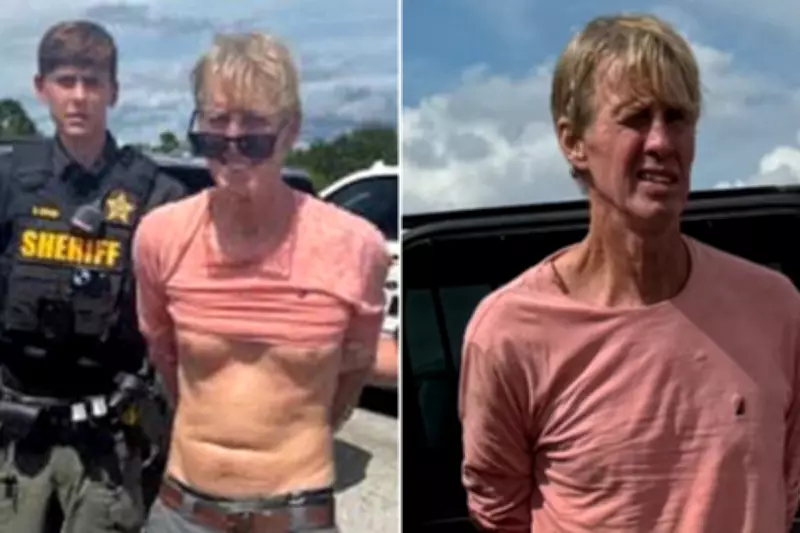
The attempted assassination occurred on September 15, 2024, when Secret Service agents discovered Routh concealed in bushes just hundreds of yards from where Trump was golfing at the Trump International Golf Club in West Palm Beach. Routh fled the scene, abandoning an assault-style rifle, but was subsequently apprehended by authorities.
Prosecutors detailed how Routh had arrived in South Florida approximately a month before the incident, residing at a truck stop while meticulously tracking Trump's movements and schedule. Trial evidence revealed he carried six mobile phones and employed false identities to obscure his presence. On the day of the attempt, he lay concealed in thick bushes for almost 10 hours.
Evidence and Trial Proceedings
Investigators at the scene recovered significant evidence including:
- The assault-style rifle
- Two bags containing body armour-like metal plates
- A video camera aimed at the golf course
Routh was also convicted of three illegal firearm possession charges and one count of impeding a federal officer during his arrest. His recent residences included Hawaii and North Carolina before the Florida incident.
During the trial, Routh's rambling opening statement delved into subjects such as the origin of the human species and the settlement of the American West. Judge Cannon eventually cut him short, cautioning him against making a mockery of the court. His defence centred on his self-proclaimed nonviolent nature, yet he offered minimal challenge to the extensive evidence presented by numerous law enforcement witnesses.
Prosecution's Case and Aftermath
Prosecutor John Shipley informed jurors that Routh's plot was "carefully crafted and deadly serious," adding that without the Secret Service's intervention "Donald Trump would not be alive." Following the jury's verdict, Routh reportedly attempted to stab himself multiple times with a pen and had to be restrained by US marshals.
His daughter, present in court, reportedly shouted that her father had harmed no one and vowed to secure his release. Trump himself praised the verdict on his Truth Social platform, stating: "This was an evil man with an evil intention, and they caught him."
Political Context and Previous Attempts
This incident marked the second assassination attempt on Trump within two months. It followed an earlier incident two months prior, when a bullet fired by a gunman grazed Trump's ear at a campaign rally in Butler, Pennsylvania. Both events unfolded in the lead-up to the November 2024 election, which saw Trump return to the presidency after his defeat by Democrat Joe Biden four years earlier.
Trump, a Republican, subsequently leveraged these attempted assassinations as a campaign issue, asserting that the US Justice Department under President Biden could not be trusted with such investigations. The case has drawn significant attention due to its political implications and the unusual circumstances of Routh's self-representation during the trial.