The High Court has been told that murderer Glyn Razzell is a "deeply deceitful individual" and that the Parole Board's decision to release him should be reversed.
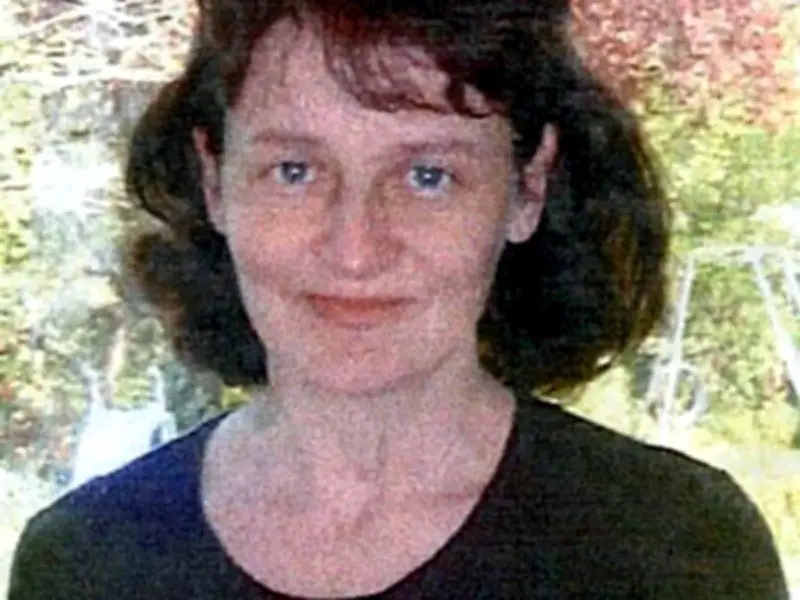
Razzell was jailed for life with a minimum term of almost 16 years in 2003 after being convicted of the murder of his estranged wife Linda Razzell, who was originally from Llanybydder in Carmarthenshire. Mother-of-four Mrs Razzell disappeared on her way to work at Swindon College in Wiltshire in March 2002 amid divorce proceedings, and no trace of her body has ever been found.
Having refused Razzell parole three times since 2019, the Parole Board decided he could be released into the community in April after considering Helen's Law. The law, named after Helen McCourt, who vanished on her way home from work in 1988, requires the Parole Board to take into consideration a killer's refusal to reveal where they hid their victim's body.
Parole Board's Decision
In its decision, the Parole Board panel said it had "serious doubts" about Razzell's honesty and that there was a "very significant" risk in the context of relationships, but said this was "not imminent". It found that he would comply with licence conditions as he was "strongly motivated not to return to custody".
The Ministry of Justice (MoJ) has referred the decision to the High Court, claiming the board did not assess Razzell's risk properly. Razzell, formerly of Crewkerne, Somerset, is resisting the bid to challenge his release on licence, with his lawyers claiming that the Parole Board was correct.
He initially sat behind his barrister wearing a dark suit and tie, but shortly before the hearing began moved to sit in the dock in the courtroom in London.
MoJ's Challenge
Tristan Jones KC, for the MoJ, said Razzell is held in an open prison and has been compliant with conditions, including when released on licence for short periods. He also said Razzell had made a "degree of progress" and that professionals who worked with him supported his release, acknowledging the case involved "difficult judgments".
But he continued: "Mr Razzell is a deeply deceitful individual who carried out a campaign of violence against Linda, some of it witnessed by their children, and then planned and carried out her murder."
Mr Jones also said the Parole Board's report "loses sight of the fact that he has not been honest or transparent". He also said that proposed licence conditions, including wearing a tag for a year and living at an approved premises, "cannot fully address the risks" Razzell poses.
The court was also told that Razzell has been involved in a documentary about the case and continues to operate a website. Mr Jones said: "He is so attached to his narrative of innocence that he is willing to continue inflicting pain on the victims. He does not come before you as someone who is doing all he can to not cause others harm."
In written submissions, Mr Jones said there was a "more than minimal risk" that Razzell would commit further offences of violence against intimate partners.
Razzell's Defence
Razzell has always denied being responsible for the killing, with a Parole Board panel finding in 2023 that he "does not want to lose his desired status of being a 'wrongly convicted murderer'". In its decision earlier this year, a Parole Board panel said it was "unconvinced, to say the least, by much of what Glyn Razzell says about himself".
But it continued that Razzell had demonstrated that he "can comply with controls placed upon him for the protection of the public", adding: "The only identifiable risk he presents, and it is plainly a very significant one, is within the context of relationships, and is therefore not imminent."
The MoJ can refer a Parole Board's decision to release a prisoner to the High Court if it believes the release would undermine public confidence in the parole system, and the court must be satisfied that imprisonment is no longer necessary for the protection of the public.
Matthew Stanbury, for Razzell, told the court in written submissions that the Parole Board's decision was "detailed and thorough", and that the MoJ's case "comes close to treating denial as conclusive to risk". He said: "The claimant's case is predicated on wrong assumptions or assertions that the defendant's denial of his offending, and attendant non-completion of offending behaviour programmes, are a bar to release. Both factors were properly considered and weighed by an experienced Parole Board panel which considered the countervailing factors and matters in the round. There is no, or no sufficiently cogent, basis for departing from the panel's decision."
The hearing before Mrs Justice Cheema-Grubb is due to conclude on Tuesday.