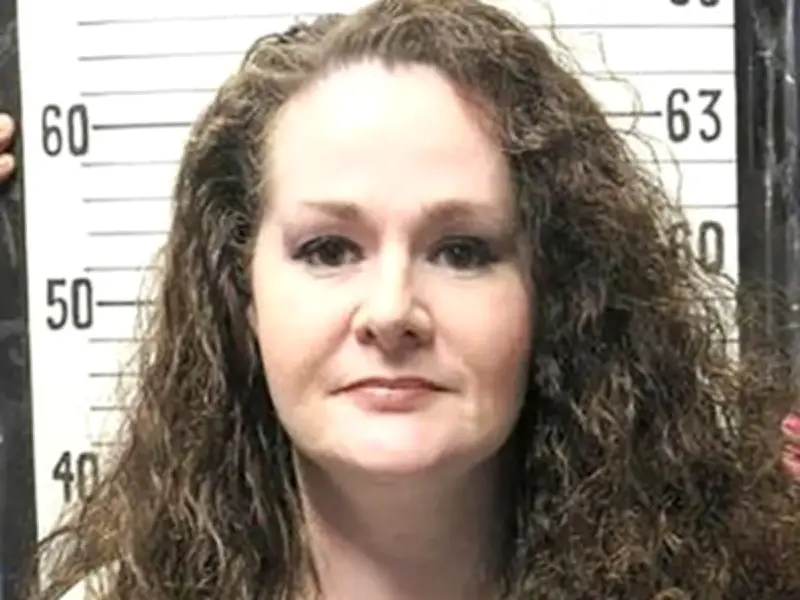
A court document filed Thursday (October 22) reveals that a member of the execution team in charge of Christa Pike's care had warned that some of her veins may have ruptured or “blown” during the failed execution attempt. The Tennessee execution team members failed multiple times to establish working IV lines in both of Pike’s arms.
Details from the Court Document
According to the court document, attorney Randy Spivey wrote that the IV team went through about 10 needles and tried several IV sites on both arms. The document provides the most detailed account of what happened during the botched execution of Pike. The team also struggled to push saline through the last IV site they established, Spivey wrote.
The execution team began trying to place the two IVs required by Tennessee’s execution protocols at 6:34 p.m., Spivey wrote. When they struggled, Pike helped, advising them to look in her upper arm for a viable vein. They managed to set an IV in Pike’s right arm within about 6 minutes, but it took them nearly an hour to complete the same process in her left arm.
Pike's Condition and Hospitalization
Pike, 50, was hospitalized after surviving two doses of pentobarbital as the state tried to execute her on Sept. 30 for the 1995 stabbing death of classmate Colleen Slemmer. She was 18 when she tortured and killed Slemmer with her boyfriend, becoming one of the youngest women to be sentenced to death.
After being taken to a hospital, Pike was on a ventilator for several days. At one point, her attorneys did not expect her to survive. She ultimately regained consciousness and returned to prison after being discharged.
Reactions and Legal Proceedings
The failed execution has brought renewed scrutiny to how Tennessee carries out death sentences. The court document was part of a separate legal proceeding in which people on the state’s death row are challenging Tennessee’s lethal injection procedures.
“Our predictions about the likelihood of botched executions have come true — and will continue to come true — without substantial change,” Kit Thomas, an attorney representing people on death row in the case, said.
Spivey called fellow attorneys at 8:22 p.m. and asked them to stop the execution because a third dose of pentobarbital isn’t authorized under the state’s protocol. He then went back to the witness room and told the deputy attorney general that Pike needed immediate medical care. Spivey was told an ambulance was on the way at 8:50 p.m., and 20 minutes later he was told that medical staff were providing life-saving measures. An ambulance was seen arriving at the hospital at 9:14 p.m.