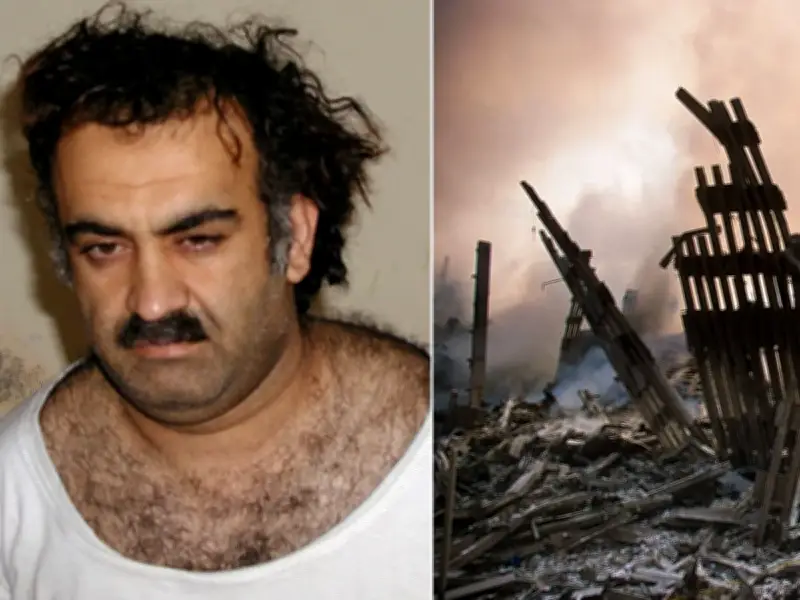
Khalid Sheikh Mohammed, the alleged architect of the September 11, 2001 terror attacks, will finally stand trial 27 years after the events that killed more than 3,200 people. The trial comes nearly three decades after the attacks, despite US officials detaining Mohammed back in 2003.
Long-Delayed Military Court Proceedings
Mohammed, now 61, was not charged until five years after his initial arrest and has been held at the Guantánamo Bay detention centre since 2006. He was eventually charged in 2008 with war crimes and murder. The alleged terror mastermind will face a military court alongside alleged co-conspirators Walid bin Attash, Ali Abdul Aziz Ali, and Mustafa Ahmed al-Hawsawi in June 2028.
As per NBC News, the new trial date was set by military commissions judge Michael Schrama after he rejected a proposed trial date window of January 2027, which had been suggested by the prosecution. The fresh date comes after a failed attempt at a plea deal by Mohammed, in which he applied to an appellate court to strike a deal of a guilty plea in exchange for a chance at a death sentence.

Torture Allegations and Legal Grey Areas
Lawyers acting on behalf of Mohammed have accused the US government of stalling the long-awaited trials to allow more time to cover up evidence of torture used against detainees at CIA black sites or in prisons like Guantánamo. These sites operate offshore and technically outside the US legal system, which has seen authorities take advantage of a number of legal grey areas at the expense of those detained.
A 2014 US Senate report found that the CIA had used what it called “enhanced interrogation techniques” against Mohammed and his fellow conspirators on hundreds of occasions, including 183 instances of waterboarding. The report described the torture method used as “a series of near-drownings”.
Legal Recourse and the 2001 Attacks
As per the US Department of Justice, habeas corpus—the legal recourse against unlawful detention—does not apply to inmates held at Guantánamo, as the Cuban island is technically not US territory, allowing suspects to be held without charge in effective perpetuity.
Mohammed was accused of orchestrating the 2001 terror plots that saw al-Qaeda hijack a number of planes before flying them into New York's World Trade Centre and the Pentagon building in Washington. Another hijacked plane did not make its target and instead crashed into a field in Pennsylvania, after passengers fought back in an attempt to regain control of the aircraft, which was headed for another government building in DC.