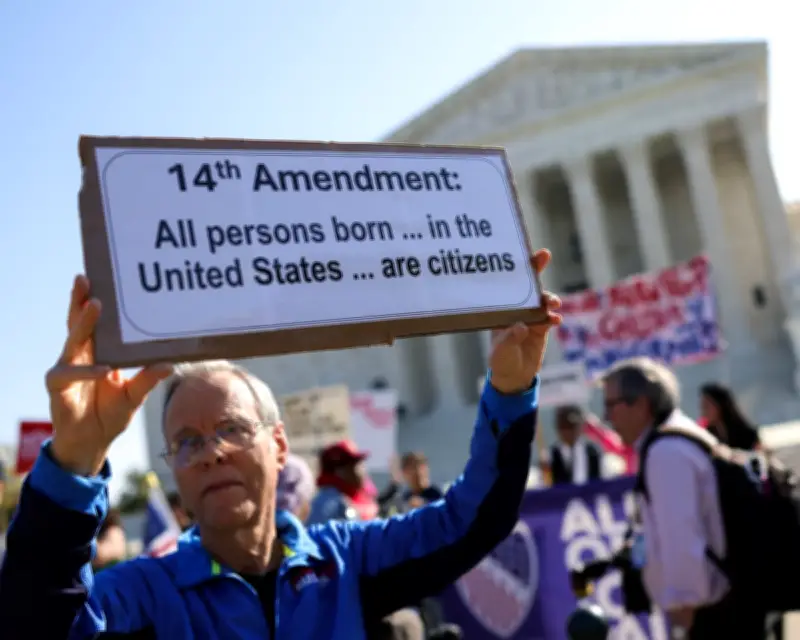
The US Supreme Court has ruled against President Donald Trump's attempt to end birthright citizenship, delivering a major blow to his immigration agenda. In a 6-3 decision, the justices found that Trump's executive order violated the 14th Amendment, which guarantees citizenship to anyone born on American soil.
Executive Order Challenged
Trump issued the executive order on the first day of his second term, seeking to deny citizenship to children born to undocumented immigrants and temporary foreign visitors. The order faced immediate legal challenges from Democratic state attorneys general and the American Civil Liberties Union, leading to the case Trump v Barbara.
Court's Decision
The Supreme Court heard oral arguments in April and issued its opinion on June 19, 2025. The majority opinion, written by Chief Justice John Roberts, stated that the Trump administration had violated a provision of the 14th Amendment, which had been affirmed by the court 128 years ago in United States v Wong Kim Ark. That landmark case established that nearly all children born in the US are citizens, regardless of their parents' immigration status.
Conservative Justice Brett Kavanaugh concurred with the judgment but dissented in parts, though the details of his dissent were not immediately available.
Administration's Argument
The Trump administration argued that children of undocumented immigrants and temporary visitors were not eligible for citizenship, claiming that the Wong Kim Ark decision relied on parents having permanent 'domicile' in the US. However, the term 'domicile' does not appear in the 14th Amendment, and the court rejected this interpretation.
Impact
The ruling is a significant setback for Trump's hardline immigration policies and reaffirms the principle of birthright citizenship, which has been a cornerstone of US nationality law for over a century. Legal experts say the decision clarifies that any attempt to alter birthright citizenship would require a constitutional amendment, not an executive order.