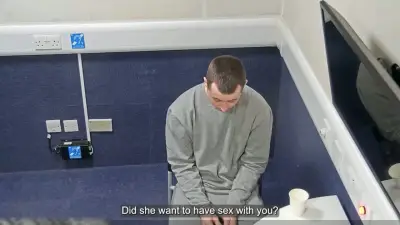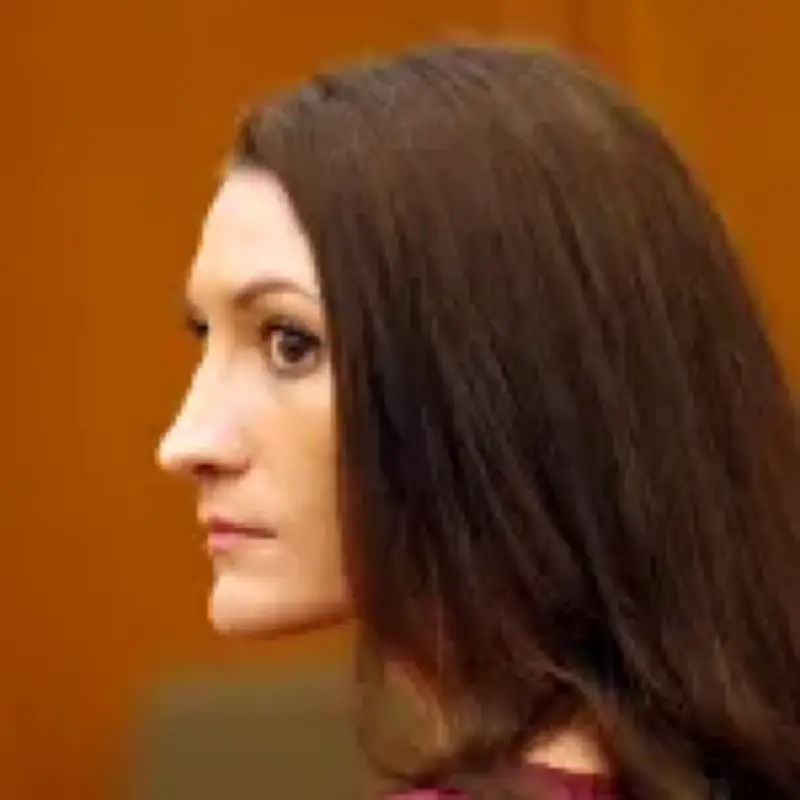
Closing arguments have begun in the murder trial of Lindsay Clancy, a Massachusetts mother accused of strangling her three young children. The case has drawn worldwide attention to postpartum mental health and the barriers women face in accessing care.
Clancy, 36, does not deny killing her children before attempting suicide in January 2023, which left her partially paralysed. She has pleaded not guilty by reason of lack of criminal responsibility, with her lawyers arguing she was experiencing postpartum psychosis when she killed Cora, five, Dawson, three, and eight-month-old Callan. Clancy is charged with three counts of first-degree murder.
Family Testimony for Both Sides
Over the five-week trial, prosecutors called over 70 witnesses, including Clancy's ex-husband, Patrick Clancy, who testified as the prosecution's first witness. He told jurors how his ex-wife's mental health declined after the birth of their third child, describing it as a 'big spiral.' Patrick also recalled Clancy being a 'very dedicated' mother and explained how she sought help for her mental health, stating: 'It wasn't a matter of trying to get off the medication – it was trying to get on the right medication.'

Clancy's mother, Paula Musgrove, testified for the defence, saying she thought her daughter's medications were 'destroying her mind' and that Clancy had expressed thoughts of harming the children a month before the killings. Clancy's sister, Allison Ozga, told the court that Clancy had confessed suicidal thoughts to her around the same time.
Protesters Divided Outside Courthouse
Last week, around 300 women gathered outside the courthouse in support of Clancy, wearing pink T-shirts that said 'Believe', 'She Needed Help,' and 'Peace For Lindsay.' They made heart shapes with their hands. Supporters say Clancy was failed by the system as she asked for help on multiple occasions, and aim to raise awareness of postpartum mental health.
Other protesters held signs claiming Patrick was responsible for the murders, while others protested in solidarity with the children, wearing white and holding signs that said: 'Justice for Cora, Dawson, Callan,' 'The only innocents [are] Cora, Dawson, Callan,' and 'Say their name, justice for the real victims.'
Final Witnesses Disagree on Voice
An FBI psychiatrist, Dr Gregory Saathoff, one of the final witnesses for the prosecution, told jurors he believed Clancy knew right from wrong when she took her children's lives and did not hear a man's voice instructing her. He said: 'Having no instructions as to how to do it, but being able to execute those decisions, that is surprising that she's able to accomplish all of this without any other kind of direction or plan.'
Forensic psychiatrist Phillip Resnick, the defence's final witness, argued that Clancy was suffering from a 'command hallucination' at the time of the murders. Resnick said: 'My opinion is that Ms Clancy was, due to her mental disease, unable to conform her conduct to the requirements of the law on the day that she took the lives of her children.'
Private Writings Revealed
On August 13, Clancy's internet searches and diary-style entries from before the killings were read out in court by Massachusetts State Police Detective Timothy Chiappini. One entry said: 'I'm sad and depressed because I am not able to parent my third child like my first.' Four days before the killings, Clancy searched the web for 'Can you treat a sociopath?' Other searches included 'how to slit your throat to die' and 'can you turn airbags off on kia sorrento (sic),' Clancy's former car.
Clancy has broken down in court on multiple occasions. On August 12, as a medical examiner testified about the children's injuries, Clancy cried uncontrollably and said: 'I can't do it.' She was wheeled out of the courtroom, and Judge William Sullivan reminded the jury to remain impartial, saying: 'I'm instructing you that the law says you must separate any emotional reaction on your part from the informational value and weight that the evidence produces.'
If convicted, Clancy faces life in prison without parole. If jurors find her not guilty because she lacked criminal responsibility, she could be committed to a psychiatric facility. Jury deliberations will begin immediately after closing arguments.