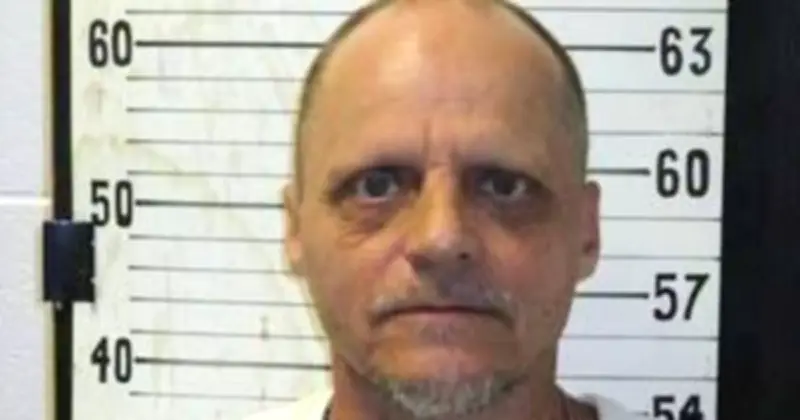
Anthony Darrell Hines, 66, was executed by lethal injection in Tennessee on Thursday for the 1985 murder of motel housekeeper Catherine Jean Jenkins. He was pronounced dead at 10:43 a.m. local time.
Final words and witness accounts
When initially asked whether he had any final words, Hines responded, "Not right now, thank you," before adding, "Tell my son hello." His son, Dennis, attended to witness the execution and had reunited with his father four days prior after not having seen him since he was three years old, according to the Associated Press.
Approximately four minutes after the curtain was drawn back, Hines asked a spiritual adviser, "How long do I have?" Witnesses subsequently heard "groans and heavy breathing" as the adviser placed her hands on his shoulders and prayed over him.
Victim's family reaction
Following the execution, Jenkins' son described to reporters how his mother was murdered, revealing that she had only a plastic spray bottle to defend herself against the knife attack. "I hope he did suffer. I hope he felt severe pain, because what he did to my mother is nothing compared to what he may have just gone through," Dennis Jenkins said.
Context and previous execution issues
Thursday's execution took place three months after a lethal injection attempt on fellow inmate Tony Carruthers was called off owing to difficulties with an IV line. Hines' arms and hands were hidden under a sheet during his execution.
Hines mounted unsuccessful appeals to the governor and the courts, contending that the physician who oversaw a May execution had failed to establish a backup IV line for more than an hour, was insufficiently qualified, and would in all likelihood mishandle his execution too. The state declined to reveal whether the same physician would be responsible for Hines' execution. The Tennessee Supreme Court ruled that Hines "had not proven the doctor was unqualified and suggested the problems were an isolated mishap."
In a written statement issued to the Associated Press, the Tennessee Department of Corrections stated that medical personnel "had quickly established a primary IV line but were unable to find a suitable vein for a backup line as required by the state's execution protocol. Efforts to insert a central line also failed, and officials called off the execution." Maria DeLiberato, a lawyer for the American Civil Liberties Union representing Carruthers, said she watched him "wincing and groaning" as officials attempted to locate a vein, describing the experience as "horrible" to witness.