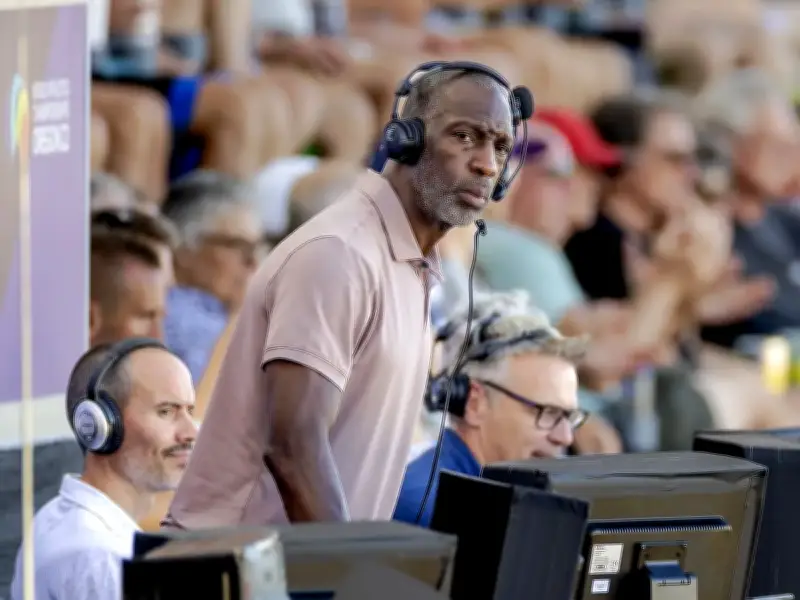
The European Athletics Championships are underway in Birmingham, but a familiar face remains missing from the BBC's punditry team. Four-time Olympic sprint champion Michael Johnson has not appeared on the broadcaster's athletics coverage since last year, when his involvement in a financial scandal away from television came to light.
Grand Slam Track Collapse
In 2024, Johnson announced plans for a new league, Grand Slam Track, designed to bring the world's fastest athletes together for four three-day events annually, with the aim of "saving" track athletics. The inaugural season began in April last year, offering a total prize pot of $12.6m (£10m) and salaries for contracted runners.
However, the final event of the four scheduled meets was cancelled in June due to insufficient funds, and organisers later filed for voluntary bankruptcy in the USA. The collapse left millions owed to creditors and athletes, including British stars Josh Kerr and Matt Hudson-Smith, who were reportedly due six-figure sums.
Allegations and Response
Earlier this year, a court filing in the United States accused Johnson of paying himself $500,000 (£372,000) days before the project collapsed, despite knowing it was financially doomed. A spokesperson for Grand Slam Track dismissed the claims as "unfounded and false", and Johnson addressed the allegations in an interview with the Telegraph.
Johnson, 58, called the accusations "hurtful" and clarified that the payment was a reimbursement. "Our credit card was full at Grand Slam Track, because we were facing significant cash-flow issues," he said. "I instructed our travel team to put it on my credit card, and I would be reimbursed for it. So, what I received was reimbursement." He added that he loaned the company $2m (£1.5m) and forwent his own salary.
Stress and Future with BBC
Johnson described the stress of the project's collapse as "10 out of 10", saying he had sleepless nights. "I definitely had nights where I didn't sleep, where I would be awake thinking, 'This is on me'," he told the Telegraph.
While he has not worked for the BBC since the launch of the failed project, he has not ruled out a return. "We'll see where I am next year," he said. "It has been 22 years that I've worked for the BBC, and I love it. We're in constant conversation about the future."