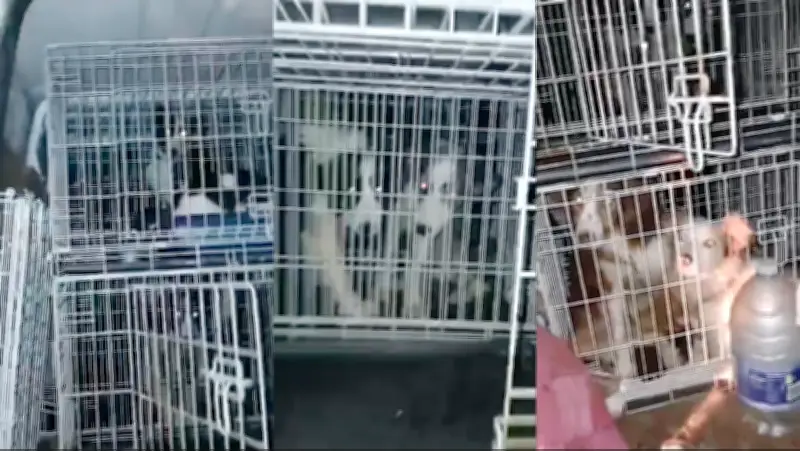
A woman has avoided prison after 21 dogs and a cat were found living in stacked crates inside a filthy caravan and van in Cumbria. Penelope Garner-Carpenter, 67, was handed a lifetime ban on keeping animals following the RSPCA's discovery of 21 pedigree collies and a cat in heavily soiled conditions.
The animal welfare charity, alongside police officers, visited Garner-Carpenter's caravan and van at a car park on Walney Road, Barrow-in-Furness, on 14 July last year after concerns were raised about how the dogs were being kept.
Dogs found emaciated and anaemic
A total of 16 female dogs, five males, and a black and white cat were removed to a local police station. Veterinary examinations revealed that 10 of the dogs were emaciated, which had resulted in them becoming anaemic. The animals were reportedly covered in faeces and urine staining and had developed pressure sores on their bodies.
Within Garner-Carpenter's van, RSPCA inspectors encountered a "strong unpleasant smell" after dogs had allegedly been housed in the cargo section. They also uncovered an unopened packet of raw chicken thighs, which Garner-Carpenter had purportedly been feeding to the animals.
In a statement to Barrow-in-Furness Magistrates Court, RSPCA Inspector Carl Larsson said: "I was shown the cargo area of the van, which although the dogs had been removed from, still had a strong unpleasant smell of urine and faeces."
Caravan conditions described as shocking
Inspector Larsson added: "In the front cab of the van, which was very cluttered, I saw an unopened pack of raw chicken thighs which I was informed the owner had stated she was feeding them. The van was a panel van with no windows in the back. Once the doors were closed there would be very limited natural light entering the cargo area."
He continued: "The caravan was in a similar condition and I could not believe that someone had been living there. The dogs were all housed in metal dog crates with plastic bases, although these were missing from some of them. There was no bedding of any sort and almost all the cages were heavily soiled."
Vet reports severe malnutrition
Following examination at the police station, several of the dogs were transported to a veterinary surgery for additional assessment. Evaluations revealed that 10 of the animals were deemed to be emaciated and covered in urine and faeces more than 24 hours old. The vet determined that all of the dogs were regarded as "extremely anaemic" as a consequence, which she believed would have required "several months" of malnutrition.
Several of the dogs were also discovered to have diarrhoea, matted coats and pressure sores, while one female Collie was so severely dehydrated she required an overnight drip. The vet said: "The cat was terrified and had been kept in the caravan with some of the dogs. The caravan was very crowded and dirty, and the cat would have found it hard to hide from the dogs which would have been extremely stressful."
Garner-Carpenter was found guilty of three animal welfare offences in her absence. At a sentencing hearing at Barrow-in-Furness Magistrates Court on September 25, she received a 22-week prison sentence, suspended for a year, and was prohibited from keeping animals.
The court heard that she claimed the dogs had spent "most of their lives" with her, and while she acknowledged the van was not a suitable place to keep them, she described it as a "short-term solution" following her recent eviction from her home. She told investigators she fed the animals raw chicken and treated them for fleas when necessary, adding that she would rotate the time they spent outside due to having a limited number of leads.
Garner-Carpenter, now residing in Hatfield Woodhouse, near Doncaster in South Yorkshire, denied all wrongdoing, stating she was suffering from old age and poor health, according to the RSPCA. Since the dogs were seized, 20 have since been rehomed, while one had to be put down due to ill-health, the charity confirmed. The cat, Julius, has also since been adopted.
Speaking following sentencing, RSPCA Inspector Will Lamping, who headed the investigation, described the conditions in which the animals were kept as "unacceptable". He said: "There would have been barely room to move, distress from excessive noise and the animals would have been forced to toilet in the small space they had been provided with. Crates should only be used for short periods of time, with suitable training, and should never be used as a permanent environment for a dog."