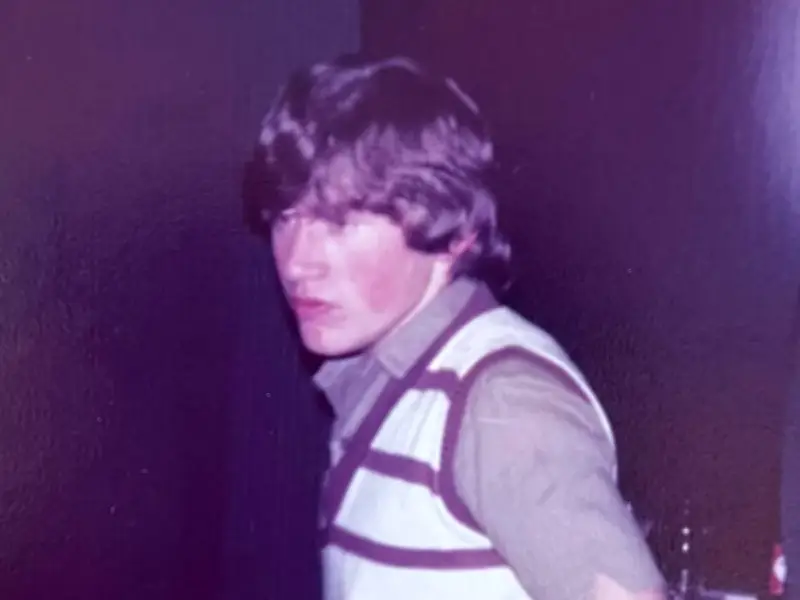
An inquest has concluded that a patient who fled a secure hospital unit and was later found dead died from misadventure. The body of Anthony Whittle, 30, was discovered by a cyclist on a concrete track 50 feet below the A55 Expressway between Llandygai and Halfway Bridge near Bangor on November 25, 1994.
Following an inquest held in February 1995, his brother Christopher Whittle, 65, campaigned for a fresh inquest, believing the original one was inadequate. On Wednesday, October 7, a jury of seven women and four men in Caernarfon returned a narrative conclusion that Anthony died from misadventure, reports North Wales Live.
Acute mental health episode
After deliberating for almost five hours, the jury found that Anthony had suffered an acute mental health episode on November 24. They determined that he had been undergoing an assessment at the Hergest Unit when he was left unattended. He then climbed through a window and used an unknown route along the A55 to the area by the Expressway between Llandygai and Halfway Bridge.
The coroner praised the dignity of Anthony's brother Christopher. The two-day inquest heard how Anthony had been diagnosed with paranoid schizophrenia at age 19. He had separated from his wife Mary in Burnley and began a forestry course at Bangor University in October 1994.
Events leading to his death
In November that year, he was seen on sand dunes in an agitated state in Prestatyn, leading a police officer to take him to Rhyl Police Station. Following his arrival, a locum GP and police surgeon, Dr Timothy Pilsworth, diagnosed him as psychotic with "persecutory delusions" and "delusions of grandeur of a religious nature." He was taken to the Hergest Unit at Ysbyty Gwynedd in Bangor.
On Tuesday, the inquest heard how Anthony said he walked with his eyes closed and trusted in Jesus. Dr Tom McMonagle, a trainee psychiatrist in 1994, told him that walking with your eyes closed is a risky thing to do. Following this assessment, Anthony was left alone in an interview room at Hergest but broke through a window and fled at 12.15am on November 25, 1994. The inquest heard that from there it would have taken about 45 minutes for him to walk to where he was found dead.
Psychiatrist's evidence
Dr McMonagle told the inquest he was "amazed" Anthony had got out of a window without breaking the glass. He explained how a bench was then used as a ladder to get over a roof. The psychiatrist, who had three months' experience at the time, said he hadn't realised how unpredictable psychotic patients could be. He said he believed it safe to leave Anthony in an interview room and explained how the most inexperienced thing he did was to have "a therapeutic relationship with a psychotic man." "I did not appreciate he was high risk. I thought he had agreed the plan," he added.
Dr McMonagle acknowledged that having someone stay with him would have been a good option and he would have done it if he had his time over again. On the first day of the inquest, Anthony's brother recalled how Dr McMonagle had told him: "Don't worry, we'll find him. He's safe." However, Anthony was found dead hours later by cyclist Jutta Wurst, a PhD student.
Subsequent improvements
On the second day of the inquest, Tom Regan, head of operations for adult mental health services at Betsi Cadwaladr University Health Board, gave evidence about subsequent improvements at the Hergest Unit, including sturdier doors and windows. There had, however, been one incident where a patient climbed up an overgrown tree in a garden and out of hospital grounds at one of the three Hergest, Ablett and Hedfan Units in North Wales in recent years before being found. Relatively recently they installed "anti-climb guttering." Asked by the Whittle family's barrister Nicholas Jones whether he was surprised it had taken so long, Mr Regan replied: "Yes. There's probably a multitude of reasons. Potentially funding (which) may have been an issue."
Solicitor Patricia Gaskell, representing Betsi Cadwaladr University Health Board, asked Mr Regan if there had been improved safety measures since 1994 to prevent an incident like this happening again. Mr Regan said "Yes."