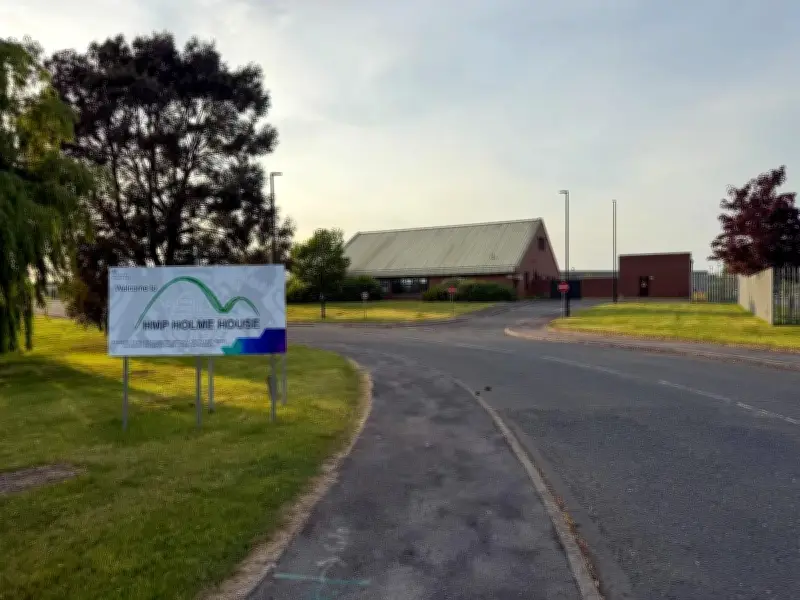
A Gateshead drug dealer who claimed he was being bullied by an officer died in his cell at HMP Holme House in 2024. George Armstrong, 56, was found hanging at the prison on April 23, 2024.
Armstrong had been sentenced to 15 years in May 2013 after a large consignment of cocaine was found in his home and car. He was released years later but recalled in January 2022 after another large stash of drugs was found in his possession.
Mental health history and ACCT monitoring
An investigation by the Prisons and Probation Ombudsman found Armstrong had a history of low mood and anxiety. In December 2023, a nurse diagnosed him with anxiety and depression and placed him on a waiting list for cognitive behavioural therapy (CBT). A GP later prescribed an antidepressant.
Following his first CBT session on March 13, 2024, a nurse recorded severe anxiety and depression. On March 21, Armstrong's partner called the prison concerned that he had not called her. An officer from the safer custody team carried out a welfare check, during which Armstrong said he had taken an overdose of painkillers. He refused treatment, saying he had vomited the tablets, and the officer started suicide and self-harm monitoring (ACCT).
At an ACCT review that afternoon, Armstrong said he had no further thoughts of self-harm or suicide and that he had taken the tablets because he was being bullied by the officer who gave him negative entries. The nurse recorded his thoughts and decided no further action was needed from the mental health team. No one from that team attended subsequent case reviews, and ACCT monitoring was stopped on April 11, 2024.
Complaints and final day
On April 23, a custodial manager and senior officer met with Armstrong to discuss his complaints of bullying. They offered mediation or a move to another wing, both of which he declined, saying he would rather keep away from the officer and speak to his offender manager.
At 11.40am, the offender manager visited Armstrong but left because it was lunchtime. When he returned at around 1.25pm, he saw Armstrong hanging through the cell observation panel and radioed a medical emergency code. Officers and healthcare staff carried out CPR until paramedics arrived. Armstrong was pronounced dead at 1.46pm.
Ombudsman findings and inquest verdict
The Ombudsman found the ACCT process was overall well managed but said a member of the mental health team should have attended all reviews. It was satisfied staff handled Armstrong's complaints appropriately and found no evidence of bullying.
The Ombudsman made recommendations for improving mental health care at the prison. The clinical reviewer concluded the care Armstrong received was not equivalent to what he could have expected in the community. The mental health nurse who attended the ACCT review completed only the first of three stages for referrals, and a referral to the secondary mental health team on March 25, 2024 was not actioned.
At an inquest held from October 19 to 27, 2026, a jury found that a failure to reassess Armstrong by the secondary mental health team, which failed to remain involved after the ACCT was closed, possibly but not probably contributed to his death. The jury also found inadequate communication between the secondary mental health team and prison discipline staff resulted in missed opportunities to recognise the decline in Armstrong's mental health and increase in his risk.