Disability campaigners are calling on the Mayor of London to scrap plans for future floating bus stops, warning of potential tragedies involving cyclists and vulnerable people. The stops, introduced in 2013, have a cycle lane running between the bus stop and pavement, forcing pedestrians to cross the cycle path to board or alight.
The Mayor and pro-cycling groups support the schemes, saying protected cycle infrastructure separates cyclists from motor traffic and encourages more people to cycle. However, campaigners representing blind and partially sighted people argue the stops present a significant danger.
Pause on some designs
Last year, ministers paused the rollout of Shared Use Bus Borders (SUBBs), where the cycle lane runs across the front of the bus stop, but not bus stop bypasses (BSBs), where the lane runs behind. These make up about 1.5% of London's 19,000 bus stops. The Department for Transport (DfT) said further research is being carried out to ensure accessibility, with funding for local authorities to modify existing sites.
Between 2020 and 2022, there were six casualties at floating bus stops, 0.8% of the 623 pedestrian casualties involving cyclists. Sarah Gayton of the National Federation for the Blind UK (NFBUK) said the designs are totally unsafe and inaccessible, noting that cyclists and e-bike riders come at speed, and blind people cannot hear or see them.
Call for complete halt
Gayton urged a complete halt on all floating bus stop designs, referencing advice from the Disabled Persons Transport Advisory Committee, which recommended pausing them until more research is done. Gary Wiggins of the Waltham Forest Blind Association, who is partially sighted, described being knocked over by a cyclist and blamed, saying he no longer uses buses and relies on taxis.
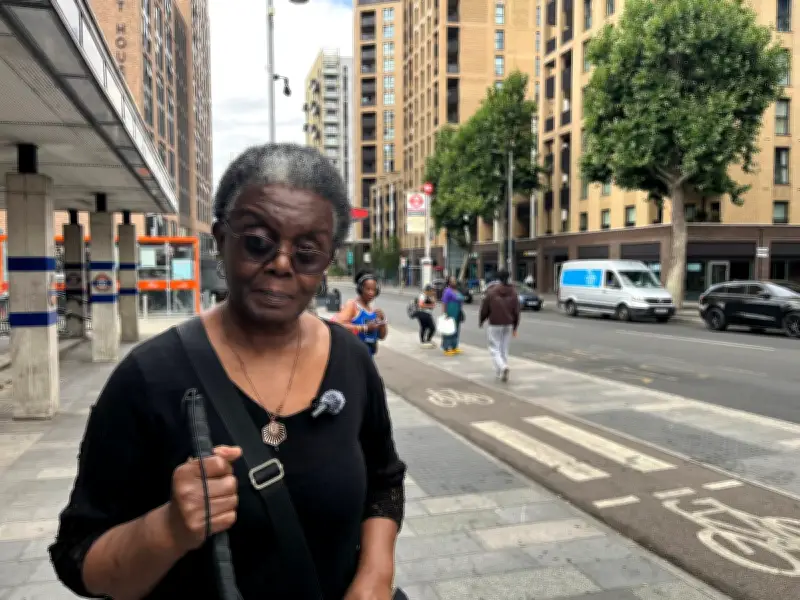
Hyacinth Malcolm, who is fully blind, said the bus is her life but she now takes taxis due to uncertainty about cycle lanes. City Hall Conservatives transport spokesman Thomas Turrell called the stops needlessly risky, noting that TfL has to warn passengers to be careful when getting off.
Support for floating bus stops
Simon Munk of the London Cycling Campaign argued the evidence shows floating bus stops are no more dangerous than other road sections, and they are necessary for inclusive mobility. Erik Matthies of RNIB said nearly half of blind and partially sighted people avoid BSBs, and there is no safe way to cross the cycle lane.
A DfT spokesperson said they have listened to concerns and are carrying out further research. City Hall and TfL spokespeople said they welcome statutory guidance on floating bus stops and are working to make them more accessible while protecting cyclists.