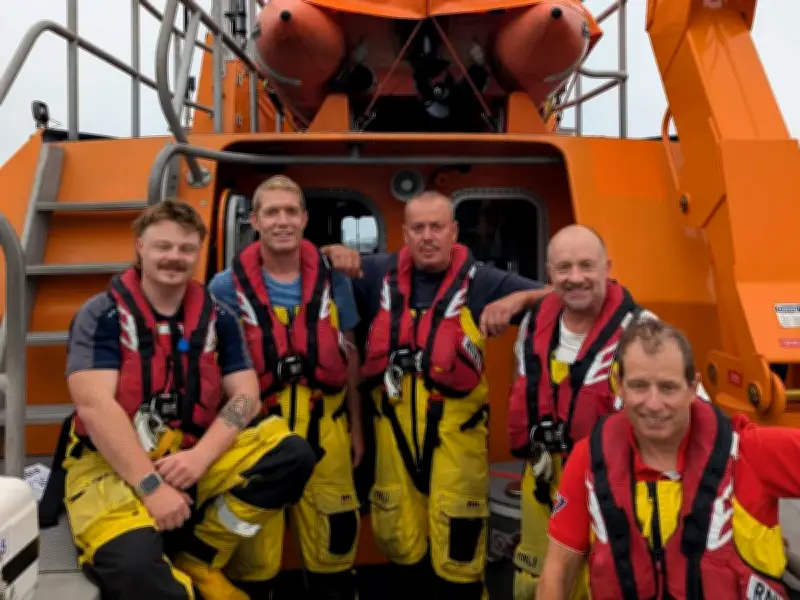
Tynemouth RNLI's Severn-class all-weather lifeboat Osier was launched 134 nautical miles east of Tynemouth after an emergency position indicating radio beacon (EPIRB) was activated. The call-out came after the beacon, which was not registered to a vessel, sent a distress signal, leaving the Coastguard and lifeboat crew with limited information about the circumstances or whether anyone was in distress.
Fuel planning for long-distance tasking
The distance involved presented a significant challenge for the volunteer crew, as the reported position was beyond the distance the lifeboat could reach at full speed while retaining enough fuel for a safe return. Tynemouth RNLI's volunteer mechanics worked alongside the crew to carefully calculate fuel requirements and available range, reducing speed to conserve fuel. The Severn-class lifeboat has a range of approximately 250 nautical miles, making careful fuel planning essential for such a long-distance tasking.
Coxswain's response and Coastguard confirmation
Coxswain Enzo said: "When an EPIRB activates, you have to treat it seriously. The difficulty for us on this occasion was that we had very little information about what had happened, and the position was a considerable distance offshore."

"Our crew and mechanics worked carefully to make sure we understood the fuel requirements and what we could safely achieve. We were relieved when the Coastguard aircraft was able to confirm there was no one in trouble and that our assistance was no longer required. It was a long way to go, but that is what our volunteers are here for. If someone is in trouble at sea, we will do everything we can to reach them."
A Coastguard aircraft based at Humberside was also tasked to the area to establish what had happened. After over three hours at sea, and when the lifeboat was approximately 72 nautical miles from Tynemouth, the Coastguard aircraft confirmed that there was no one in trouble and that the lifeboat's assistance was no longer required.
Return and refuelling
The lifeboat crew then began the journey back to Tynemouth, arriving back into the River Tyne at approximately 3.30pm. Following the lengthy tasking, the lifeboat was refuelled with more than 3,000 litres of fuel and was ready for service by 5pm.
This call-out was close to breaking Tynemouth RNLI's previous record, set in June 2015 when the lifeboat went 114 miles offshore to assist a Danish fishing vessel taking on water. This tasking would have beaten that by 20 miles.