The Fire Brigades Union (FBU) has written to First Minister John Swinney, warning that Scotland's fire service "cannot take any more cuts" following a year marked by severe wildfires in the Cairngorms and devastating city centre blazes in Edinburgh and Glasgow. The union is seeking an urgent meeting to discuss the "capability, capacity and resilience" of the Scottish Fire and Rescue Service (SFRS).
Firefighters pushed to exhaustion
The union has repeatedly warned that the service is under-staffed, forcing firefighters to work themselves "to exhaustion" when responding to major incidents. The letter highlights that FBU members are routinely asked to breach their contractually agreed terms and conditions, with reports of firefighters who worked to exhaustion now being required by their primary employers to work back lost time or take annual leave to cover their release.
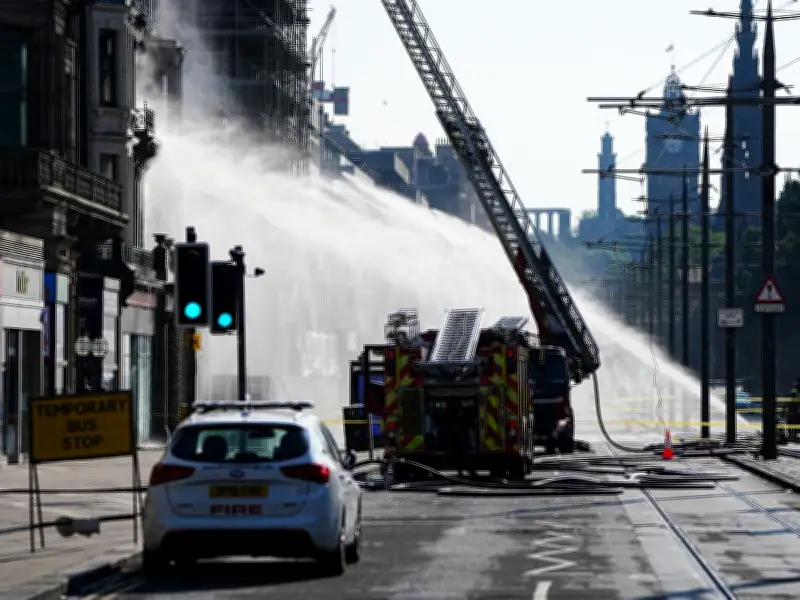
The warning comes after a wildfire last month swept through Cairngorms National Park near Aviemore, burning thousands of acres of moor and woodland and forcing local businesses to close. Princes Street in Edinburgh remains closed to traffic after a blaze reduced a former Debenhams department store to a burnt-out shell, and a similar fire in Glasgow in March destroyed the 19th century Union Corner building, temporarily closing several busy streets.

Union demands increased funding
Colin Brown, FBU executive member for Scotland, said: "Across Scotland we are seeing the very real impact of the climate catastrophe. These large scale, resource intensive and protracted incidents evidence the FBU's demands for increased funding for the SFRS to ensure they are properly resourced and equipped to deal with a future of climate related emergencies."
Since the SFRS was created, 1,239 firefighter jobs have been cut in Scotland – almost a sixth of the total – and every day the SFRS is forced to take multiple appliances off the run due to insufficient numbers to crew them safely. Brown added: "The wildfires in the Cairngorms and elsewhere, and the large urban fires in Glasgow, Edinburgh, and Fife, soak up a huge amount of resources leaving fire cover in the rest of the country stretched. Communities cannot take any more cuts."
SFRS response
Assistant Chief Officer David Farries, Director of Service Delivery for the SFRS, said: "We have committed significant resources to the Cairngorms wildfire and the recent large-scale fires on Union Street in Glasgow and Princes Street in Edinburgh. I am immensely proud of the efforts of our crews who worked tirelessly in challenging conditions, and for the skill and professionalism of our Operations Control teams and wider staff in coordinating the response to these incidents."
Farries noted that incidents of this scale require staff and appliances to be drawn from across wider areas, which is the benefit of a national service. He added that the SFRS maintains the ability to mobilise resources while always maintaining strategic cover, and that a formal structured debrief will be carried out to capture learning and drive improvements.
Government investment
A Scottish Government spokesperson said: "The 2026-27 Budget includes almost £436 million for SFRS - an increase of £23.8 million. This investment supports frontline services and the Scottish Government is in regular contact with SFRS to ensure it has the resources it needs to continue to keep Scotland’s communities safe."
The spokesperson added that the strength of a national fire service lies in its ability to draw on resources from across Scotland, and that the SFRS conducted a review earlier this year to ensure resources are in the right place at the right time.