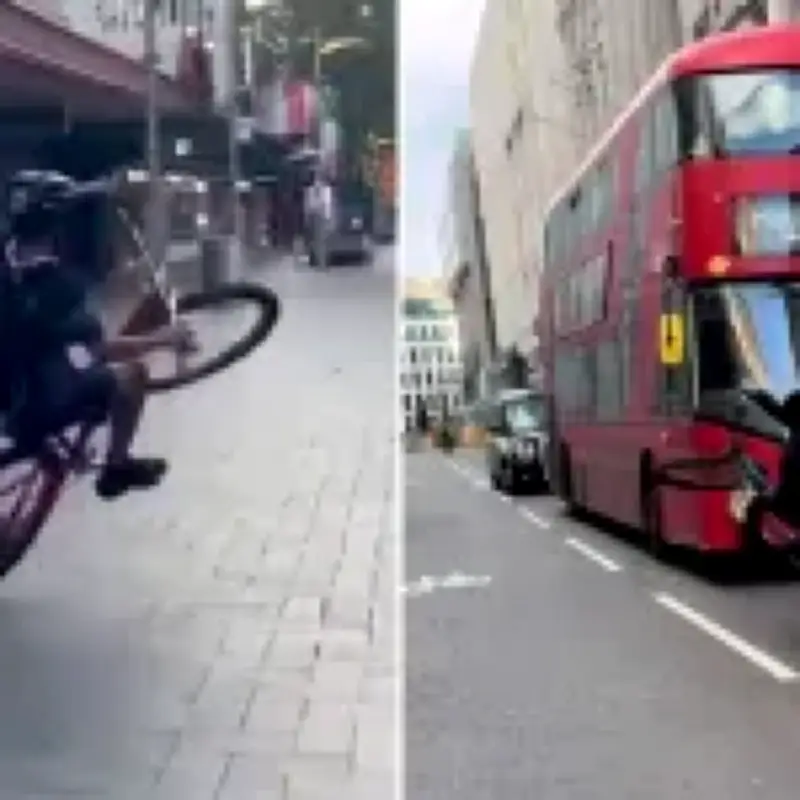
A dangerous teen craze known as ‘snapping’ is spreading in the UK, involving youths doing wheelies on bikes and e-bikes directly into the path of pedestrians and oncoming cars, swerving at the last minute. The trend has injured men, women and small children, and forced vehicles to brake sharply.
What is ‘snapping’?
Cheryl Spruce, head of membership at Neighbourhood Watch, told Metro she has witnessed the behaviour in central London and has spoken to many members worried about the trend. ‘It’s about getting a reaction,’ she said. ‘They feel empowered because there’s a lot of them doing it, so they’re being bold and not caring about pedestrians or other road users.’
Spruce described a community meeting in Kidbrooke (Greenwich) where members said elderly relatives were finding it difficult to go outside because of the number of youngsters on bikes. ‘They’re not feeling safe to walk on the pavements as they get cut off. It’s really, really dangerous.’

Videos show collisions and near-misses
Videos circulating online show a young girl being knocked off her pram on a promenade by a boy purposely doing a wheelie towards her and her parents. Another clip shows a young man flipped off his bike after wheelie-ing in front of a car. Other pedestrians have fallen over trying to run away from the bikes, while others cower in fear.
‘Young people are looking for an outlet,’ Spruce added. ‘It’s understandable young people are trying to get this thrill factor but many don’t understand the dangers they’re putting themselves and other people through. They aren’t thinking of the repercussions, people can get seriously hurt from just a fall. They need to learn to be respectful of people and the environment in which they live in.’
Statistics and wider impact
The trend is alarming given that 45% of pedal cycle fatalities occur in two vehicle collisions between a pedal cycle and a car. According to the Department for Transport, 234 pedestrians were killed or seriously injured after being hit by a cyclist or e-cyclist in 2025. Cyclists themselves sustained 3,822 serious injuries and 10,645 slight injuries in 2024, and this trend could cause these figures to rise.
‘Snapping’ is also becoming a big trend in America and Australia. It has sparked widespread fury online, with many mocking the teen boys for thinking they’re ‘tough’ and saying the trend constituted assault. Comments included ‘This is so ugly’, ‘the best birth control ad ever’, ‘People like this should be arrested’, and ‘What’s so cool about this?’ Others warned the youths are looking for reactions so they can ‘get mad’ and get into confrontations.
Rideouts and community concerns
The behaviour can also happen in big groups known as ‘rideouts’, where many youths assemble on their bikes and block entire main roads. This caused a stir in Poole in February. Janet Trendle, who lived in the area for nine years, told Metro: ‘There are bikes everywhere with kids on them riding in front of cars.’ She added: ‘We saw a gang in balaclavas shoplifting from our local Co-op, they left rubbish everywhere and graffiti covers everything. We started feeling unsafe in our home, so we packed up and moved.’
Footage shows riders swarming through Poole and into neighbouring Bournemouth, performing wheelies into the path of oncoming cars, forcing drivers to slam on their brakes. Facebook user Martyn Dickson said: ‘I keep seeing these little wannabe gangsters ride around like they are untouchable, intimidating other road users and being a general stain on society. It’s disgraceful.’
How to respond
Cheryl Spruce says the key to tackling the behaviour is reporting it every time you see it. ‘If there’s an immediate danger to people, obviously call 999, but you can report things to local authorities if it’s happening in your local town centre. We encourage people not to be silent about it and speak up and report it.’

Neighbourhood Watch offers a free Neighbourhood Safety Training course for businesses and members of the public. ‘It’s about being confident and knowing what you can do because there are many ways you can be an active bystander, and stay safe while you’re doing it,’ Spruce added. This can include stepping in to talk to the victim, or filming the incident so they have evidence to give to the police. Some police forces, including Bradford and Surrey, also offer free active bystander training.
Charity Every Action Counts has tips for parents on approaching the topic with a child suspected of involvement. It advises starting the conversation in a calm environment, avoiding starting when either party is frustrated or angry. ‘Explain how their actions can impact others, how their actions might be intimidating (even unintentionally), and why it is important to consider those around them when out and about with friends. Be sure to keep the tone conversational and not accusatory. Then, outline the possible consequences of committing anti-social behaviour, addressing the affect it can have on their own life.’
The charity adds it’s important to be open to questions and to find answers together if you can’t answer them all yourself. It also suggests sharing local activities and thanking the child for taking the time to discuss the importance of anti-social behaviour. The Met Police have been contacted for comment.