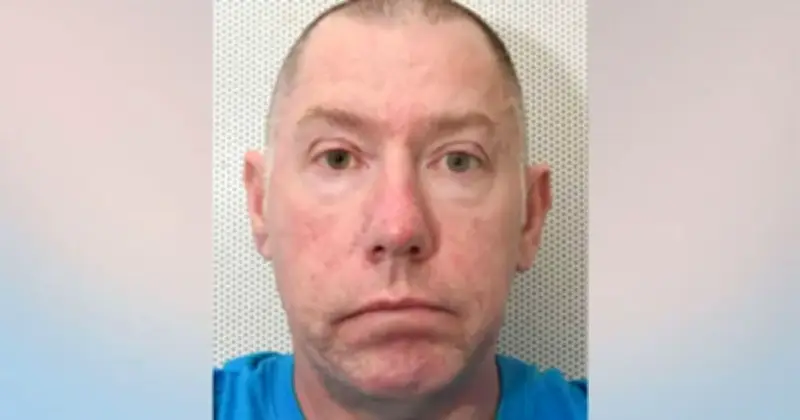
A police officer later exposed as a violent serial rapist was accepted into the force despite two prior reports of criminal behaviour against women on his record, a BBC Disclosure investigation has revealed.
Alan Greer joined Strathclyde Police in 2009, even though vetting staff knew of a formal police caution issued by the Metropolitan Police in 2005 for making inappropriate phone calls to a woman in London. He had also been investigated by Strathclyde Police in 2002 for similar calls to a woman in Glasgow. That case was reported to the procurator fiscal, but no further action was taken.
17 years of service and 15 identified victims
Greer served for 17 years before taking his own life in May, days after officers raided his home as part of an inquiry into offences dating back to 2012. Police Scotland has identified 15 of his victims, amid fears the true number is far higher.

He had contact with hundreds of sex workers during his career and violently assaulted many of them. One victim, a vulnerable woman, was raped by Greer hours after he met her while on duty. He is also understood to have taken inappropriate photographs of female colleagues during officer safety training.
Force denies missed opportunities
Last month, Police Scotland told the BBC there had been no “missed opportunities over the years” to identify Greer’s offending sooner. Assistant Chief Constable Lynn Ratcliff said there was “nothing to suggest there had been any missed opportunities” and that officers now face annual integrity testing and routine re-vetting. The force later clarified that its earlier answers related only to Greer’s conduct during his policing career, not his original recruitment.
A partial paper vetting record confirms the 2005 caution was known to Strathclyde’s vetting unit in 2009. Sources say the 2002 “adverse trace” would “absolutely” have been discoverable.
Vetting failures and missed chances
Strathclyde’s own 2006 Standard Operating Procedures stated the force “should not recruit people with cautions or convictions, which may call into question the integrity of the applicant or the force.”
Craig Naylor, who led a 2023 HM Inspectorate of Constabulary in Scotland review of Police Scotland’s vetting, said Greer should never have been allowed to join. He told the BBC: “My view is that he should never have got in at that point.” Asked if these were missed opportunities, Mr Naylor replied: “Yes.”
A confidential briefing document prepared by the senior investigating officer in June and shared with the Scottish government and Scottish Police Authority noted that under current rules, Greer “would not have been granted Recruitment Vetting.” However, when the SPA met publicly on July 30, board members were not given the full details of his vetting history.
An HMICS inquiry in 2023 found significant gaps, including failure to re-vet thousands of legacy officers after the 2013 force merger. Greer was among roughly 8,800 still unchecked. A subsequent “historic data wash” by Police Scotland’s Anti-Corruption Unit also flagged nothing on him. Mr Naylor described this as another missed chance.
A police source said: “Two reported crimes related to women before he joined should have been raising all sorts of alarm bells. He was clearly a menace from the off and should never have been allowed near a uniform to abuse his position.”
Police Scotland said the 2009 recruitment process will form part of an independent National Police Chiefs’ Council review and that it would be inappropriate to comment further. The force added that today’s vetting landscape is “markedly different” and Greer’s application would not progress under current arrangements.