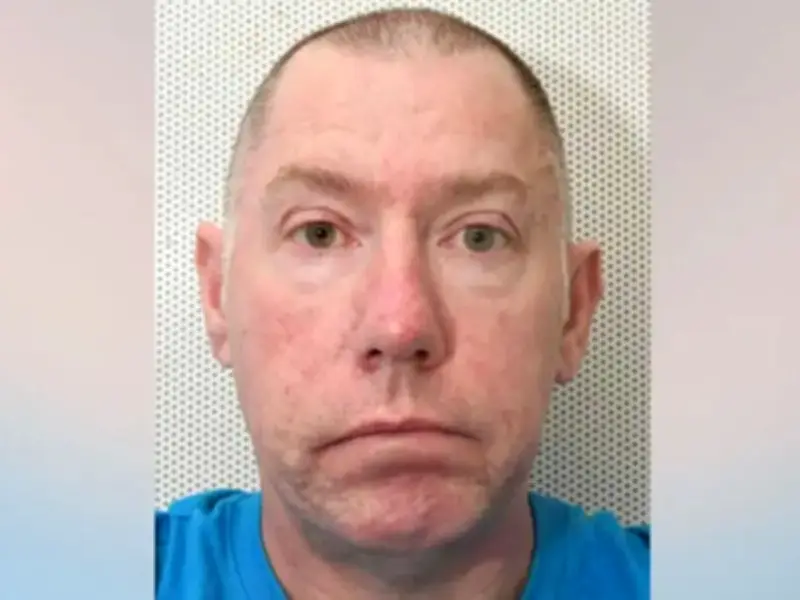
PC Alan Greer, a Police Scotland officer exposed as a serial rapist, passed vetting checks to join the force despite a record showing two reports of criminal behaviour against women. He took his own life in May 2026, days after a police raid on his home.
Background and first attack
Greer's first victim is believed to be a woman he raped in her Glasgow home in 2012 after she had called police to report a crime. Uniformed officers attended her house, took her statement, and left before one officer returned alone hours later, forced her into a sexual act, and raped her.
Police Scotland launched one of its biggest ever anti-corruption inquiries into Greer late last year after the woman reported the attack. Investigators have since uncovered eight further victims, five of whom were sex workers, attacked while Greer was off duty. The total number of victims has risen to 15, with the force anticipating more to be identified.

Vetting history
Strathclyde Police investigated Greer in 2002 over inappropriate calls made to a woman in Glasgow. Although reported to the procurator fiscal, no action was taken. In 2005, he received a formal police caution after making more inappropriate phone calls to a woman he knew in London. He was accepted into Strathclyde Police four years later despite the vetting unit being aware of the caution; it is unclear whether the 2002 offence was known to staff.
Police Scotland noted there had been no "missed opportunities over the years" to identify Greer's offending sooner. Clarifying those comments, the force insisted they had "provided answers" relating to Greer's offending during his career and did not believe they needed to answer questions about his vetting record.
Current vetting standards
Assistant Chief Constable Lynn Ratcliff said the vetting landscape is "markedly different" now and Greer would not have passed current checks. Officers now must pass annual integrity testing and routine re-vetting. The Strathclyde Police Standard Operating Procedures handbook from 2006 stated they "should not recruit people with cautions or convictions".
Craig Naylor, chief inspector for HM Inspectorate of Constabulary in Scotland (HMICS), led a 2023 review into Police Scotland vetting. He noted that despite the vetting landscape in 2009 not being as strict as today, Greer's past should have made it impossible for him to be accepted. He answered "Yes" when asked if this was a missed opportunity to stop him joining the force.
Operation Submarine and re-vetting failures
A confidential briefing document, labelled "Operation Submarine", dated June 12 2026, noted that "within the current vetting regime, he would not have been granted Recruitment Vetting". It was passed to the Scottish Government and the Scottish Police Authority (SPA), but no details of Greer's vetting record were disclosed at a public meeting on July 30.
A failure to re-vet legacy staff since the forces merged in 2013 was identified in an HMICS inquiry in 2023. Greer, along with around 8,800 officers and staff, had not been re-vetted - more than a third of the total workforce. A "historic data wash" was initiated by Police Scotland following the review and concern over high-profile vetting failures in England, including the case of David Carrick. Nothing was flagged in relation to Greer.
A Police Scotland spokesperson said: "We have been completely open and transparent around information which can be shared in relation to the ongoing investigation into Alan Greer. During an interview with the BBC on 20 July 2026 we provided answers to questions relating to Alan Greer's offending during the course of his policing career, which spanned almost 17 years. The investigation has not established any information during his career which could have resulted in his criminal behaviour being identified at an earlier stage. The recruitment and vetting process carried out by Strathclyde Police prior to Alan Greer joining in 2009 will form part of an independent and external review by the National Police Chiefs' Council. Our absolute priority throughout this investigation is to support victims. As work continues to identify and support everyone affected by this case it is imperative that we do not disclose any information which could be detrimental to that support."

Police Scotland added: "We have already stated publicly that the vetting landscape in 2026 is markedly different from that in 2009 and, under current arrangements, Alan Greer's application would not have progressed."