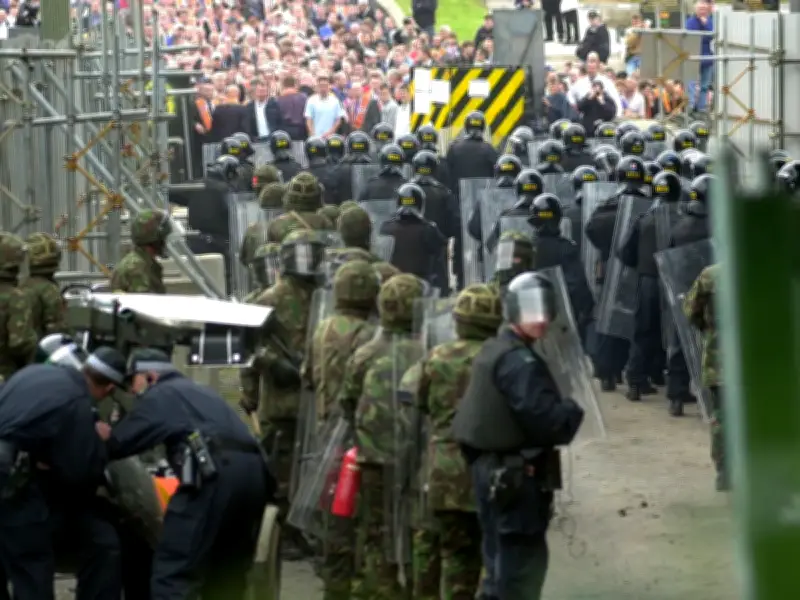
Police Scotland is sending officers to Northern Ireland to support the security operation for an Orange Order parade in Drumcree, Portadown, after a request from the Police Service of Northern Ireland (PSNI).
The march was banned from walking along the mainly-nationalist Garvaghy Road in 1998, but the Parades Commission has now ruled it can go ahead on Sunday morning at 8am with 35 participants. The decision to reverse the ban has raised tensions in the area.
Mutual aid request
The PSNI has put in place a significant security operation for the parade, with officers from outside the region called in under mutual aid arrangements. Police Scotland confirmed to the Record that they will be in attendance after the PSNI requested help.
A spokesperson for the force said: "Any mutual aid request is balanced against the needs of policing in Scotland. As a national service, Police Scotland has the ability to flex resources where the need is greatest and in order to keep people safe."
"Scotland has benefited from mutual aid in the past and will do so again in future, therefore it is entirely appropriate that we support other forces if asked to do so."
Criticism from human rights group
The Scottish human rights group Call It Out criticised the decision, calling it an "extraordinary intervention." A spokesperson said: "Garvaghy Road has not seen the forced Orange Order march down the nationalist part of the road. That hard-won status quo exists against the backdrop of an extraordinarily painful history. Police Scotland should understand exactly what it is stepping into."
"Unless Police Scotland can demonstrate a genuine public-order necessity, deploying 100 officers to facilitate this march is an extraordinary intervention in a post-conflict society it does not routinely police. After 28 years, why should Scottish officers be used to alter this deeply sensitive status quo?"
The spokesperson added: "Police Scotland calls itself human-rights-based. Where, then, are the rights and dignity of Garvaghy Road’s Irish nationalist residents in its assessment? And what will this do to trust among Irish communities in Scotland? This decision appears profoundly ill-considered."
History of violence
Following the decision to ban the march from walking on Garvaghy Road in 1998, a wave of violence erupted across Northern Ireland. There were 2,561 public order incidents between 4th and 14th July, including 615 attacks on security forces, 632 petrol bombs thrown and 467 vehicles damaged. The crisis culminated in the murder of three young brothers, Richard, Mark and Jason Quinn, who died after their home in Ballymoney was firebombed.
Garvaghy Road residents have now submitted an application to hold a counter-protest on the road tomorrow morning. It would involve around 5,000 participants, according to the application listed on the Parades Commission website.