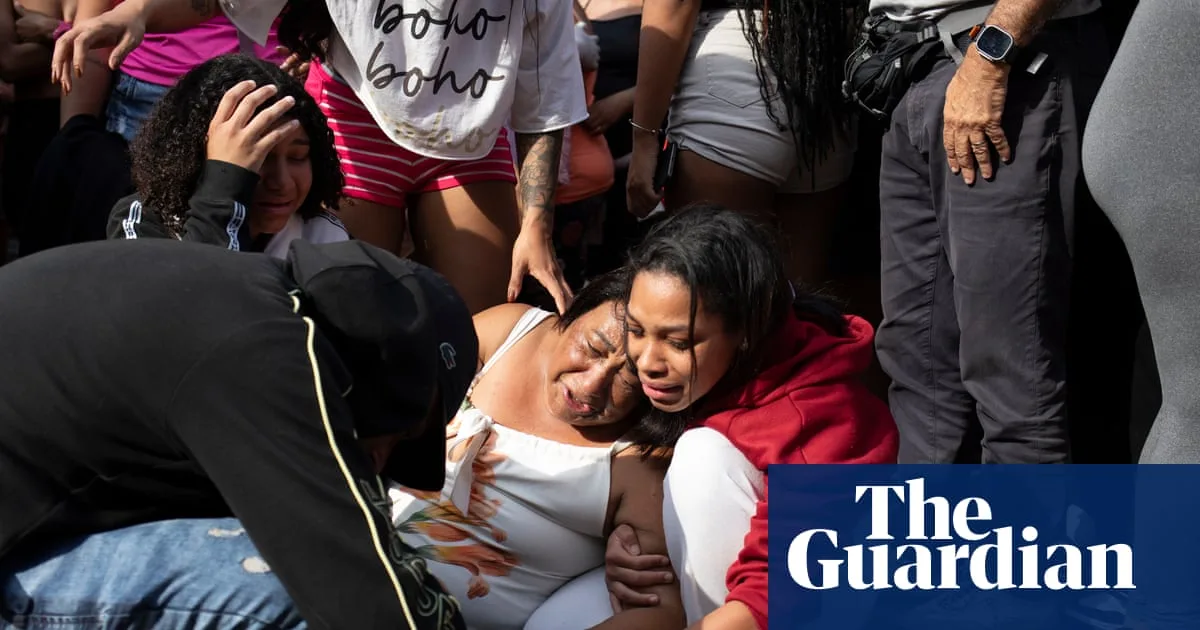
Juliana Conceição was startled awake at 4.30am on 28 October as the first shots of an infamous day were fired in the Complexo da Penha, the Rio favela where she was born and raised. Thousands of police had surrounded the community’s barricaded entrances and were preparing to swarm up its streets in black armoured personnel carriers. By nightfall, the father of her six children, Ronaldo Julião da Silva, lay dead in a nearby alley – one of 122 people killed in the deadliest police operation in Brazilian history.
Five of the victims were police. The operation, called Operation Containment, was hailed by police chiefs and rightwing politicians as a historic blow to the Red Command drug faction. However, activists, security experts, and President Luiz Inácio Lula da Silva have called it a futile massacre. Among the 117 non-police fatalities, at least one person was not involved in crime, despite official claims that all those killed were traffickers.
The list of 100 arrest warrants justifying the operation featured none of the names of those 117 people. The majority of those killed were from regions outside Rio, such as the Amazon states, reinforcing research showing police violence disproportionately affects Afro-Brazilians. Police refused to disclose the race of those killed, but relatives and journalists said the vast majority were black.

Lt Kelly Patricia Camara da Silva, a 30-year-old member of the Shock Battalion, woke at 3am that day unaware of the danger ahead. After 60 days of planning, police launched a massive assault on the Complexo da Penha, targeting local drug boss Edgar Alves de Andrade. Silva’s seven-strong team was among the first to enter, tasked with climbing steep alleyways to contain armed resistance.