Deadly Police Operation in Rio Favelas Claims Eight Lives Including Notorious Drug Boss
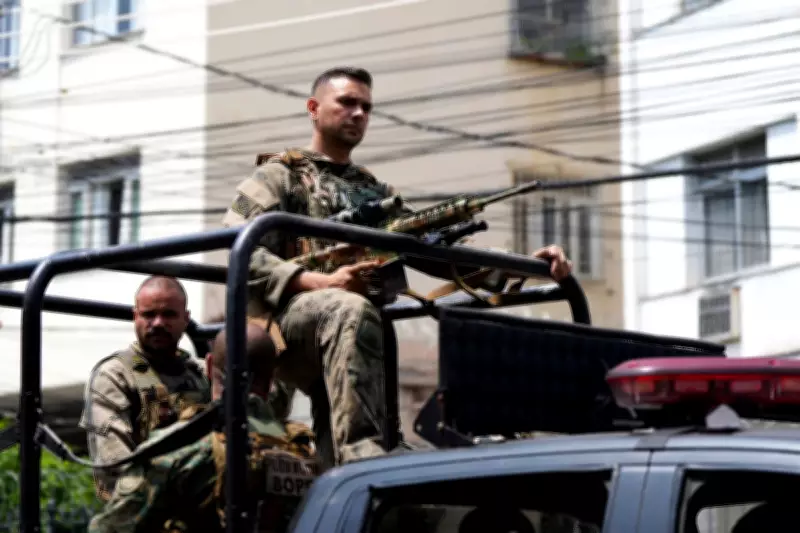
A large-scale police raid conducted in multiple Rio de Janeiro favelas on Wednesday has resulted in at least eight fatalities, according to official statements from Brazilian law enforcement. The operation, which involved approximately 150 military police officers, targeted several sprawling urban communities in central Rio, leading to a violent confrontation that left seven suspected drug traffickers and one local resident dead.
High-Profile Target Eliminated in Coordinated Assault
Among those killed was Claúdio Augusto dos Santos, identified by authorities as a prominent drug-trafficking boss and a member of the infamous Red Command criminal organization. Secretary of the Military Police Col. Marcelo de Menezes confirmed dos Santos' death during a press conference, stating that the operation was initiated after intelligence successfully located the gang leader. The targeted communities included Prazeres, Fallet, Fogueteiro, Coroa, Escondidinho, and Paula Ramos, with police seizing an arsenal of weapons including rifles, pistols, and revolvers during the raid.
Retaliatory Violence and Civilian Casualties
In a swift retaliatory response, individuals described by police as "criminals" set fire to a bus and blocked roads in Rio's central zone, resulting in four arrests. Márcio Sousa, the driver of the torched bus, recounted the terrifying incident to The Associated Press, noting that attackers boarded with gasoline bottles. "It all happened very fast," Sousa said. "There is no security. Rio de Janeiro is like this — it is not for amateurs." The violence also impacted innocent civilians; a local couple was taken hostage during the shootout, with the man killed and the woman successfully rescued by authorities.

Historical Context and Political Implications
Col. Menezes announced that military police personnel will remain deployed in the area indefinitely to ensure security and guarantee freedom of movement, referring to drug traffickers as "narco-terrorists"—a term previously used by former U.S. President Donald Trump. This raid follows a pattern of intense operations against organized crime in Rio, with a similar large-scale action against the Red Command last year resulting in over 120 deaths in the Penha and Complexo de Alemao favelas, marking the most lethal police operation in the city's history. That event sparked widespread protests and calls for the resignation of Governor Cláudio Castro.
Recent reports from local news outlet UOL indicate that the U.S. administration is considering classifying Brazilian criminal groups like the PCC and Red Command as terrorist organizations, highlighting the international dimension of the ongoing security crisis. The latest raid underscores the persistent challenges faced by Brazilian authorities in combating drug-related violence in Rio's favelas, where operations frequently lead to high casualties and retaliatory attacks, exacerbating tensions between law enforcement and criminal factions.