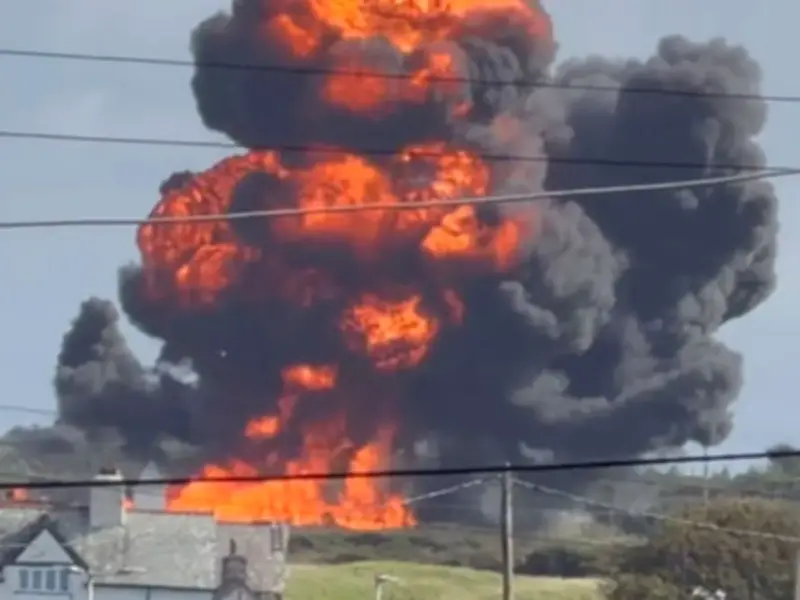
Two British RAF pilots are recovering from 'minor injuries' after ejecting from their Hawk T2 aircraft above Anglesey yesterday. The ejection, a violent and terrifying process, likely saved their lives, though it may have been the most brutal ordeal of their careers.
The ejection handle is a dreaded object in any cockpit. Pulling it triggers a massive explosion beneath the pilot, rocketing them to safety with incredible force. It's a decision made in a split second, often when the plane is barely upright, to ensure the trajectory points upwards.
The Physics of Survival
Upon ejection, pilots are catapulted at speeds few humans survive, enduring up to 20G-force at 50 feet per second. This force is double what most fighter pilots ever experience, even in wartime, and the risk of serious injury is high. G-force is measured with 1G as the baseline on the ground, and up to 5G on a rollercoaster. Pilots wear special suits that pump varying pressures to protect their bodies, but the sensation can feel like being punched or having a heavy weight sit on you.
Training for ejection is nearly impossible due to its hazardous nature, aside from learning the correct posture. The canopy explodes above the pilot, and if too high, they may free fall uncontrollably until the parachute opens, potentially over enemy territory, desert, mountains, or sea.
A First-Hand Account
Mirror journalist Chris Hughes experienced the ejection seat setup during a 2012 flight in an RAF Tornado with Wing Commander Brian "Sumo" James, a Gulf War veteran. Hughes was told to pull the ejection handle only if the pilot was incapacitated and the plane was in trouble. Otherwise, the pilot would use a master control to eject both of them. The advice was to "leave it alone" during the one-hour flight.
During the flight, Hughes recalled the G-force suits pressurising during dives, feeling like a person many times his weight sitting on him. He asked "Sumo" about the pressure endured in the Gulf War, and was told it exceeded 9G-force. The force endured by the two pilots yesterday was likely five times that, making their minor injuries a fortunate outcome.
Aftermath and Recovery
Some who eject suffer long-term back injuries or worse. The two pilots' parachutes likely opened soon after the ejection, as they were low-flying. They are reported to have suffered minor injuries and were lucky. The ejection seat, though frightening, is a life-saving device, but the violence of the force and the chance of injury are always present.