The Queensland government has rejected claims its policies have further strained an under-pressure child protection system, after revelations that vulnerable children were made to sleep on the floor of public service offices.
The premier, David Crisafulli, confirmed on Monday that the approach had been used under his LNP government, but said it would typically be done only in the early morning, when other options weren’t available. “These kids otherwise might be on the street,” Crisafulli said.
Children Sleeping in Offices Since 2019
The practice of housing children in public service offices has been used in emergencies since 2019, when no short-term option for placement could be found, such as a hotel. The Courier Mail reported over the weekend that children were removed from homes without alternative places being organised for them, with children in state care sleeping on mattresses in government offices.

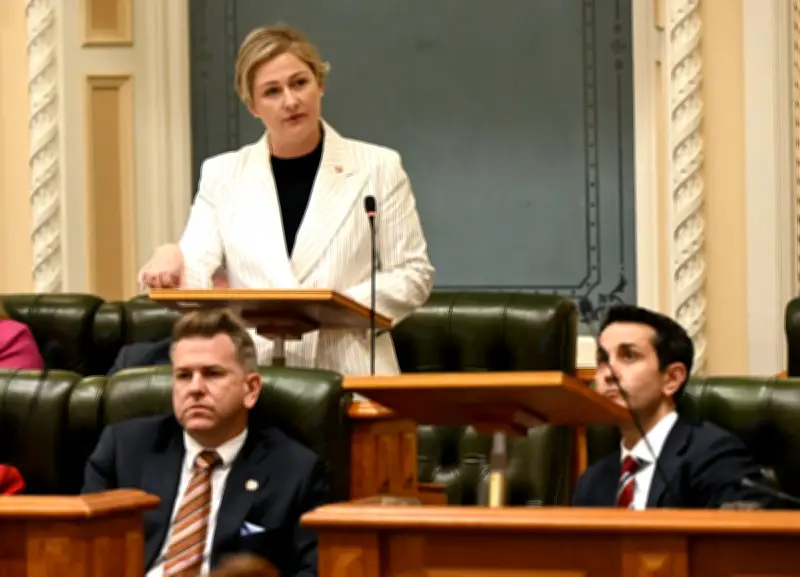
The shadow treasurer, Shannon Fentiman, said the department of child safety should be investigated over whether it breached its duty of care.
Union Reports Increase in Practice
The Together union, which covers many workers in Queensland’s public sector, told media on Monday that the practice was getting more common. The union told Guardian Australia on Tuesday that children in the child safety system had slept overnight on air mattresses at the Toowoomba and Ipswich West child safety service centres this month and last month.
The union’s assistant secretary Dee Spink said children being forced to sleep at the offices “because there are no alternate options available reflect a system that has been stretched for too long”. The union had raised concerns about the problem with the state government on 10 June, she said.
Queensland's Out-of-Home Care Statistics
Queensland has the largest number of children in out-of-home care in the country at 12,500, despite state rules that removal should not be the preferred option. The state also has the country’s largest residential care industry, housing about 2,258 children, including 78 under the age of five.
Impact of Recent Reforms
Since the conclusion of a commission of inquiry into the sector last month, the state government has stopped housing children under five in hotel accommodation, and cracked down on unlicensed residential care providers, cancelling contracts with two weeks’ notice. Guardian Australia understands many of the contracts were due to expire on 30 June. The child safety minister, Amanda Camm, did not respond to questions about how many would.
Spink said the changes were the “driving force” for the increase in the use of office space. “This is not what a child safety officer is supposed to be doing. They are not there to be that overnight supervisor for young people,” Spink said.
Minister Denies Link to Reforms
In response to Guardian Australia’s questions, Camm denied that the practice had occurred since the commission of inquiry concluded. “We have been clear about the fact that no child has been moved from residential care to a Child Safety Service Centre, therefore any suggestion there is a link between the Crisafulli Government’s reforms and children seeking emergency overnight refuge is wrong,” she said.
In an earlier statement, she said: “Only in extreme and emergent circumstances, where children are taken into child safety custody after hours, has the department provided supervised refuge in a child safety service centre, while stable and permanent accommodation is sourced within hours. While these situations are rare, there are examples dating back to 2019 and there have been no instances of this occurring since the Commission of Inquiry concluded.”
Camm has not fronted a media conference since 17 June. Asked on Tuesday why his minister would not answer questions, Crisafulli said she was “trying to fix 10 years of a broken system”.

Expert Criticism
The Youth Advocacy Centre CEO, Katherine Hayes, said children sleeping in public service offices was completely inappropriate and would exacerbate the children’s feelings of uncertainty and instability and lack of trust of the system. “The kids that are in these kind of placements are the most vulnerable and high needs kids in Queensland, and are also often in a situation of acute need, so the holding of them in an office environment is really traumatising and damaging,” Hayes said.
The government must respond to 52 recommendations of the inquiry within two months.