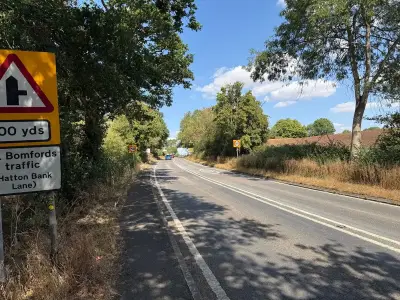
Reporter Toby Codd arrived in Portsmouth the morning after 140 migrants were rescued and brought ashore, an incident that sparked an anti-migrant protest in which hundreds of demonstrators blocked roads across the city. Walking from Portsmouth Harbour towards Eastney Landing, where the migrants were first spotted on their journey from Normandy on Sunday night, the tension was palpable.
The walk along Eastney Esplanade and through the Solent Heights development was quiet, with most passers-by going about their day-to-day business. It was not until two boys sped past on electric scooters shouting "send them back" that Codd was reminded he was close to the scene of an incident that had made national headlines the night before. The incident saw Hampshire Police deploy riot officers, use pepper spray, and issue a dispersal order.
Local residents express shock and fear
The locals that Codd spoke with were understandably shocked. The recent migrant crossing took place much further west than typical small boat routes and raises questions over a potential shift in Channel Crossing tactics.

One Portsmouth resident, 43-year-old Kaz McBride, told Codd she now fears her daughter walking to school alone. She also noted her own financial situation, revealing how she was struggling to afford rent while migrants are seemingly given "homes, fresh clothes and new phones".
According to Portsmouth City Council, the city ranks 64th out of 296 local authorities in England for average deprivation score. Around 12% of Portsmouth's neighbourhoods fall within the 10% most deprived areas nationwide.
Sunday night clashes and aftermath
Between 200 and 500 far-right demonstrators descended near Eastney Landing and clashed with police officers. The scenes were branded "intimidating and thuggish" by the UK government. Alongside watching live-streamed footage of the demonstrations on Sunday, some featuring Danny Tommo, Codd also witnessed the aftermath: a police car and a Home Office vehicle both left smashed and damaged.
By midday Monday, more people started to visit the scene, which now consisted of dozens of orange life jackets that had been disposed near the jetty. Several local people left the area carrying lifejackets that had been left behind by the RNLI.
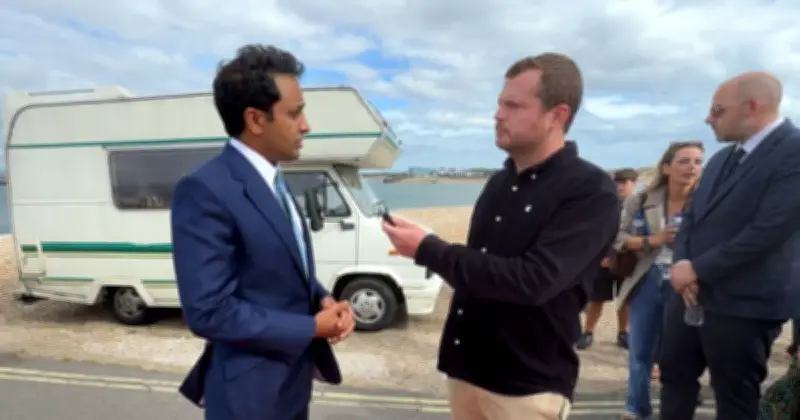
Reform UK's spokesperson for home affairs, Zia Yusuf, arrived to address the media. The media round started smoothly until Danny Tommo, whose real name is Daniel Thomas, arrived and barged through the crowds to confront Yusuf. Thomas, a prominent far-right activist who recently founded the group Patriot Platform, went face-to-face with Yusuf.
Operation Fortress policy and failed second protest
Codd had the opportunity to ask Yusuf a few questions, during which he reiterated Nigel Farage's insistence on implementing Reform's Operation Fortress migration policy. The party describes the plan, which includes deploying the Royal Navy and military forces to intercept small migrant boats, as the largest military operation in the English Channel since World War Two.
Codd believes the policy is flawed, noting the Royal Navy is equipped for warfare and deep-sea operations rather than acting as a coastal taxi service. Military experts have also raised concerns about Operation Fortress, citing both logistical and legal issues, arguing that entering another country's territorial waters without permission to intercept and return migrants would breach international law.
Following Yusuf's media round, there were murmurs of a second protest beginning in Portsmouth at around 6pm. Footage circulated on social media of right-wing ringleaders attempting to whip up crowds for a second night of unrest. Fortunately, the demonstration never came into fruition.
Codd arrived at Portsmouth Guildhall at 6pm to find a small group of teenage boys, who wore all black and some in balaclavas, sitting on the steps. There were occasional shouts of "stop the boats" but the atmosphere remained largely peaceful. As it started to get dark at around 8pm, a group of masked boys and men started to make a move towards Eastney Landing, located around an hour away on foot, but quickly fragmented into smaller groups.

Once they arrived, they were left disappointed. There were no boats, only half a dozen police officers waiting for their potential arrival. Their bubble had been burst and their night was over. Codd left feeling fairly disheartened, with his heart going out to the people of the city impacted by small boat crossings, while noting that disruptive protests are not the answer and politicians need to find a proper solution.