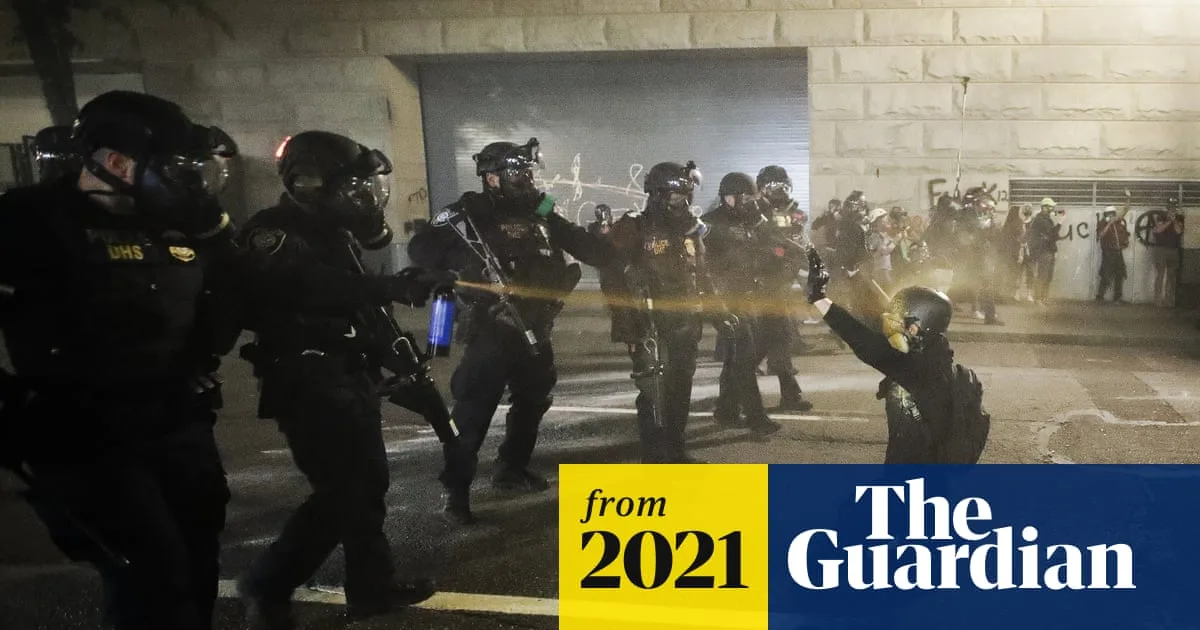
Police in the United States are three times more likely to use force against leftwing protesters than rightwing protesters, according to new data from the US Crisis Monitor, a database created by Princeton University and the Armed Conflict Location and Event Data project (ACLED). The analysis covers law enforcement responses to more than 13,000 protests since April 2020.
The data shows that police used teargas, pepper spray, rubber bullets, and beatings at a much higher percentage at Black Lives Matter demonstrations than at pro-Trump or other rightwing protests. For leftwing demonstrations, force was used in about 4.7% of protests, compared to 1.4% for rightwing demonstrations. The disparity persists even when protests remained peaceful, with police 3.5 times more likely to use force against peaceful leftwing protests.
ACLED’s research also indicates that law enforcement agencies were more likely to intervene in leftwing protests overall, and more likely to use force when they did. Interventions occurred in 9% of leftwing protests versus 4% of rightwing protests. Half of police interventions in leftwing protests involved violent force, compared to a third for rightwing protests.

Dr Roudabeh Kishi, ACLED’s director of research and innovation, noted that the disparity is not solely due to higher violence among leftwing protesters. “Police are not just engaging more because [leftwing protesters] are more violent. They’re engaging more even with peaceful protesters,” she said.
Former US President Barack Obama highlighted an earlier version of these statistics on 8 January, arguing they provided a “useful frame of reference” for understanding outrage over the Capitol police response to the 6 January riot, where a mob of Trump supporters invaded the Capitol.