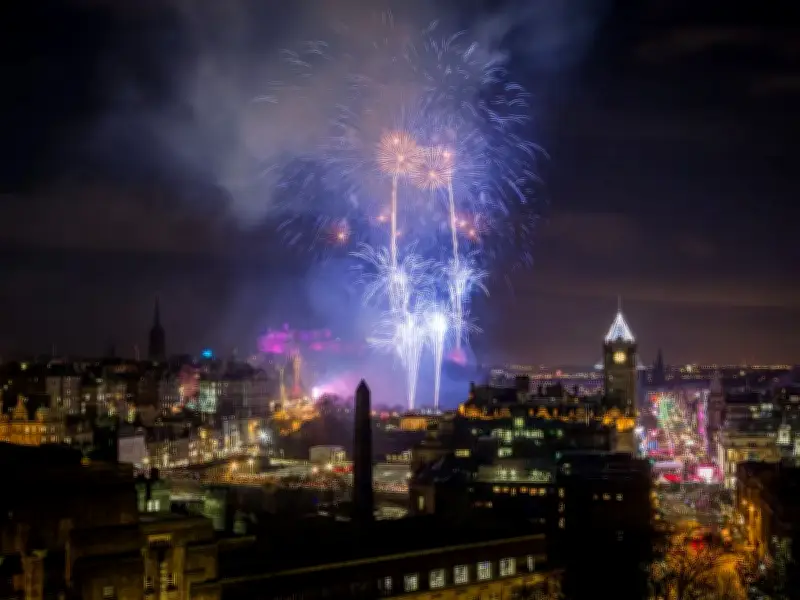
Police have clarified the rules on fireworks for Bonfire Night, covering age limits, curfew hours and the penalties for breaking them. The guidance, published on Ask The Police, a website run by police forces across the UK, responds to a question about the regulations relating to fireworks.
Offences under firework rules
According to the police, it is an offence to possess adult fireworks in a public place while under the age of 18. Adult fireworks are all fireworks except category 1 fireworks such as party poppers, sparklers and throwdowns.
It is also an offence to possess category 4 fireworks, which are professional display fireworks, unless the person is a fireworks professional. Supplying adult fireworks to anyone under 18 is prohibited, as is throwing, casting or firing any firework in or into a highway, street, thoroughfare or public space, including from a private place into a public one.
Lighting any fire or discharging any firearm or firework without lawful authority or excuse within 50 feet of the centre of a highway that comprises a carriageway is also an offence if the highway is damaged as a result.
Firework categories and curfew hours
Fireworks are divided into four categories. Category one covers throwdown fireworks including firecrackers, bangers and party poppers. Categories two and three are adult fireworks available in shops, and category four covers professional display fireworks available from specialist suppliers.
A curfew on the use of adult fireworks runs between 11 pm and 7 am, except on Bonfire Night, when it is between midnight and 7 am. On New Year's Eve, Chinese New Year and Diwali Night, the curfew runs between 1 am and 7 am.
Police say there are penalties for setting off fireworks outside the curfew hours, including up to six months in prison and a fine of up to £5,000, or unlimited depending on the severity and specific regulations enforced. They also warn that residents could commit an offence if they use fireworks to cause a nuisance.
Buying fireworks and penalties
Gov.uk confirms that setting off fireworks past the Bonfire Night curfew could lead to trouble and urges people to check with their local council about any local rules. Fireworks, including sparklers, can only be bought from registered sellers for private use between October 15 and November 10, between December 26 and December 31, and in the three days before Diwali and Chinese New Year.
At other times, fireworks can only be bought from licensed shops. The guidance states: "At other times, you can only buy fireworks from licensed shops. You can be fined an unlimited amount and imprisoned for up to 6 months for selling or using fireworks illegally. You could also get an on-the-spot fine of £90."
Why Bonfire Night is celebrated
Guy Fawkes Day, also known as Bonfire Night, is a British event held on November 5. It marks the failed Gunpowder Plot of 1605, when a group led by Robert Catesby planned to blow up the Houses of Parliament and kill King James I. According to Britannica, the conspirators were "zealous Roman Catholics enraged at King James I for refusing to grant greater religious tolerance to Catholics."
The plot was discovered and Guy Fawkes was caught the night before with the explosives. The plotters were killed or captured and later executed, and Parliament made November 5 a national day of thanksgiving, first celebrated in 1606.
Traditionally, straw figures of Guy Fawkes were thrown onto the bonfire, and children carried these figures, known as "Guys," around the streets asking passers-by for "a penny for the guy," often chanting rhymes linked to the event. The best-known rhyme dates back to the 18th century: "Remember, remember, the fifth of November / Gunpowder treason and plot / We see no reason / Why Gunpowder treason / Should ever be forgot."