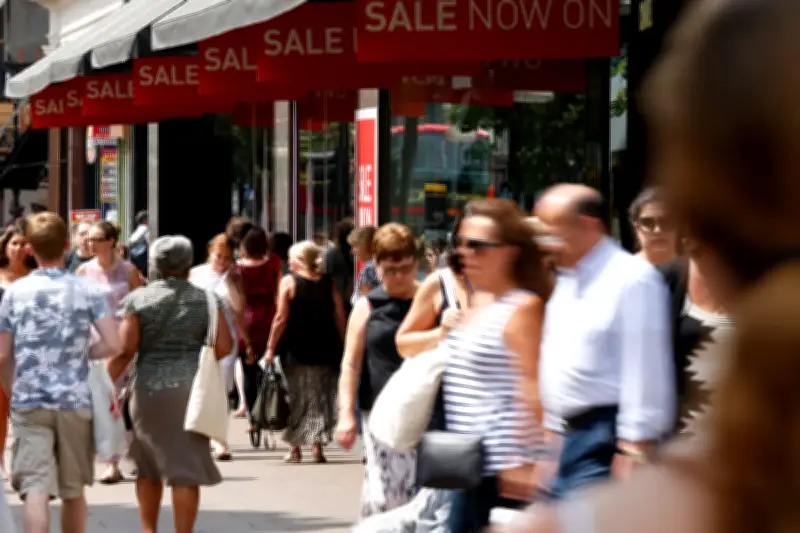
Live facial recognition cameras will be used on Oxford Street to scan shoppers and tourists for wanted suspects. The Metropolitan Police has already said it wants to expand the use of the technology in the capital, and Sir Sadiq Khan has indicated that the newly pedestrianised Oxford Street will be included.
It would be among the first areas in the country to have permanent live facial recognition (LFR) infrastructure scanning the faces of people passing and comparing them with a watchlist of wanted suspects. The cameras would likely be attached to street furniture such as lampposts rather than a temporary police van, as has been the case up until now.
Criticism from human rights groups
LFR has been widely criticised by human rights groups, with one organisation describing the Oxford Street rollout as an escalation in routine public surveillance. Scotland Yard plans to use static live facial recognition cameras in London’s West End and Soho – which have some of the highest crime rates in London.

During a routine City Hall session last month, Sir Sadiq was asked about the rollout of LFR in the West End. He said: “The Met is working really closely with the Oxford Street Development Corporation about how, when we pedestrianise that street, we use LFR in a sensible way, using the opportunity of new CCTV to use LFR.
“It is right and proper we should let the public know LFR is being used. The Met is very good at testing on individual sites before rolling out. What we do not do is a big bang as it would be a disaster. I am confident that we will have a good rollout in the West End.”
Rights groups and polling
Ruth Ehrlich, from human rights organisation Liberty, told the Press Association: “The prospect of permanent live facial recognition cameras being introduced on Oxford Street marks a significant expansion of surveillance in public spaces.
“This technology scans the faces of everyone who passes by, regardless of whether they are suspected of any wrongdoing. If live facial recognition is to be deployed in one of the country’s busiest shopping and tourist destinations, there must be full transparency about how it will be used, what safeguards are in place, and how its impact on people’s rights will be monitored.
“The Government has promised a legal framework for live facial recognition. The Met should not be rolling out more of this technology before that framework is in place. Permanent cameras on Oxford Street would be a significant escalation in our nation’s capital.”
Recent polling commissioned by Liberty suggested that 48% of people oppose scanning the faces of those walking on high streets when there is no suspected imminent threat.
Jasleen Chaggar, from the campaign group Big Brother Watch, urged the mayor to abandon the idea. “Plans to turn the newly walkable Oxford Street into a permanent digital police line-up using live facial recognition software would be a mistake,” she told PA.
“Innocent Londoners who are not suspected of any crime by the police should be able to wander around public spaces without identifying themselves to the authorities. A face scan is as unique as a fingerprint. The police cannot take your fingerprints when you are not suspected of wrongdoing. Taking a faceprint is no less intrusive just because it happens remotely.
“The West End rivals the best cities in the world for its culture and nightlife. The mayor should abandon the plans to roll out Orwellian biometric software which would instead place London in the company of authoritarian regimes.”
Met's use of the technology
The Met used fixed cameras during a six-month pilot in Croydon, south London, between October 2025 and May 2026 which saw 173 people arrested including a woman who had been wanted for more than 20 years. Commissioner Sir Mark Rowley has described it as “one of the most revolutionary technology advances in policing in recent years”, with the force arresting more than 2,000 people using LFR cameras since the start of 2024. The technology has also started to be deployed at London’s Tube stations this month.

A spokesperson for the Mayor of London told PA: “The mayor is committed to transforming Oxford Street into a world-class, pedestrian-friendly and safe destination. As part of delivering that, the mayor is working with the Met, West End Taskforce and Oxford Street Development Corporation on making best use of technology.
“Backed by record funding from City Hall, the Met are leading the way in using the latest technology, including e-bikes, drones and live facial recognition, to arrest dangerous criminals and tackle and prevent violence in the capital. In Westminster, neighbourhood crime has fallen, with 14,000 fewer offences in the past year and the Met’s rollout of live facial recognition in the West End and Soho will help drive down crime rates even further.
“The mayor is committed to ensuring the Met is open and transparent around where, when, why and how live facial recognition technology is used. His Office for Policing and Crime will continue to scrutinise and oversee its use to ensure there’s trust and confidence in policing, as we continue to build a safer London for everyone.”