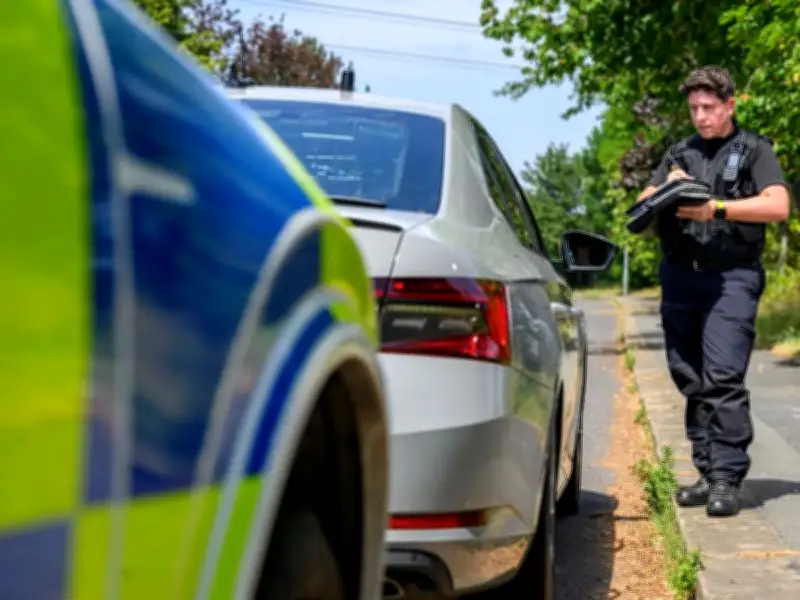
A new Government-funded centre will lead a nationwide crackdown on vehicles with illegal, cloned or 'ghost' number plates, with drivers facing fines of up to £1,000.
The Department for Transport has announced funding for a dedicated roads policing team and the creation of a National Roads Policing Coordination Centre. Police forces will join forces to share technology and data as part of a "blitz on organised crime".
The action forms part of the Government's road safety strategy - the first in more than a decade - which aims to "save thousands of lives".

How illegal plates are used
Illegal number plates are used by drivers to evade speeding, parking or clean air zone penalties. For organised crime gangs, they also provide cover for moving illegal goods on the roads.
Vehicles that hide from number plate recognition technology are harder for police to track down when stolen or linked to organised crime and other serious offences. Better detection will mean police can find criminals more quickly, making roads safer and reducing crime on the streets.
Drivers can be fined up to £1,000 for not displaying their vehicle's number plate correctly. Illegal plates include cloned plates - where a vehicle carries a copied registration belonging to another legitimate vehicle - and ghost plates, which use a transparent film to make the registration undetectable to cameras. Some vehicles do not show a number plate at all.
New technology and trials
The new centre will bring police forces together from around the country to share intelligence, improve collaboration and make better use of data. It will also trial new technology, including specialised goggles that can detect number plates altered to look unreadable by cameras.
Roads minister Justin Madders said: "We're cracking down on illegal number plates with new policing resource and innovative tech. Illegal number plates are used for crimes from evading parking charges to drug trafficking and we're stepping in to protect drivers.
"This is a signal to anyone using illegal number plates that their time is up. We will catch you and our roads and streets will be safer for it."
Police and minister response
Chief Superintendent Marc Clothier, who will be deputy national coordinator for the new centre, said work by police forces in a ghost plates operation has already shown the effectiveness of a targeted, intelligence-led approach. He said progressing work on tackling offenders while educating drivers about numberplate compliance is "a valuable opportunity to support road safety and roads policing across the UK with enhanced national coordination, consistency, collaboration and communication across policing, government and the wider road safety community".
Policing and crime minister Sarah Jones added: "Illegal number plates are not a victimless offence". She said the new team will help police track down offenders faster and disrupt organised crime groups which rely upon the road network, with police being given every advantage and roads being made safer for everyone.
The initiative builds upon collaborative work with the DVSA, DVLA and police to improve how illegal number plates are identified and action against them is enforced. This work includes investigations into businesses involved in the illegal supply of number plates and support for police roadside operations.