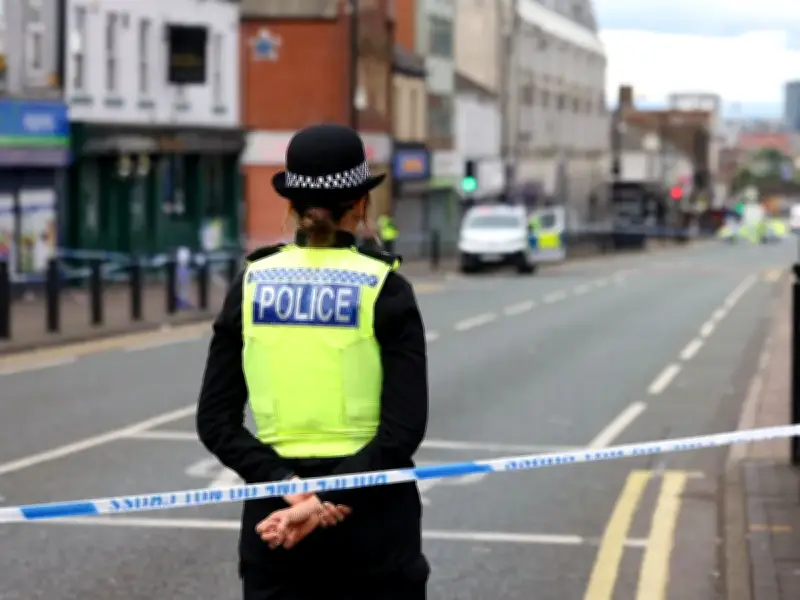
North East MPs have criticised the reduction in police officer numbers across the region as a “national scandal”, stating that communities are now paying the price. Northumbria, Durham, and Cleveland police forces have a combined 578 fewer officers today than in 2010.
Disproportionate impact on the North East
In a Parliamentary debate led by North Durham MP Luke Akehurst on Tuesday, ministers were told that the North East had suffered disproportionately compared to the rest of the country. Cleveland Police’s officer numbers fell by 221 between 2010 and 2026, a 12.8% drop that was the largest proportional reduction of any force in England, according to the most recent Government figures.
Home secretary Shabana Mahmood recently pledged £2 million in extra funding for Cleveland to tackle serious crime, following the A66 crash in August in which police officers Matthew Blades and Tom Clough were killed. Northumbria has lost 255 officers and Durham 102 since 2010, reductions of 6.1% and 6.8% respectively, which are also in the top five biggest falls. Across England’s police forces, officer numbers increased by an average of just under 1% in that time.
Contrast with other regions
Surrey has seen its numbers jump by almost 25%, while areas including Warwickshire, Thames Valley, Bedfordshire, and North Yorkshire also reported notable rises. Mr Akehurst claimed on Tuesday that it was no coincidence that Durham, Cleveland and Northumbria recorded the three largest increases in crime, excluding fraud, of any police force areas in England and Wales at the same time as officer numbers fell.
The Labour MP said: “Police numbers were cut in the years after 2010. Public safety has therefore deteriorated, and our constituents are paying the price. It terrifies me to think that communities like those I represent could ever face a breakdown in law and order of the kind that occurred temporarily in Cleveland. It drew me to ask the question: why was our region left so under-resourced that it became vulnerable to such pressures?”
“Sadly, I can only conclude that the answer lies in an ideological choice by the Conservative party during the 14 years in which it was in government that places such as North Durham were not deserving of the necessary police resources, despite the severe social and economic challenges that our communities have faced following decades of deindustrialisation. Frankly, that decision should be regarded as nothing short of a national scandal.”
Political responses and funding concerns
Matt Vickers, the Conservative MP for Stockton West and the shadow policing minister, said he shared the concerns and that the recent extra funding for Cleveland Police was “nowhere near enough to make a difference or solve the underlying problem”. He defended the previous Tory government’s record, saying police numbers in his area had increased substantially between 2019 and 2024, and called for urgent action to put more police funding into deprived areas.
Mr Vickers said: “As we approach the forthcoming police funding announcements, I hope that the Government will reflect on the events of a few months ago, the words of north-east MPs and the need for meaningful improvement to police forces in our region. Our brave frontline police officers deserve the resources they need to do their job, and our law-abiding residents deserve safe streets to go about their lives without fear.”
Despite the fall in numbers, the North East’s three forces do rank more favourably in terms of the number of police officers per 100,000 population. Of the 42 forces in England and Wales, Northumbria has the eighth highest rate on that measure as of March 2026, Cleveland is ninth and Durham 17th.
Ian Lavery, the Labour MP for Blyth and Ashington, told Tuesday’s debate that “absolutely devastating” funding pressures had led some of the largest towns in Northumberland with no manned police stations. Mary Kelly Foy, Labour’s MP for the City of Durham, said elderly residents in her constituency were “afraid to go out alone after dark”.
She added: “I met Belmont Guides recently, and heard how deeply antisocial behaviour and low-level crime impacts their local community. Whether that is balaclava-clad youths riding e-bikes, vandals damaging park equipment and green spaces, acts of animal cruelty or intimidating behaviour as the evenings draw in, many of our communities are increasingly having to contend with these issues. These young girls deserve to feel safe in their communities, but they see a distinct lack of police officers on the streets.”
Policing minister Sarah Jones confirmed that the Government is reviewing its funding formula for police forces and “it will be fair”. She added: “I assure honourable members that the Government and I hear their case on the North East. We are with them in their desire to reform policing and to make sure we have the people we need to fight crime so that their communities can feel safe, which is the very least that a Labour Government ought to be able to deliver.”