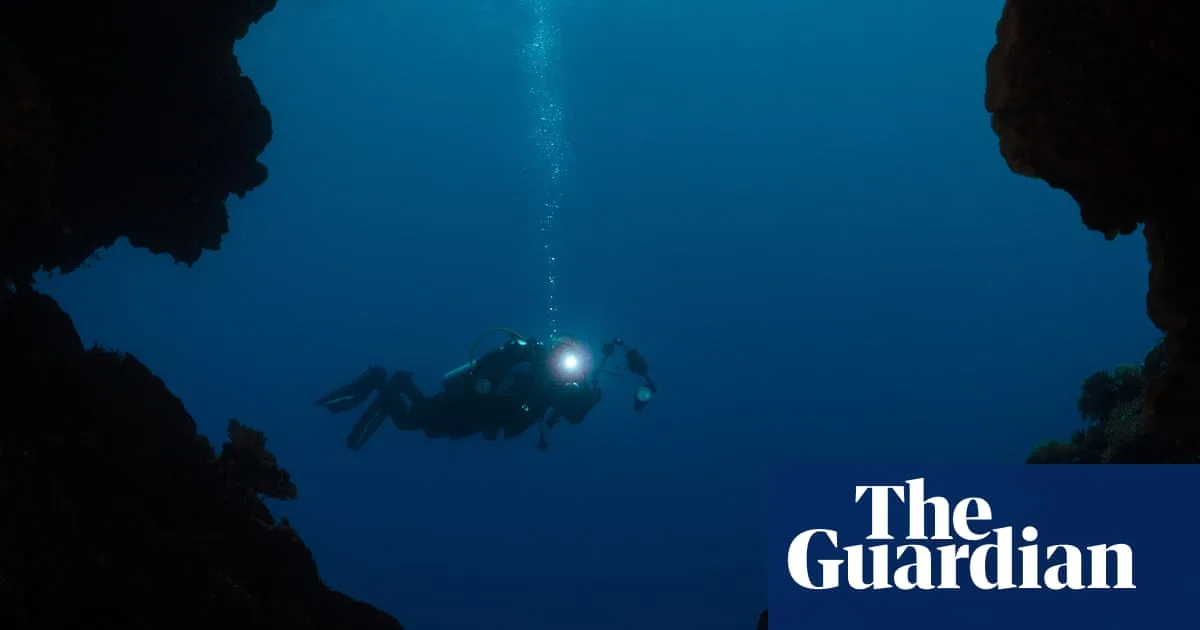
The deaths of five Italian divers and a Maldivian navy diver in an underwater cave in the Maldives have prompted renewed warnings from experts about the dangers of cave diving without proper training, planning and specialised equipment.
The Divers Alert Network (DAN), which coordinated the search and recovery operation at the Dhekunu Kandu dive site in Vaavu atoll, confirmed that all bodies had been recovered. The victims were identified as Monica Montefalcone, Giorgia Sommacal, Federico Gualtieri, Muriel Oddenino, and Gianluca Benedetti. Maldivian navy diver Mohamed Mahudhee also died from decompression sickness during a recovery mission.
DAN deployed a specialised rescue team including Finnish cave diving experts Sami Paakkarinen, Jenni Westerlund and Patrik Grönqvist. Working with Maldivian authorities, the team recovered all bodies over several days using closed-circuit rebreathers, underwater scooters and extensive backup equipment.
British cave diver Jonathan Volanthen, who helped rescue 12 schoolboys from a flooded cave in Thailand in 2018, explained that cave diving carries risks fundamentally different from open-water diving. “If something goes wrong, you can’t simply head to the surface because there’s usually something that’s preventing that,” he said. He noted that depth exacerbates dangers, as divers must carefully manage gas supplies to ensure a slow ascent and reduce the risk of decompression sickness.
American cave diving expert Edd Sorenson emphasised the importance of redundancy in equipment, including multiple tanks, regulators, lights and computers. He also highlighted the need for anti-silting techniques, as common flutter kicks can quickly reduce visibility to zero. “When your light goes out [in a cave], there’s nothing,” he said, stressing the importance of a continuous guide line to the surface.