A New Orleans sheriff's office deputy who handcuffed a journalist covering July's indictment of Louisiana's attorney general has been disciplined for breaching his employer's professionalism policy – albeit for an argument with the facility's judicial administrator that day, according to an internal agency report.
Deputy Ordered to Counseling
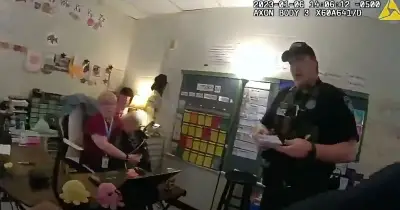
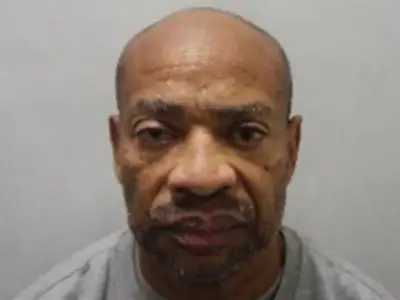
Deputy Herschel Green was ordered to undergo counseling for that argument after he and his colleague Diedra Rayfield placed both WWL Louisiana investigative producer Danny Monteverde and station attorney Elana Beiser in handcuffs, a 33-page agency report released on Friday said.
The report also said that a sheriff's office investigation into the chaotic circumstances surrounding Monteverde's and Beiser's handcuffings “revealed deficiencies involving operational planning, communication, training supervision, media management” and other factors.
Event Details
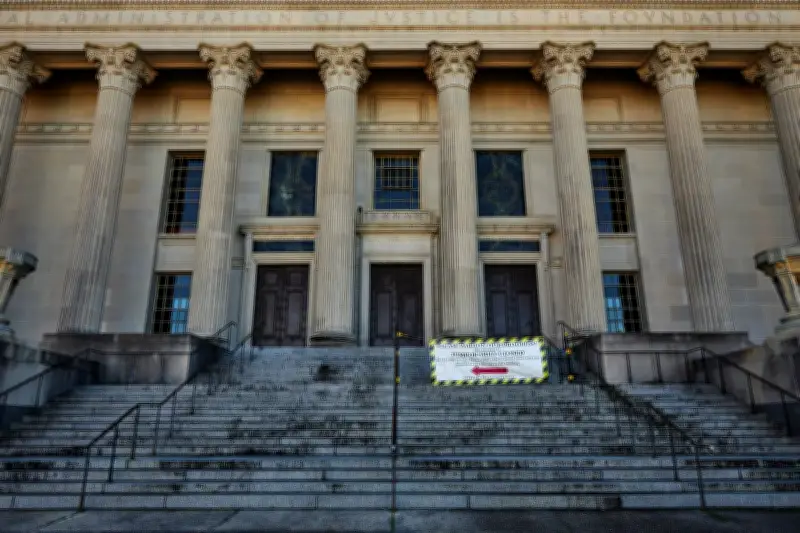
As the report recounted, Monteverde and Beiser were among “numerous” media and legal representatives present at New Orleans' criminal courthouse for the handing up of an ultimately dismissed public intimidation indictment against Louisiana attorney general Liz Murrill. The judge overseeing the proceeding, Leon Roché, ordered his courtroom cleared before the handing up of the indictment, ostensibly to protect grand jurors' identities. So the media, lawyers including Beiser, and other members of the public gathered in the hallway outside the courtroom, the report said.
Deputies at that point ordered the crowd outside the courtroom to either move further down the hallway or leave the courthouse, according to the report, which attributed that information to conflicting witness statements. Monteverde responded by saying the courthouse was a public place and that he was not leaving the building entirely, the report said.
Investigation Findings
The report said Green then handcuffed Monteverde, and Rayfield did the same to Beiser, who was there to help WWL object to the courtroom's closure because state law requires indictments to be returned in open court.
Courthouse construction work, meanwhile, triggered a fire alarm around that time, the report said – and deputies maintained they couldn't immediately rule out a fire, so they ordered an evacuation of the building to give the local fire department time to investigate.
Whatever the case, Monteverde subsequently caught the attention of the courthouse's judicial administrator, Robert Kazik, and showed him he had been handcuffed, according to the report. Kazik asked Green why he had handcuffed Monteverde, the report said, which contained statements to the sheriff's office from all three men.
And when it seemed to Kazik that Green intended to walk Monteverde out of the front courthouse entrance and down a set of steps there, where “local and national media outlets had gathered”, the judicial administrator “entered into a heated verbal exchange with the deputy and instructed him not to take” that route with the journalist.
Disciplinary Action
Green acknowledged to internal investigators that he had argued with Kazik – though he accused the judicial administrator of first approaching “in an aggressive manner”, questioning him about Monteverde's handcuffing and threatening to call his commanders on him, according to the report.
A sheriff's office sergeant eventually arrived and successfully ordered Green to uncuff Monteverde, the report said. Rayfield, too, was instructed to uncuff Beiser. Both deputies said “that they acted independently” and had not been commanded to detain either Monteverde or Beiser, according to the report, supporting an earlier statement from Roché denying that he had ordered anyone to be handcuffed.
The sheriff's office's investigation into the handcuffings later determined that Green's argument with Kazik violated an agency policy requiring employees to “conduct themselves professionally with the utmost concern for the dignity of any individual with whom they are interacting”, according to the report.
“Employees shall not demean or unnecessarily inconvenience any individual and shall not act in a manner that discredits the employee or the sheriff's office,” the professionalism policy says. Green on 9 September signed a citation of disciplinary action requiring counseling for him, according to the sheriff's office internal affairs report.
In conclusion, the report said courthouse deputies met that day's events “without a documented operational plan or comprehensive briefing”. It recommended various corrective actions, among them “preparing a written plan for high-profile proceedings identifying the incident commander, chain of command, assignments … media staging areas, access restrictions … [and] detention protocols”.
“Temporary handcuffing is a significant detention and should be supported by a clearly articulated legal basis, supervisory oversight and complete documentation,” the sheriff's office report also said. “When the underlying conduct involves verbal disagreement or passive refusal, available de-escalation methods should be used before restraints unless immediate action is necessary for safety.”
The Guardian has asked the sheriff's office if it wanted to comment on the report. It did the same to WWL, a Guardian reporting partner.
Green's handcuffing of Monteverde was one of two recent high-profile episodes pitting his station – a CBS affiliate – against New Orleans' criminal courthouse. The New Orleans criminal court judge Kimya Holmes filed a police report against WWL in September after investigative reporter David Hammer aired a politically unflattering segment examining a real estate transaction in which she was involved. Yet Holmes later conceded that she did not realize her complaint relied on a section of law prohibiting the dissemination of certain personal information that had been repealed at the beginning of August. And investigators concluded WWL had committed “no violation … or criminal offense”, a police report said.