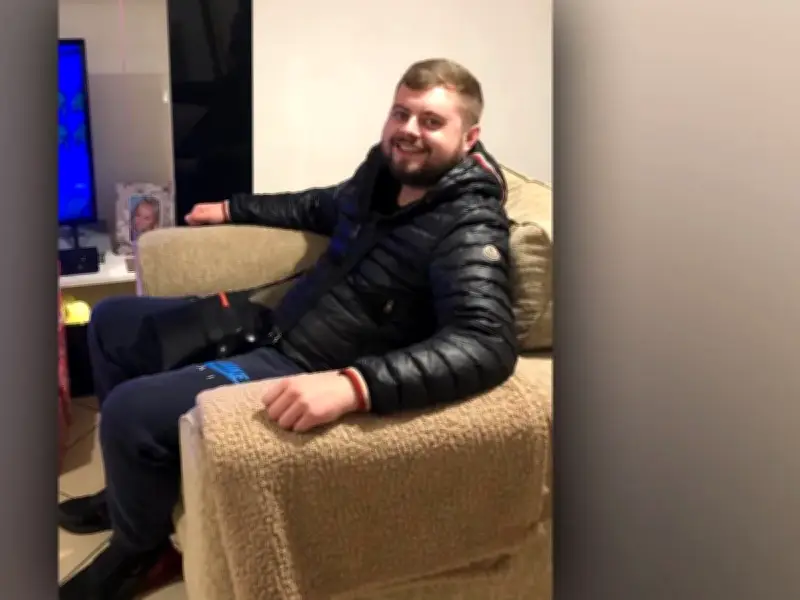
Lewis Kent, 29, from Salford, was found collapsed on the bathroom floor of his flat by his mother Deborah Kent on Good Friday, April 3, after she became concerned when he failed to send his usual good-morning message. The pair exchanged good-morning and good-night messages every day, telling each other they loved one another. Lewis, who had diagnoses of autism and ADHD, was described by his mum as a “gentle giant” who was very much a creature of routine.
Easter plans cut short
He had been looking forward to spending Easter with his family. Deborah had bought him an Easter egg and was planning to cook him a special dinner. But Lewis, who lived alone in a flat on Gus Risman Street, Weaste, would never make it home. Born on April 18, 1996, he was one of six children, with three brothers and two sisters. After leaving school, he went to college to study maintenance and construction. He was single, had no children and lived independently in a flat where he had previously lived with his father.
An inquest at Bolton Coroner's Court on November 12 heard that Lewis died from cocaine toxicity. However, his mum has raised concerns about the police response to reports he had made about alleged harassment and stalking before his death.
Deborah told the inquest that she had last heard from Lewis on April 1, just before he was due to come home for Easter. She said: “He rang me because he was excited about coming and spending time with me and the family. I got him an Easter egg and was going to cook him a special dinner. He was very family orientated.”
Mum's concerns
When he did not make contact as expected, Deborah drove to his flat and let herself in. She found him slumped unconscious on his bathroom floor. Paramedics attended and Lewis was pronounced dead at around 12.46pm.
Speaking at the inquest, Deborah said she believed her son had been failed on several occasions and had not received the safeguarding he needed. “He was let down on four occasions. He didn't get the safeguarding that he needed, and I do believe Lewis would still be here today,” she said.
Deborah also described seeing threatening messages allegedly sent to Lewis in the weeks before his death. “I've seen them threatening messages, 'watch what's gonna happen to you over the upcoming weeks, I'm gonna kill you', 'I'm gonna do this',” she said. “Within two and a half weeks of that message he was dead.”
The messages form part of an ongoing criminal investigation into allegations of stalking and harassment. Deborah said she feared the stress Lewis was experiencing may have contributed to his return to cocaine use. “Sadly the only witness is deceased which is my son, and we're never going to know the full story,” she said. “We'll never truly know what happened that day.”
Post-mortem findings
The concerns raised by Deborah come amid evidence at the inquest about a number of injuries found on Lewis's body during his post-mortem examination. These included bruising and a laceration around his right eye, an injury to the frenulum – the small piece of tissue connecting the inside of the upper lip to the gum – and bruising to the backs of his hands. The injuries to his hands could have been defensive or offensive in nature, the court heard.
The pathologist also highlighted the injury to Lewis's frenulum, explaining that injuries of this kind are rarely caused accidentally and are more likely to be associated with an incident involving some degree of force. However, it was not possible to establish precisely when the injuries had occurred or how they had been sustained. There were no fractures or broken bones, no bleeding into the brain and no other injuries identified that could explain his death. The findings of the consultant neuropathologist also did not identify anything that would explain his death. The pathologist concluded that the injuries identified during the post-mortem examination had not caused or contributed to his death.
Home Office pathologist Dr Tracey Sorkin carried out both an internal and external post-mortem examination and gave evidence about her findings. The court also heard evidence from a consultant neuropathologist and a forensic toxicology report prepared by Dawn Reed of Cellmark Forensic Services. The toxicology findings showed the presence of a number of substances in Lewis's blood, including prescribed medication and low levels of cannabis. However, the main finding was cocaine.
Dr Sorkin said: “So it could be either seizure or cardiac-related that has been the cause of death as a result of taking the cocaine.” The court heard that the effects of cocaine can be sudden and vary between individuals, and that its impact on the brain and heart may not leave signs that can be identified after death. It was not possible for the pathologist to establish whether Lewis had suffered a seizure or a cardiac event before he died.
Police response
The inquest heard that Lewis had previously reported concerns about harassment and alleged stalking involving another individual. A 30-year-old woman had been arrested on suspicion of domestic abuse offences following a previous report to Greater Manchester Police. She was later released on bail pending further enquiries. The arrest and subsequent investigation did not establish that the woman was responsible for Lewis's death.
Following the inquest, a spokesperson for Greater Manchester Police told the Manchester Evening News: “Any report made to us is taken seriously, particularly where vulnerability and safeguarding concerns are involved. While the coroner concluded that Lewis' death was drug-related, previous police contact will be carefully reviewed. We will continue to examine our involvement and consider any learning opportunities identified through that process. As there are ongoing criminal proceedings linked to this matter, it would be inappropriate to comment further at this stage.”
Detective Inspector Zoe Marsden also gave evidence about the numbers saved on Lewis's phone and his contact with people linked to the supply of drugs, including his last phone call before his death, which was to a well-known drug dealer. She said: “Some research on our systems on that number has revealed that it's used by a well-known drug dealer in the Salford area to sell Class A drugs including cocaine.” Enquiries indicated that Lewis had been buying drugs, on average, twice a month and spending around £50 each time.
DI Marsden told the court that an outgoing call had been made from Lewis's phone at 12.24pm on April 2. A message received from close family friend Nora Martin at 3.48pm had not been opened. Messages sent after that also remained unread. She said: “So from his phone data, that would indicate that Lewis had passed away at some point between 12.24 when he made the outgoing call and 15.48 when he didn't read the message.”
A neighbour, Hillary Miller, reported seeing Lewis around lunchtime on April 2 as he walked towards local shops. She said he appeared well and had no visible injuries. However, DI Marsden said police had been unable to independently establish the precise time of the sighting, despite making CCTV enquiries. A grocery delivery from Iceland later also went unanswered. Bank records showed transactions on the evening of April 1, but none on April 2 or 3. DI Marsden added that there was a “bag of white powder and set of house keys” by his body.
Coroner Ceri Owen concluded: “The pathologist report came back showing a number of substances in his blood. One was prescribed medication, another was low levels of cannabis but the main finding from toxicology was cocaine.” The coroner added: “Prior to his death, the deceased had reported harassment and alleged assaults by another individual resulting in police investigations.” However, following the medical evidence, Coroner Owen continued: “Although there were a number of injuries identified on his body in post-mortem which could have been defensive or offensive injuries, is found not to have caused or contributed to his death.” The coroner recorded the medical cause of death as cocaine toxicity and concluded that Lewis's death was drug-related.