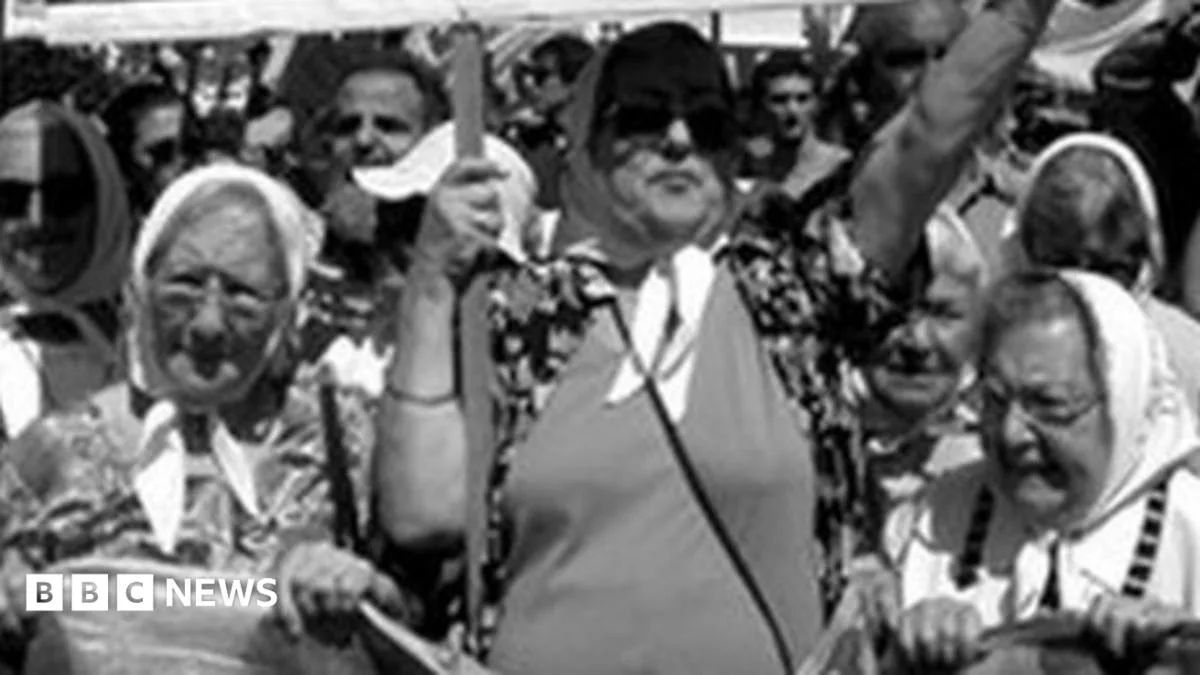
On 30 April, the Mothers of the Plaza de Mayo marked 35 years since their first protest, demanding justice for their children who "disappeared" during Argentina's military dictatorship. The group, known for their white headscarves, has become a global symbol of resistance against state-sponsored repression.
Human rights groups estimate that more than 30,000 people were kidnapped and murdered by right-wing groups or the military government that seized power in a 1976 coup. The mothers, including co-founder Hebe de Bonafini, began marching every Thursday in 1977 to demand information on their missing children.
"We went to the square that Thursday with the intention of handing over a letter to (military ruler Jorge) Videla," said Ms de Bonafini, now 83. The authorities had banned gatherings of more than three people, so the mothers linked arms and walked in circles, inadvertently creating their iconic protest.
The movement faced brutal repression. Three founding members were detained, tortured, and thrown from a plane into the sea. Despite this, the mothers continued, growing in number as the dictatorship intensified its crackdown.
"I don't remember being afraid," Ms de Bonafini said, reflecting on the loss of both her sons and daughter-in-law. The Mothers of the Plaza de Mayo remain a powerful force, still marching for truth and justice more than three decades on.