A Ministry of Defence police dog handler who was bitten on the privates by his own animal was among a catalogue of painful mishaps logged on military bases last year. The dog, named Sem, turned on the officer as he was being taken out of his kennel for exercise and has now been retired from duty.
In another painful case, a soldier lifting weights in his regimental gym during a lunch break dropped a 15kg dumbbell and severed the end of his little finger. The 12-month dossier of accidents which injured military personnel, civilian staff and visitors to MoD bases was revealed by safety officers who record all serious incidents for the Health and Safety Executive.
Training and parade injuries
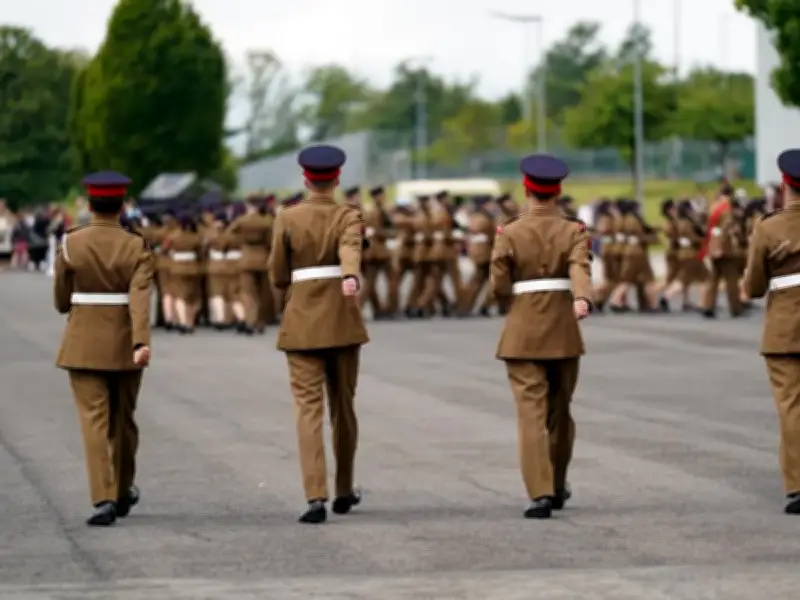
A Remembrance parade ended in disaster when a Royal Navy cadet fainted and broke his jaw in a fall. It happened shortly after cadets were handed doughnuts and pastries, and quizzed on whether they had eaten that day.

Two Royal Navy recruits at HMS Raleigh in Cornwall suffered broken arms in separate rope climbing lessons, with one hearing a pop as he hung from the rope. Safety chiefs admitted the ropes drill was under formal investigation because of the number of injuries being sustained by recruits during basic fitness training.
A member of the public on a tour of an RAF training hangar shattered four teeth and fractured a shoulder while clambering out of an inflated life raft. Officials have since forbidden the unit from letting visitors use survival equipment, while an investigation examines how the tour was allowed to go ahead.
Prank-related incidents
A control room operator needed an emergency dentist after a colleague jokingly yanked her chair, aggravating old spinal injuries. The prankster was told to have a period of “self-reflection”.
Two soldiers at the same Hampshire base each needed spinal surgery within days of throwing a ball overhead during lunchtime games of bucket ball, a version of netball. MoD police officers were repeatedly hurt during their own restraint training, with one who played the part of a drug dealer in a mock stop and search left with a dislocated shoulder.
Compensation and response
There was also a case where a trainee on a quad bike course hit the accelerator instead of the brake and smashed through a steel framed door, flattening the instructor sheltering behind it. Elsewhere staff broke wrists tripping in potholes in MoD car parks, and a Royal Marines hopeful fractured his leg after jumping from a commando assault course.
The Ministry of Defence has also revealed that in the most recent year it paid out £135.5million in compensation for incidents affecting service personnel and £16.2million to its civilian staff, although it is not known if any of the payouts relate to the dossier of incidents reported to the HSE.
Professor Bill Durodie, Chair of Risk and Security in International Relations at the University of Bath, said: “These accident statistics report from the UK Ministry of Defence make grim reading ... for the security and resilience of the country.
“The reality is that the world is not risk free, and while we all expect employers to afford a duty of care to their staff, the military, necessarily, are expected to be exposed to greater challenges and risks.
“Many of the incidents recorded by the MoD in their document are accidents that could occur anywhere, with quite a few happening through what might politely be described as staff ‘mucking around’ for which, of course, there ought be few excuses.
“On the other hand, the public expect, and deserve, a military trained for their mission and ready, in the main, for active, combat duty, for which there can be no short cuts in training.”
In previous years the survey has uncovered bizarre accidents including a soldier set alight by a flaming Christmas pudding and a parachutist who crash-landed into a burger van. There was also an office worker blinded by a Nerf gun, a woman who dislocated her knee dancing the Cha Cha Slide and staff injured in lunchtime yoga classes.
A Ministry of Defence spokesperson said: “We have robust policies and processes in place to address the health, safety and wellbeing of our people. When accidents happen, we work to find out how to prevent future occurrences.

“When compensation claims are received, they are considered on the basis of whether or not we have a legal liability to pay compensation. Where there is a proven legal liability, compensation is paid.”