Margaret Rogers, known to Victorian Swansea police as 'Mad Maggie', accumulated a staggering 275 convictions for drunkenness over her lifetime. When she died in 1908, the local newspaper observed she possessed a "pretty wit and much intelligence". Her exact age remains unclear – some accounts place her in her mid-60s while others suggest she was 72 – but she was described as "cleanly and industrious".
Yet the tragic reality was that Rogers spent the bulk of her adult years moving between prison and the workhouse. She was a familiar figure throughout Swansea due to her conduct, and especially familiar to the town's police officers who reportedly gave her the nickname 'Mad Maggie'.
A Life Marked by Alcohol
Upon her death, the newspaper report observed that "had her life in its earlier years been ordered differently" she might have accomplished greater things. However, her undoing was alcohol. Throughout the years she accumulated 275 court appearances for drunken and disorderly conduct on Swansea's streets and within its numerous pubs and ale houses.

An editorial piece in the South Wales Daily Post – as the South Wales Evening Post was known then – penned more than a decade before her death stated that how she and women in similar circumstances were treated by society "will be regarded by future generations as evidence of our cruelty and unwisdom".
From Haverfordwest to Swansea's Courts
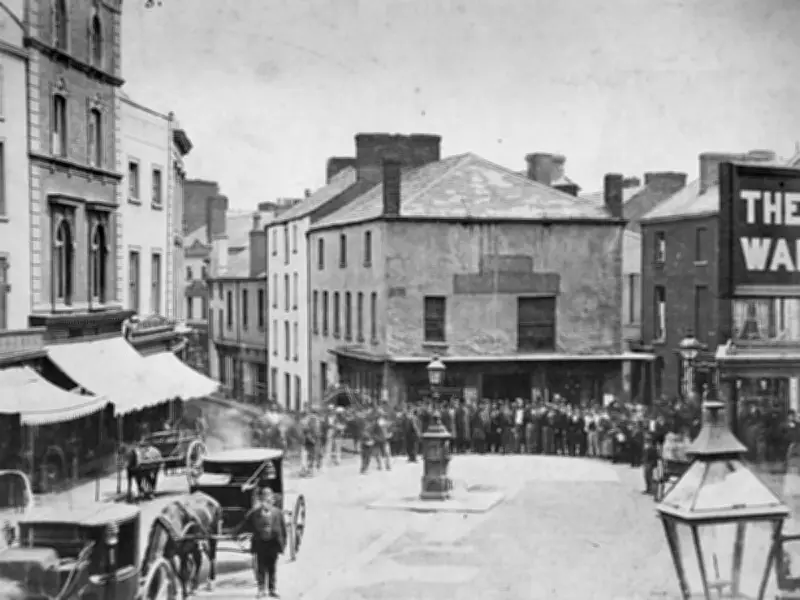
Margaret Rogers was born in Haverfordwest, Pembrokeshire, although the precise date appears uncertain and scant information exists about her early years or family history. By the 1860s, she had settled in Swansea and was beginning to fall foul of the law. Victorian Swansea was a thriving industrial and commercial hub, attracting vast numbers of people from across south Wales, the west of England, and Ireland.
In August 1871 she gave birth to a son, William, but as a single mother with little income and no family nearby it appears she struggled from the outset. Fewer than three months after giving birth she appeared before the court, clutching her baby, charged with being drunk and disorderly. The Cambrian newspaper, dated December 1, 1871, reported that "she had her infant in her arms, which she threatened to destroy – the unfortunate woman stated that she had to pay 4s a week for the nursing infant but was obliged to take it back owing to not having sufficient money".
Repeated Offences and Attempts at Help
Rogers was released with a caution but would soon become a familiar face in both the police cells and the courtroom. By 1877 newspaper reports were referring to her as 'Mad Maggie' – a nickname apparently coined by the police officers who knew her well. That same year her son was removed from her care and sent to live at Cottage Homes in Cockett. William remained there until the age of 12, and it appears he subsequently departed Swansea and possibly seldom saw his mother.
In court reports she is variously referred to as "an unfortunate", "an abandoned woman", "a prostitute", "ill-famed", "an incorrigible", or "the famous Swansea drunkard". Victorian Swansea was saturated with alcohol, featuring dozens of pubs and hotels alongside illegal drinking establishments. The Strand, a street at the heart of the town's thriving docklands, contained no fewer than 12 pubs along its stretch.
Throughout the 1880s and 90s, Mad Maggie was a virtually permanent presence in court. On an almost monthly basis she came before magistrates and was routinely found guilty. Frequently she was apprehended and sentenced within a day or two of being discharged from a previous term. It was a bleak pattern of alcohol-driven offending and reoffending.
There were efforts, at times, to assist her. In 1886, the Cwmdonkin Park Shelter for Fallen Women was established by Lady Vivian. Women were urged to sign "the pledge" and refrain from alcohol, and the shelter also promoted emigration to Canada, Australia, and New Zealand. By 1907 approximately 1,300 women had passed through its doors, and it is known that Rogers was amongst those who resided there. She was also once sent to Brentry Inebriates Home near Bristol, though just days after her release she appeared again before Swansea court on a charge of drunkenness.

Final Years and Legacy
Her final recorded court appearance was in February 1906 when she faced, once more, a charge of drunkenness. She informed the court she was about to depart for Pembrokeshire and was discharged with the recommendation that she should "start at once" on the journey west. It remains unclear whether she returned to her county of birth that day, but she passed away at Swansea Union Workhouse on May 19, 1908.
An obituary published in The Cambrian noted she was "regarded with something akin to affection" in Swansea police court and that "drink was her sole weakness". Her cause of death was recorded as senile decay and cardiac failure. She was officially listed as being 72 though she may have been in her mid-60s. The workhouse logged her occupation as a "charwoman" – a cleaner. Rogers was laid to rest at Danygraig Cemetery in Port Tennant.