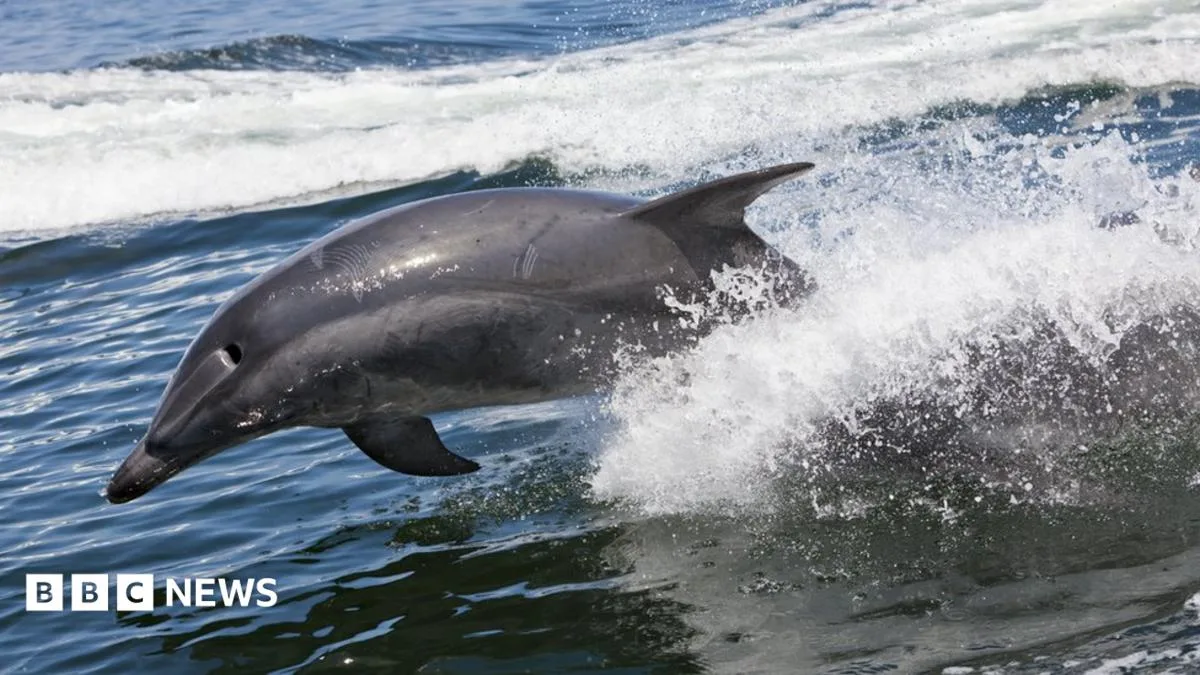
A young female bottlenose dolphin has become a local attraction in the waters off Saint-Jean-de-Luz, a picturesque beach town in southwestern France. Since mid-October, the cetacean has been lingering close to shore, weaving between swimmers and drawing delighted crowds. However, experts have voiced concerns about the animal's safety, warning that well-meaning humans are creating risky situations by surrounding her.
Dolphin's Behavior and Characteristics
Measuring over 6.5 feet (two metres) in length and weighing between 200 and 250 kilograms, the dolphin is estimated to be between six and eight years old and has not yet reached maturity. According to Pascale Fossecave, an oceanographer and the city's deputy for environmental affairs, the dolphin has been seeking social interaction, readily approaching the shore and displaying marked curiosity toward humans. 'The reason why she came here escapes us. These animals do not get lost. They can communicate over distances of up to 20 kilometres – we know she can hear the other animals,' Fossecave said.
Risks and Warnings
While locals and tourists are thrilled by her presence, the situation poses risks for both beachgoers and the animal. As summer approaches and France endures scorching temperatures, many people are expected to flock to the coast. Authorities have called on beachgoers to behave responsibly, warning that inappropriate conduct could result in a 750-euro fine. 'Unfortunately, we end up managing humans more than the dolphin, because it's human behaviour that causes problems,' Fossecave added. 'We see gatherings and attempts to surround her, which can create risky situations.'
Experts caution that frequent close contact with humans can harm dolphins, increasing the risk of injury or death. Once fully accustomed to human presence, they may lose their natural wariness of people, boats, and jet skis, and most do not survive long under such conditions. It is hoped the dolphin will eventually return to open sea.
Historical Context and Similar Incidents
Across the border in Spain, a dolphin nicknamed Pakito settled in the waters off San Sebastian in the 1990s, living there for several years and becoming a local celebrity. Last year, a family in Dorset, UK, experienced a playful dolphin joining their morning swim at Lyme Bay. Thea Taylor, managing director of the Sussex Dolphin Project, noted that bottlenose dolphins are inherently curious and often mimic behaviors. She strongly encouraged people not to seek out such interactions, warning that they can be dangerous for both animals and humans. In 2018, a 'love-lorn' dolphin named Zafar caused a French town to ban swimming after repeatedly rubbing against swimmers and boats.
Bottlenose Dolphin Facts
Bottlenose dolphins are the most familiar of dolphins, often seen from UK shores. They are highly social and can be found in small groups of up to 15. They feed on fish and often work as a team to hunt. The best places to see them in the UK include the Moray Firth in Scotland, Cardigan Bay in Wales, and the coasts of Cornwall, Northumberland, and North Wales.